Key Points
- Keltbray Chinatown Developments has lodged plans with Glasgow City Council for a major regeneration of the Chinatown site in Glasgow.
- The proposed scheme is valued at £160m and covers the 4.4-acre site on New City Road.
- The project is a joint venture between Keltbray Developments and the current owners of Glasgow Chinatown.
- The plans form part of the Cowcaddens District Regeneration Framework.
- The Chinatown complex opened in 1992 and has been described as an important part of Glasgow’s cultural landscape.
- The area has declined over the past decade and is now being positioned for revitalisation.
- The design work has been carried out by Hawkins\Brown, with CBRE appointed as planning agent.
- If approved, the project is intended to restore Chinatown as a mixed-use cultural and community destination.
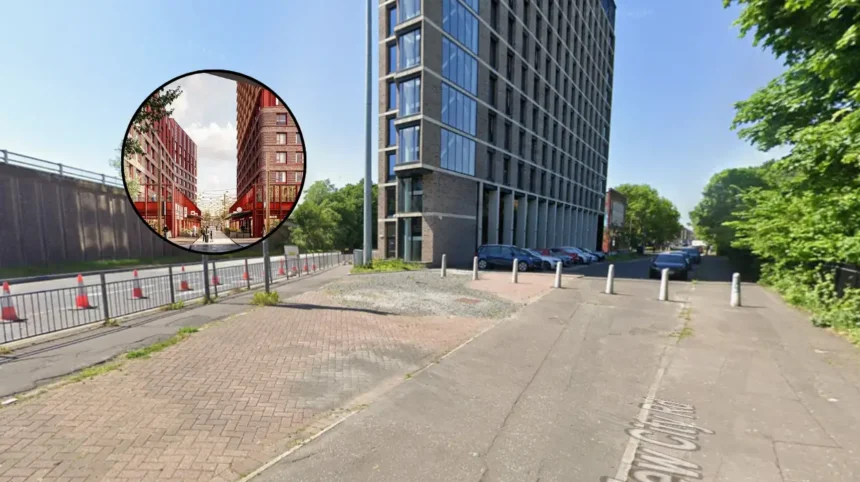
Glasgow (Glasgow Express) May 19, 2026 Keltbray Chinatown Developments lodged the proposals with Glasgow City Council for the regeneration of Glasgow Chinatown, according to the information provided by the developer. The plans relate to the historic site on New City Road and set out a transformation that the developers say would turn the area into a new mixed-use neighbourhood. The scheme has been described as a £160m investment across the 4.4-acre site.
Who is behind the plans?
The development is being brought forward by Keltbray Chinatown Developments, a joint venture involving Keltbray Developments and the current owners of Glasgow Chinatown.
The design work has been prepared by Hawkins\Brown, while CBRE is acting as planning agent. Those details matter because they show the project is being advanced by a partnership with both development and planning expertise behind it.
Why is the site being redeveloped?
The site is being put forward for regeneration because the Chinatown complex, which opened in 1992, has been identified as an area that has declined over the past decade.
The redevelopment is framed as a response to that decline and as part of the wider Cowcaddens District Regeneration Framework.
The stated aim is to restore the site as a vibrant cultural and community destination rather than allow it to continue deteriorating.
What would the development aim to achieve?
If approved, the proposals would seek to create a mixed-use neighbourhood that re-establishes Chinatown as a more active part of the city.
The wording provided indicates that the intention is not only physical regeneration, but also cultural renewal. That suggests the project is being positioned as both an urban development scheme and a place-making exercise within central Glasgow.
How does this fit the wider city area?
The site lies within the Cowcaddens District Regeneration Framework, which gives the proposal a wider planning context beyond the Chinatown complex itself.
That matters because the project is not being presented in isolation, but as part of a broader approach to improving the district.
In practical terms, this usually means planners will consider how the site connects with surrounding streets, existing land uses and longer-term regeneration goals.
Background of the development
Glasgow Chinatown opened in 1992 and has been part of the city’s cultural landscape since then. Over time, however, the area has declined, creating the case for a substantial reset through redevelopment.
The current proposals represent the first major step towards reshaping the site into a renewed neighbourhood, with the scale of the project indicating that the intention is long-term rather than cosmetic.
Prediction
For local residents, nearby businesses and people who use the area, the development could bring noticeable change if it receives approval and moves forward.
A successful regeneration could improve the appearance and use of the site, increase footfall in the surrounding area and support a more active mixed-use environment.
At the same time, the eventual impact will depend on what is built, how quickly it progresses and how well it is integrated with the wider Cowcaddens area.