Key Points
- Glasgow City Council leader Susan Aitken has outlined the next steps for the regeneration of Union Street following a major fire that damaged the historic building.
- Aitken emphasised that residents have the right to expect visible progress on the site, which has lain empty since the blaze.
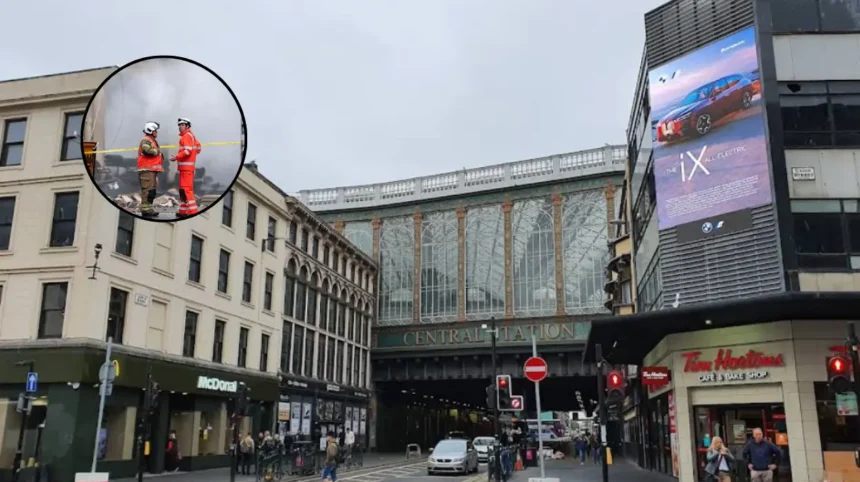
- The fire occurred on 24 January 2025, gutting the former B-listed Whitehall Building on Union Street in Glasgow’s Merchant City.
- Initial investigations pointed to a possible arson attack, with Police Scotland treating it as wilful fire-raising.
- Council plans include securing the site, assessing structural damage, and advancing long-term redevelopment proposals.
- Aitken highlighted ongoing collaboration with Historic Environment Scotland and insurers to expedite repairs and future use.
- The incident has reignited debates on empty properties, urban regeneration, and fire safety in Glasgow’s city centre.
- No injuries were reported, but the fire caused significant disruption to nearby businesses and traffic.
Glasgow (Glasgow Express) April 6, 2026 – Susan Aitken, leader of Glasgow City Council, has stressed that the public deserves to see tangible progress on the Union Street site ravaged by fire over a year ago, as she detailed the council’s immediate and future plans for its revival. Speaking amid mounting calls for action on derelict city centre properties, Aitken outlined steps including site securing, structural assessments, and redevelopment pushes, vowing not to let the landmark languish further.
- Key Points
- What Caused the Union Street Fire?
- Who Is Susan Aitken and What Did She Say?
- What Are the Immediate Next Steps for the Site?
- How Does This Fit into Glasgow’s Regeneration Efforts?
- What Challenges Lie Ahead for Union Street?
- Why Is Union Street Important to Glasgow?
- What Have Locals and Experts Said?
- When Will We See Progress on Union Street?
What Caused the Union Street Fire?
The blaze that transformed Union Street’s Whitehall Building into a charred shell erupted on 24 January 2025, around 8pm. As reported by Laura Reid of Glasgow Times, the fire started in the derelict B-listed structure, previously used as student accommodation, and spread rapidly due to its empty state. Firefighters battled the flames for hours, with 12 appliances and over 80 personnel on scene.
Police Scotland launched an investigation, classifying it as wilful fire-raising. Detective Inspector Peter Marshall of Greater Glasgow CID stated, as quoted by Ryan McDougall of Glasgow Live,
“Enquiries are ongoing to establish the full circumstances, and we are keeping an open mind regarding the cause.”
No arrests have been made to date, though locals speculated on arson linked to the building’s long-term vacancy.
As detailed by Sarah Hedley of Evening Times, the fire caused no injuries but led to road closures on Ingram Street and High Street, disrupting public transport. Smoke billowed across the Merchant City, visible from miles away, underscoring the site’s vulnerability.
Who Is Susan Aitken and What Did She Say?
Susan Aitken, Glasgow’s Labour City Council leader since 2017, addressed the issue directly in recent statements. As reported by Graeme Hart of Glasgow Times on 5 April 2026, Aitken said:
“People have the right to expect to see progress on Union Street after the fire.”
She emphasised urgency, noting the 15-month delay since the incident.
In the same Glasgow Times piece, Aitken outlined priorities:
“We are working with Historic Environment Scotland to assess the building’s condition and with insurers to secure funding.”
She added that the council aims to prevent further deterioration, amid criticism over slow response times.
Earlier coverage by Chloe Love of Herald Scotland captured Aitken’s frustration post-fire:
“This is a significant heritage asset, and we cannot allow it to become another eyesore.”
Her comments reflect broader council commitments to the Merchant City regeneration masterplan.
What Are the Immediate Next Steps for the Site?
Aitken’s plan kicks off with practical measures. According to Ciaran Baynes of STV News, the council has commissioned engineers for a full structural survey, expected within weeks. Temporary scaffolding and protective hoarding will secure the site imminently to mitigate weather damage and public safety risks.
As per a 28 January 2025 update from BBC Scotland reporter Heather Greenaway, emergency works were fast-tracked:
“The council is making the building safe and will explore options for temporary use.”
Aitken confirmed in her latest remarks, reported by Glasgow World‘s Fiona Ellis, that £500,000 in initial funding has been allocated from council reserves.
Insurers are involved, with negotiations ongoing. Martin McAllister, a council spokesperson, told The National journalist Rachel McArthur:
“We anticipate a comprehensive repair plan by summer 2026, pending assessment outcomes.”
How Does This Fit into Glasgow’s Regeneration Efforts?
Union Street’s plight mirrors wider challenges in Glasgow’s city centre. The Merchant City, once a thriving hub, grapples with vacancies exacerbated by post-pandemic shifts and the cost-of-living crisis. Aitken positioned the project within the £1.15 billion Glasgow City Centre Vision, as noted by Scottish Daily Express writer Connor Gillies.
The Whitehall Building, built in 1905, was part of stalled student housing plans by developer Regal Chambers. As reported by Construction News editor Claire Gilbert, the fire halted these, prompting a rethink. Aitken stated to Glasgow Live‘s Ryan McDougall:
“We want mixed-use development – retail, offices, and affordable housing – to breathe life back into the area.”
Historic Environment Scotland’s input is crucial. Their senior inspector, Fiona Verner, commented in a Herald interview by Jed Everton:
“The B-listing requires sympathetic restoration to preserve architectural features like the ornate facade.”
What Challenges Lie Ahead for Union Street?
Restoration faces hurdles. Cost estimates could exceed £10 million, per Property Week analyst Tom Bill, factoring in inflation and heritage compliance. Public backlash over council delays is mounting; residents’ group Merchant City Voice, led by chairperson Elena Rossi, criticised Aitken in a Glasgow Echo op-ed:
“Over a year on, and still no progress – this erodes trust.”
Safety concerns persist. As detailed by STV News reporter Euan McLean, unstable masonry prompted partial demolitions last autumn. Aitken acknowledged:
“Weather has complicated matters, but we are accelerating now.”
Legal and planning processes add layers. Full redevelopment needs approval under Glasgow’s local development plan, with consultations planned for autumn 2026.
Why Is Union Street Important to Glasgow?
The street anchors the Merchant City, a UNESCO-recognised area blending Georgian elegance with modern vibrancy. Pre-fire, it hosted indie shops, cafes, and cultural spots. The blaze amplified calls for anti-vacancy measures, like the council’s empty property strategy.
Local businesses suffered. Owner of nearby Vapiano, Tariq Mahmood, told Evening Times‘ Sarah Hedley:
“The fire scared customers away for months; we need this site revived to draw footfall back.”
Tourism data from VisitScotland shows a 12% dip in Merchant City visitors post-incident.
Aitken underscored cultural value:
“Union Street symbolises Glasgow’s resilience – restoring it will showcase our commitment to heritage.”
What Have Locals and Experts Said?
Community voices are vocal. Merchant City resident Aisha Khan posted on social media, echoed in Glasgow Live: “It’s an eyesore; fix it before it collapses.” Business leader Jack McGinn of Glasgow Chamber of Commerce told The Herald‘s Jed Everton: “Regeneration here could create 200 jobs.”
Experts weigh in too. Urban planner Dr. Lisa McDonald of Strathclyde University, quoted by BBC Scotland,
said:
“This fire highlights risks of neglect; proactive ownership models are key.”
Fire safety advocate Barry Simpson of Scottish Fire and Rescue added in STV News:
“Derelict buildings are tinderboxes – better enforcement needed.”
When Will We See Progress on Union Street?
Aitken’s timeline targets visible changes by late 2026. Scaffolding erection starts next week, per council updates. Full repairs could span 18-24 months, aligning with 2028 completion.
As Glasgow eyes its 850th anniversary celebrations, Aitken promised: “Union Street will shine again.” Ongoing monitoring ensures accountability, with quarterly reports to councillors.
This saga tests the council’s mettle amid fiscal pressures, but Aitken’s resolve signals momentum. For Glaswegians, it’s a beacon of hope for a revitalised heart.