
Key Points
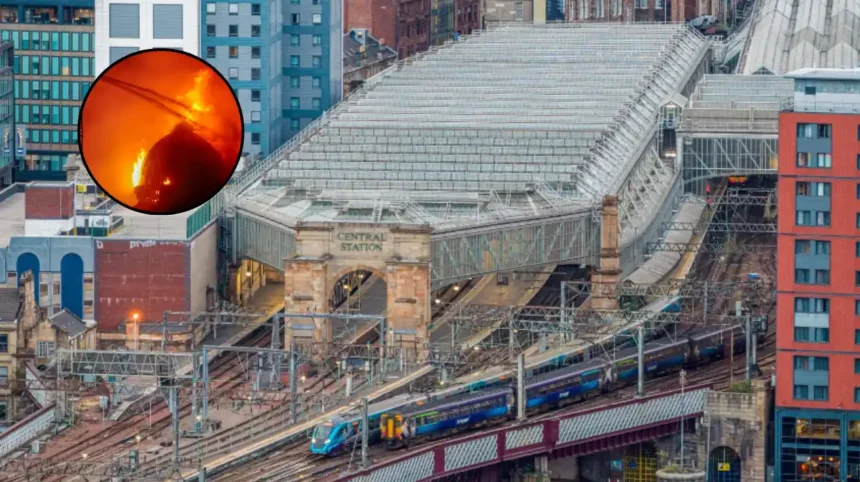
- All platforms at Glasgow Central Station, Scotland’s busiest railway station, fully reopened on Wednesday, March 25, 2026, following a massive blaze.
- Approximately 120,000 passengers have travelled through the station since services resumed to a normal timetable.
- The fire originated in a vape shop on Union Street more than two weeks prior, on Sunday, March 8, 2026, and rapidly spread through a historic Victorian B-listed building, causing partial collapse and major structural damage.
- The blaze led to the complete closure of the station, dozens of train cancellations, and evacuations of nearby hotels and residents.
- Hundreds of firefighters battled the flames for hours to prevent spread to the station and surrounding properties.
- A small exclusion zone remains on the high-level concourse, with Gordon Street and Union Street entrances still closed, as Glasgow City Council conducts remediation work.
- The fire-ravaged historic building on Union Street, known as Union Corner, will be fully demolished for public safety, as confirmed by a full assessment from the council’s building standards team.
- A multi-million pound Union Street Fire Recovery Fund, administered by Glasgow City Council with £10 million from the Scottish Government, opened for small business applications on March 23, 2026.
- National Rail confirmed no timeline initially for reopening, with the station shut until further notice after the fire impacted all services.
- Dramatic footage showed the building engulfed in flames, partial collapses including the southern gable, and ongoing firefighting efforts.
Glasgow Central Station (Glasgow Express) March 28, 2026 – All platforms across Scotland’s busiest railway hub have fully reopened, marking a significant return to normality just over two weeks after a devastating fire ravaged a neighbouring historic building. An impressive 120,000 passengers have passed through Glasgow Central Station since services resumed their normal timetable on Wednesday, underscoring the rapid recovery efforts amid ongoing site restrictions.
What Caused the Devastating Blaze?
The fire erupted in a ground-floor vape shop on Union Street around 3:45pm on Sunday, March 8, 2026, quickly engulfing the four-storey 19th-century Victorian B-listed structure at the corner of Union Street and Gordon Street.
As reported by Sky News correspondents, the blaze forced the immediate closure of Glasgow Central Station, Scotland’s busiest railway facility, with Network Rail stating it would remain shut for at least two days. Emergency crews battled the flames for over four hours, as footage from The Independent captured a building fully ablaze with a large crowd watching on.
Hundreds of firefighters worked tirelessly to contain the inferno and prevent it from spreading to the adjacent station and nearby properties, according to SWNS reporters covering the aftermath.
The Scottish Sun detailed how the fire ripped through a huge section of Glasgow city centre, collapsing a series of buildings next door and prompting evacuations of nearby hotels and residents. BBC News articles noted that the structure partially collapsed several hours after the flames intensified, leading to a complete suspension of train operations with no initial reopening timeline.
How Did the Fire Impact Train Services?
Dozens of trains were cancelled on the evening of March 8, causing widespread disruption for passengers, as confirmed by National Rail and reported extensively across media outlets. Glasgow Central Station, handling the highest volume of rail traffic in Scotland, saw all services halted until further notice, with the closure extending well beyond the initial two days projected by Network Rail.
Daily Record drone footage from March 9 revealed the scale of devastation, with only the facade of the corner building left standing amid lingering smoke, while fire crews used aerial platforms to douse remnants.
The station’s shutdown persisted for more than two weeks, severely affecting commuters, businesses, and travellers reliant on this key hub.
As services finally resumed fully on Wednesday, March 25, the influx of 120,000 passengers highlighted the pent-up demand and the critical role the station plays in Scotland’s transport network. Ongoing closures of the Gordon Street and Union Street entrances, coupled with a small exclusion zone on the high-level concourse, continue to limit access as remediation proceeds.
What Is the Current Status of the Damaged Building?
Glasgow City Council has maintained control of the Union Street site, implementing a small exclusion zone while remediation work continues on the affected structure. On Thursday, March 11, the council confirmed that the fire-ravaged remains of the historic B-listed building must be demolished in the interests of public safety, following a full and final assessment by its building standards team. Evening Standard coverage quoted the council stating:
“We are now in control of the Union Street site, and after a full and final assessment of the remaining structure, our building standards team have decided that demolition must happen in the interests of public safety.”
The building had continued to collapse post-fire, including parts of the southern gable on Tuesday night, March 10, exacerbating risks to the public and infrastructure.
SWNS reporters observed major structural damage and partial collapse in the days following the blaze, which originated in the vape shop and tore through the entire 19th-century edifice. BBC correspondents emphasised the partial structural failure near the station, underscoring the proximity and potential for greater catastrophe.
Who Is Supporting Affected Businesses?
In response to the economic fallout, a multi-million pound Union Street Fire Recovery Fund opened for applications on March 23, 2026, as announced by the Glasgow Chamber of Commerce.
Administered by Glasgow City Council and backed by a £10 million commitment from the Scottish Government, the fund targets local small businesses that lost premises or customer access due to the fire and its aftermath. The initiative aims to aid recovery for those impacted by the destruction of the Union Corner building, providing crucial financial relief amid the disruption.
The Scottish Sun highlighted how an entire block at the Union Street-Gordon Street junction appeared destroyed, affecting multiple businesses in the vicinity. Daily Record journalists noted that many enterprises were obliterated, with one MSP likening the scene to “the Blitz,” amplifying calls for swift support measures.
When Did Full Operations Resume and What Lies Ahead?
All platforms reopened fully on Wednesday, March 25, 2026, allowing the station to handle its standard timetable and welcome 120,000 passengers in the ensuing days.
Despite this milestone, restrictions persist: the Gordon Street and Union Street entrances remain shuttered, and the high-level concourse exclusion zone stays active during council-led remediation. Network Rail’s initial assessment, as per Sky News, projected at least a two-day closure, but the event’s severity extended this significantly.
Looking forward, demolition of the unstable building will proceed once safety protocols are finalised, paving the way for complete site clearance.
The recovery fund’s launch signals ongoing commitment to revitalising the area, with Glasgow City Council overseeing both structural repairs and economic rehabilitation. Footage from various outlets, including Independent TV and YouTube channels from The Scottish Sun and Daily Record, documented the blaze’s ferocity and the heroic firefighting response, serving as a stark reminder of the incident’s gravity.
Why Was the Station’s Reopening Significant?
The swift return to full operations at Glasgow Central Station demonstrates resilience in Scotland’s transport infrastructure, processing 120,000 passengers post-reopening amid peak demand. This hub’s role as the nation’s busiest railway station amplifies the stakes, with the fire’s proximity posing risks to vital services. As remediation advances, the focus shifts to permanent safety enhancements and business revival, ensuring Glasgow city centre rebounds robustly.