Key Points
- Bernadette McCash, sister of Tracey Wylde, has said she will never fully recover from her sister’s 1997 murder, telling podcasters “you never heal, it’s your sister and you never heal”.
- Tracey Wylde, 21, was strangled in her Barmulloch flat in Glasgow in November 1997 while working as a prostitute; her killer, Zhi Min Chen, was not convicted until more than 20 years later.
- Zhi Min Chen, then 22, was sentenced to life imprisonment with a minimum of around 18–20 years after his DNA linked him to Wylde’s killing; earlier reporting noted dissatisfaction from the family over the severity of the sentence.
- The case is now being revisited in Rayo’s new podcast Beware Book, which examines the murders of several women involved in prostitution in Glasgow between 1991 and 2005, some of which remain unsolved.
- The podcast highlights lingering trauma among families, many of whom are speaking publicly for the first time, and renewed calls for Police Scotland to resolve outstanding killings in the city’s red‑light districts.
Glasgow (Glasgow Express) March 30, 2026 – Families of women murdered in Glasgow’s red‑light districts three decades ago are warning that emotional scars never truly fade, as a new podcast series reopens painful memories of killings that shocked the city in the 1990s and early 2000s. In an interview with Rayo’s Beware Book podcast, Bernadette McCash described how the loss of her sister Tracey Wylde – killed in a Barmulloch flat in November 1997 – still feels raw, nearly 30 years on. The case is one of several being re‑examined in the series, which focuses on women involved in prostitution whose deaths have left relatives and detectives grappling with unfinished justice.
- Key Points
- What happened to Tracey Wylde?
- How long did justice take?
- Why does this story still matter?
- How are families still affected?
- What is the podcast’s role in reopening old cases?
- What do experts and advocates say?
- How does Bernadette McCash remember her sister?
- What does this say about justice delayed?
As reported by a Yahoo News UK article dated 29 March 2026, McCash said:
“You never heal, it’s your sister and you never heal… Twenty odd years down the line, you just learn to cope but the heartache is still there.”
The same account notes that she was only 12 when officers arrived at her door to tell her Tracey had been strangled in her Barmulloch flat, an event that instantly thrust her into a media frenzy and a long legal delay before her sister’s killer was convicted.
What happened to Tracey Wylde?
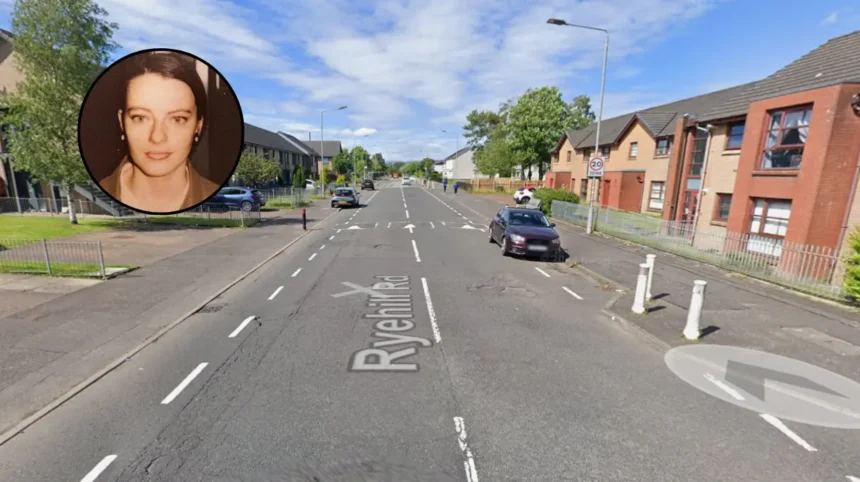
Tracey Wylde, 21, was a mother of a three‑year‑old daughter and was working as a prostitute in Glasgow’s Barmulloch area when she was murdered in November 1997. Neighbours reported hearing a dispute in her flat in the early hours, followed by a loud door slam and rattling keys, before her body was discovered the next day.
As detailed in a 2019 Express report by journalist Emma Innes, investigators collected DNA from Wylde and her clothing, as well as fingerprints from the flat, but the case remained unsolved for nearly two decades.
The key break came when Zhi Min Chen, then 22 and living in the UK as a Chinese national, was later linked to the murder through a DNA match taken after he was arrested for a separate assault.
How long did justice take?
Zhi Min Chen was ultimately sentenced to life imprisonment with a minimum term of around 18–20 years for Wylde’s strangulation, depending on later adjustments reported by the press.
According to a 2019 Express article, McCash stood outside court and told reporters that the family felt let down by the severity of the sentence, saying Chen had spent more years free after the murder than he would now spend in prison.
As reported in a 2026 Independent piece on 29 March, the prolonged gap between the killing and the conviction has left families feeling that the system failed their loved ones for years.
The article notes that Chen was not on investigators’ radar until he was caught in a petty crime, underscoring how easily the case might have remained unsolved.
Why does this story still matter?
The renewed attention comes via Rayo’s podcast Beware Book, launched on the broadcaster’s “Hello Rayo” platform, which describes the series as
“shining a light on a spate of vicious murders which shocked Glasgow between 1991 and 2005”.
The programme highlights that eight women involved in prostitution were killed in that period, and at least four of the cases remain officially unsolved.
According to a Mirror feature published on 28 March 2026, the podcast frames the victims as “young women” who often relied on an informal “beware book” – a shared notebook warning of dangerous clients – to try to protect one another in a city grappling with high unemployment, crime and heroin use.
The article notes that the series includes interviews with families and a former investigating officer, alongside reflections on the unsolved murders and the broader culture of fear among sex workers at the time.
How are families still affected?
In a 24 March 2026 story carried by Hello Rayo, relatives of murdered women are quoted urging Police Scotland to revisit outstanding cases and to listen more closely to families’ long‑standing concerns.
The Mirror’s 28 March report adds that several families have waited decades for answers, with some describing the emotional toll as “a life sentence” of their own.
As relayed in the 29 March Independent article, McCash used the podcast interview to send a message to other families still waiting for justice in similar cases. She is quoted saying:
“Hold onto your hope, don’t lose faith… You may wait 10 or even 20 years but remember this could happen one day. We truly lost hope, thinking it would never occur.”
The same piece includes remarks from Alice Wilson, whose daughter Jacqueline Gallagher was murdered in June 1996 after being last seen on the corner of Bothwell Street and Blythswood Street in Glasgow’s red‑light district.
Wilson tells the podcast that her daughter’s death has left a permanent void, echoing McCash’s sentiment that the grief does not vanish with time.
What is the podcast’s role in reopening old cases?
Rayo’s Beware Book is described on the broadcaster’s website as a series that features
“deeply personal interviews with the victims’ families — many speaking publicly and at length for the first time”.
The show also includes a brand‑new interview with a former investigating officer who worked on the original cases, who speculates on the possible whereabouts of the eponymous “Beware Book” and whether it could still hold clues.
A 29 March Independent article notes that the podcast’s coverage coincides with ongoing public pressure on Police Scotland to explain why some of these killings have never been solved, even as the Emma Caldwell case – another Glasgow murder that took nearly two decades to resolve – was recently concluded with the conviction of Iain Packer.
Commenting on Caldwell’s case, the Independent highlights that officers and former victims have suggested he may have committed further attacks or even more murders, raising wider questions about how the force handled violence against women in that era.
What do experts and advocates say?
As explained in a 22 March 2026 Mirror feature on the four unsolved killings linked to Glasgow’s red‑light districts, campaigners have repeatedly criticised earlier policing tactics, arguing that the sex‑work backgrounds of the victims led authorities to treat some cases with less urgency.
The article quotes advocates who say that stigma and institutional bias may have delayed crucial investigative steps, including cross‑checking DNA and pursuing repeat offenders.
In a 29 March 2026 piece for Yahoo News UK, family members and community advocates are quoted highlighting that the podcast’s resurrection of these stories has at least given them a platform to push for renewed scrutiny. One unnamed advocate is quoted stressing that
“these were human lives, not statistics”,
and that the persistence of grief among sisters, mothers and daughters should be central to any fresh review.
How does Bernadette McCash remember her sister?
In the Beware Book interview, as reported by Yahoo News UK, McCash recalls being shielded at school after her sister’s murder, with staff keeping her inside to protect her from photographers trying to pull her out of class.
“The school kept me inside because the paparazzi were trying to pull me out of school,”
she said, adding that classmates asked if the dead woman in the papers was really her sister.
The same article notes that she turned to memories and photographs of Tracey as a way of coping, urging other grieving relatives to speak openly about their lost loved ones instead of letting silence deepen the pain.
“The pain won’t vanish, but speak about your loved one,”
McCash is quoted advising.
“Look at photos and celebrate their life. If you remain silent, the hurt intensifies.”
What does this say about justice delayed?
The Tracey Wylde case has become emblematic of how forensic advances can bring belated closure, but also of how long families may wait for answers.
A 2019 Express report underscores that Wylde’s murder was only solved after DNA from the 1997 flat‑scene finally matched Chen decades later, a development that both vindicated the family and exposed the limitations of earlier investigations.