
Glasgow’s East End is one of the most exciting and fast‑changing housing markets in the city. With average prices still markedly below the West End and strong regeneration underway, it offers some of the smartest entry‑level opportunities for first‑time buyers, investors, and families looking for space and value. This guide explains the most strategic, evergreen ways to get a house in Glasgow’s East End—without overpaying, over‑extending, or missing the right moment.
- Why Glasgow’s East End Is a Smart Market
- Set Clear Financial Ground Rules
- Target the Right Sub‑Areas Within the East End
- Use the Right Property‑Search Channels
- Adopt a Smart Offer‑Strategy
- Consider New Builds and Shared‑Ownership Schemes
- Leverage the Scottish Buying Process Effectively
- Factor In Long‑Term Affordability, Not Just Entry Price
- Balancing “Cheap” vs “Value” When Choosing a Home
- Keeping Your Search Evergreen and SEO‑Friendly
Why Glasgow’s East End Is a Smart Market
Over the past decade, the East End has shifted from being “the cheaper option” to a genuine long‑term investment play. The average house price in Glasgow as a whole was around £185,000 in January 2026, with flats and maisonettes averaging about £156,000 and terraced homes around £235,000. In many of the East End postcodes, typical sale prices sit well below the Glasgow‑wide average, often in the mid‑five‑figures for flats and under £200,000 for many two‑ or three‑bed terraced and semi‑detached homes.
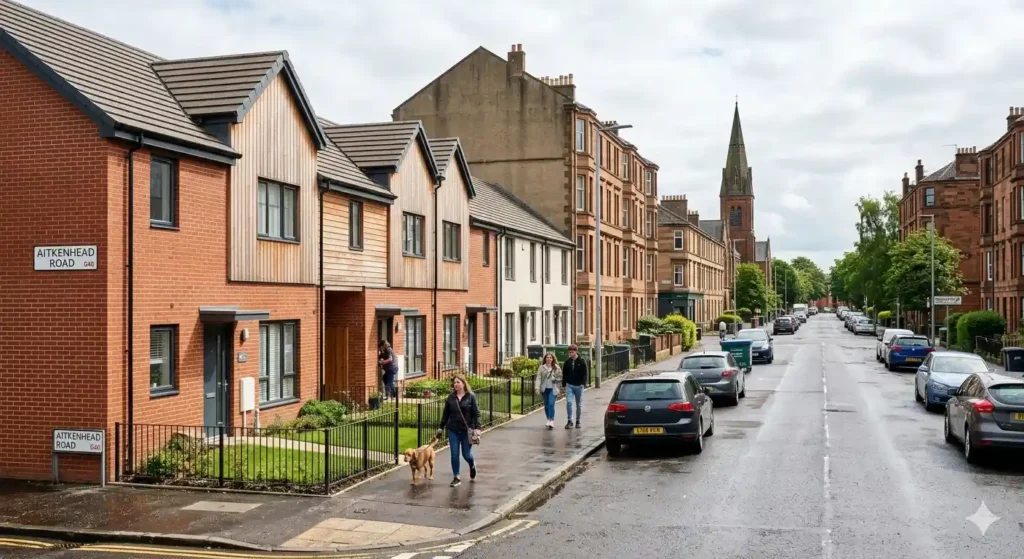
Regeneration schemes, transport upgrades, and new housing developments have steadily lifted demand without pushing prices to West‑End levels. This combination of improving infrastructure, still‑affordable stock, and modest but steady price growth makes the East End a textbook “smart” area to build equity over time rather than simply chase glamour‑premium postcodes.
Set Clear Financial Ground Rules
Before looking at any property, the smartest move is to define your numbers and borrowing profile. The Office for National Statistics reports that first‑time buyers in Glasgow paid an average of about £167,000 in January 2026, while home‑movers paid closer to £228,000. Working out whether you fit closer to the “first‑time buyer” or “home‑mover” profile will shape your budgeting from day one.
You should start by getting a mortgage agreement in principle (AIP) from a lender or broker. This shows you how much you can realistically borrow, flags any credit‑health issues early, and gives you credibility when you make offers. You should also factor in Land and Buildings Transaction Tax (LBTT), solicitor fees, survey costs, and potential repairs, since the East End still has plenty of older housing stock that may need modernisation. Ignoring these “hidden” costs can quickly turn a “cheap” postcode into an expensive decision.
Target the Right Sub‑Areas Within the East End
The East End is not one monolithic market. Prices and prospects vary widely between neighbourhoods such as Dennistoun, Tollcross, Shettleston, Dalmarnock, and areas around the G32 and G40 postcodes. Research local data on sold‑price trends and average days‑on‑market; for example, one analysis of East End sales shows flats typically selling in the low‑to‑mid‑£100,000s while semi‑detached homes often sit around the low‑£200,000s.
Smart buyers focus on three things: proximity to transport hubs, quality of schools, and visible regeneration. Areas close to new infrastructure—such as upgraded rail links, cycle routes, and major redevelopment projects—tend to see stronger long‑term price growth. At the same time, a two‑bed flat in a quieter, well‑maintained road near a good primary school can deliver better capital appreciation and rental returns than a flashier, noisier location with higher maintenance needs.
Use the Right Property‑Search Channels
In 2026, the most effective way to find East End stock is to combine mainstream portals with local agents and direct‑to‑seller listings. National portals such as Rightmove, OnTheMarket, and Yopa list hundreds of properties across Glasgow’s East, including flats, terraced houses, semi‑detached, and larger family homes. These sites allow you to filter by price, bedrooms, tenure, and even “new build” or “auction,” which is useful for spotting discounted or off‑plan deals.
In parallel, working with at‑least one local Glasgow agency can uncover “quiet” listings that have not yet gone fully national. Independent agents often know about homes coming to market before they appear online, and they can help you interpret local quirks, such as communal maintenance charges in older tenements or the impact of nearby regeneration works. Direct‑to‑seller platforms such as Gumtree and Trovit can also surface niche opportunities, though these demand extra due‑diligence around legality and condition.
Adopt a Smart Offer‑Strategy
The Scottish buying process differs from the rest of the UK, so smart East End buyers treat each offer as a calculated negotiation rather than an emotional bid‑war. In Scotland, most homes are sold via a formal “offers over” mechanism, where the seller’s solicitor invites written offers and then negotiates on the buyer’s behalf. The Home Report—a statutory pack containing a survey, energy‑performance certificate, and property questionnaire—is your first technical filter; smart buyers scrutinise this document for structural issues, damp, or outdated systems before committing to a price.
Market data for Glasgow East suggests that final sale prices typically hover very close to the Home Report value, often within about 4–6% above or below the asking mark. This means bidding modestly above the asking price when the property is in good condition and in a desirable sub‑area can be rational, whereas paying a large premium on a property needing substantial work is rarely “smart” unless you have a clear renovation plan and budget.
Consider New Builds and Shared‑Ownership Schemes
For many buyers, especially first‑timers, one of the smartest routes into the East End is through new‑build or shared‑ownership schemes. Developers such as David Wilson and Barratt have launched new‑build projects in and around the East End, offering modern homes with better insulation, lower running costs, and limited‑warranty protection. These schemes often come with incentives such as help‑to‑buy‑style grants, part‑exchange options, or payment plans that ease the initial deposit burden.
Shared‑ownership providers and housing associations also operate in parts of Glasgow, including the East End. These schemes allow you to buy a share of a property (often 25–75%) and pay rent on the remainder, gradually staircasing up to full ownership as your finances allow. For a young professional or first‑time buyer who wants to start building equity in a relatively affordable area, this can be a more sustainable path than stretching for a full‑price flat in a pricier West‑End postcode.
Leverage the Scottish Buying Process Effectively
The Scottish property process is fast, but it rewards preparation. After securing a mortgage in principle, the next step is to make a formal offer through your solicitor, who then negotiates and submits the written offer to the seller’s agent. Once an offer is accepted, the missives (contractual letters) are exchanged, and the sale is legally binding; completion then typically follows within a few weeks.
Smart buyers use this period to book a structural survey, clarify any repair needs flagged in the Home Report, and line up buildings and contents insurance. They also confirm that their mortgage is fully underwritten, since any hiccups in the final valuation or lender requirements can delay completion or even force you to renegotiate the price. Because the East End still has a mix of well‑maintained and older, unmaintained stock, a thorough survey is one of the most cost‑effective “smart” moves you can make.
Factor In Long‑Term Affordability, Not Just Entry Price
An often‑overlooked aspect of buying smartly in the East End is running the numbers on long‑term affordability. The East End’s lower entry prices can be deceptive if energy bills, maintenance, or council‑tax bands turn out to be high. The ONS notes that private rents in Greater Glasgow have been rising steadily, with two‑bed flats now typically renting around £1,088 per month, so a poorly‑insulated tenement or older villa can end up costing far more in utilities than a modern new‑build.
Smart buyers check the EPC (Energy Performance Certificate) rating in the Home Report, look at the age and type of boiler, and consider whether upgrades such as double glazing, insulation, or a new heating system are affordable within their budget. They also assess future demand: properties close to expanding employment zones, better transport links, and improving schools are more likely to retain or grow in value over a decade than those in stagnant pockets.
Balancing “Cheap” vs “Value” When Choosing a Home
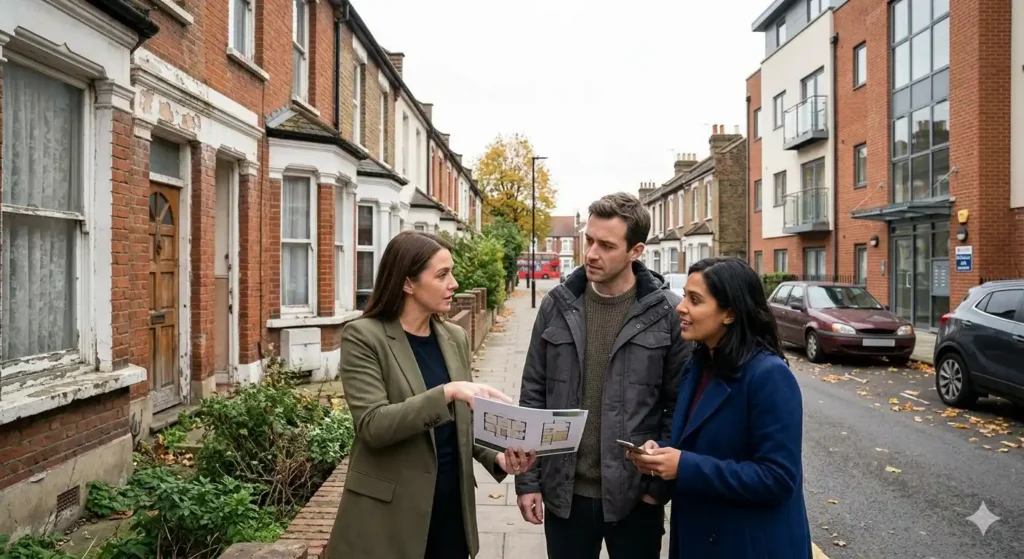
Many East End searches begin with the question: “How cheap can I get?” Yet the smartest approach focuses on “value” rather than just headline price. A flat in a well‑managed, modern block with a lift, security, and parking may cost more up front than a similar‑size flat in a run‑down tenement, but it will likely be easier to let, easier to sell, and cheaper to maintain over time.
Conversely, a terraced or semi‑detached house in need of cosmetic work can be an excellent value‑add opportunity if you have the budget and skills to refurbish kitchens, bathrooms, and the front/rear. In both cases, the key is aligning the condition and layout of the property with your long‑term goals: short‑term rental, long‑term investment, or family home.
Keeping Your Search Evergreen and SEO‑Friendly
For readers of Glasgow‑focused content, this East End strategy is designed to be evergreen: average prices change, but the core logic—knowing your borrowing capacity, targeting the right sub‑areas, using the right search tools, negotiating intelligently, and prioritising long‑term value over headline‑price temptation—remains constant. In the context of SEO, this article naturally incorporates key phrases such as “cheap houses in Glasgow East End,” “buying a house in Glasgow East,” “East End Glasgow property prices,” and “first‑time buyer homes in Glasgow,” which mirror real user searches.
By combining up‑to‑date market data, local context, and practical, step‑by‑step guidance, this guide can hold its ranking for years as long as the underlying processes in Scottish property law and Glasgow’s East End regeneration remain broadly stable. For your audience on Glasgow Express, the value is not just in “how to get a house” but in how to get a house in the East End in the smartest, most sustainable way possible.
Are there houses for sale in Atlantic Village, Glasgow East End?
Yes, Atlantic Village in Glasgow’s East End regularly has homes listed, including modern family houses and flats.