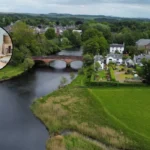
Nestled in the northwest quadrant of Glasgow, Maryhill stands as a vibrant district where industrial heritage meets modern regeneration. This evergreen slice of Scotland’s largest city offers residents and visitors alike a rich tapestry of history, green spaces, and cultural landmarks that continue to captivate. From its canal-side origins to contemporary community hubs, Maryhill embodies the resilient spirit of Glasgow’s north side.
- The Origins and Rise of Maryhill
- Iconic Landmarks Shaping Maryhill’s Identity
- Architectural Treasures and Architectural Diversity
- Communities and Daily Life in Maryhill
- Modern Economy and Regeneration Efforts
- Demographics and Cultural Vibrancy
- Green Spaces and Outdoor Pursuits
- Sports, Entertainment, and Notable Figures
- Living, Visiting, and Investing in Maryhill Today
The Origins and Rise of Maryhill
Maryhill’s story begins in the 18th century on the lands of the Gairbraid estate, owned by Hew Hill, who had no male heirs and passed it to his daughter Mary Hill in 1730. Mary married Robert Graham of Dawsholm, and together they struggled to profit from coal mines on the property until the Forth and Clyde Canal’s approval in 1768 transformed the landscape. The canal sliced through their estate, bringing boat-building, saw-milling, iron-founding, and trade that turned scattered houses into a bustling village of 3,000 by 1830.
The canal’s completion in the 1790s, including the impressive Kelvin Aqueduct and a series of locks known as Maryhill Locks, solidified the area’s industrial footing. Textile mills, glassworks, rubber manufacturing, and breweries flourished, drawing workers from across Scotland and beyond. By 1856, amid this growth, Maryhill declared itself an independent police burgh, complete with a police office on Maryhill Road and later the grand Burgh Halls designed by Duncan McNaughtan in 1878. This status reflected the community’s push for self-governance, evidenced by petitions in local archives demanding better street cleanliness, public health measures, and order.
Absorption into Glasgow in 1891 marked the end of burgh independence but not its momentum. The arrival of the Glasgow, Dumbarton, and Helensburgh Railway in the 1850s, coupled with the Loch Katrine aqueduct nearby, fueled further expansion. Even ancient echoes persist: remnants of the Antonine Wall, a Roman frontier from the 2nd century, run through Maryhill Park, including a fort site and bath-house visible today.
Iconic Landmarks Shaping Maryhill’s Identity
At the heart of Maryhill lies the Forth and Clyde Canal, a 32-mile engineering marvel that once linked Scotland’s east and west coasts. In Maryhill, it features dramatic locks descending steeply, now a rejuvenated pathway for walkers and cyclists via the Forth to Firth Canal Pathway. Efforts since the canal’s decline have restored it for navigation, with a new footbridge at Stockingfield Junction in 2022 enhancing links to neighborhoods like Ruchill and Gilshochill.
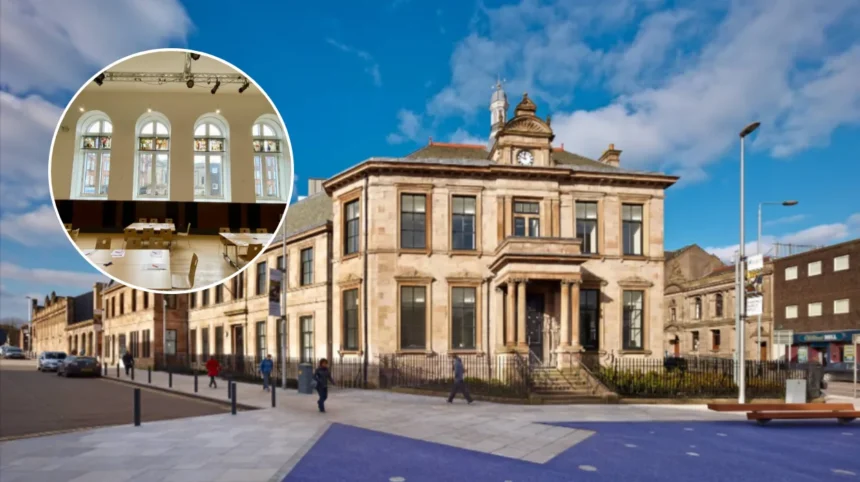
The Maryhill Burgh Halls complex stands as a testament to Victorian ambition. Restored in a £9.2 million project, it houses a heritage center showcasing 20 stained-glass windows by Stephen Adam from 1878, depicting local trades from weaving to ironwork. Adjacent former baths, a fire station, and police buildings form a listed ensemble now pulsing with community life, including exhibitions, workshops, and events that celebrate Maryhill’s past.
Firhill Stadium anchors the area’s sporting soul. Home to Partick Thistle Football Club since 1909, this venue in the Firhill sub-district has hosted Scottish Championship matches, temporary homes for clubs like Clyde and Queen’s Park, and even rugby union’s Glasgow Warriors until 2012. Maryhill F.C. and Maryhill Harriers, Glasgow’s oldest athletics club, further embed sport in the locale’s fabric.
Military history lingers at the site of Maryhill Barracks, opened in 1876 on Ruchill estate lands covering 30 acres with parade grounds, a hospital, and chapel. Housing regiments like the Highland Light Infantry and notably holding Rudolf Hess during World War II, it closed in the 1960s. Today, the Wyndford estate occupies the ground, preserving the gatehouse and wall as echoes of that era.
Architectural Treasures and Architectural Diversity
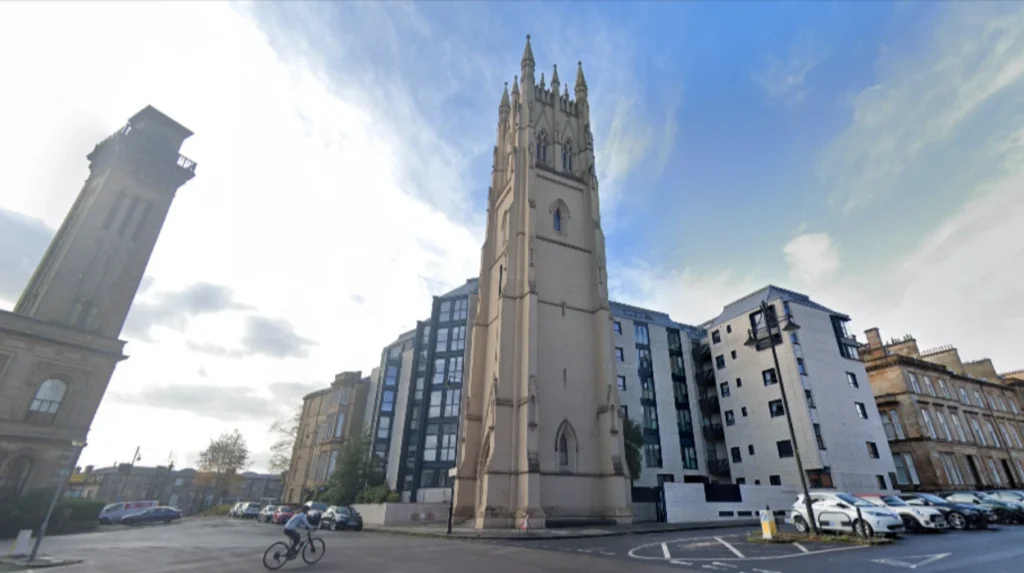
Maryhill’s built environment blends sandstone tenements, Victorian townhouses, and bold modernism. Traditional high-ceilinged tenements line Maryhill Road, the A81 artery stretching three miles from city center to Bearsden, evoking classic Glaswegian style. Queen’s Cross features Charles Rennie Mackintosh’s Queen’s Cross Church, now headquarters for the Mackintosh Society, while Ruchill Church Hall bears his design too.
High-rise contrasts define estates like Wyndford and Gairbraid, where 26-storey towers mix with low-rise homes for nearly 5,000 residents. Regeneration continues: in June 2024, plans advanced for new homes on cleared sites between Gilshochill and Summerston, turning derelict mid-20th-century blocks into sustainable housing. Housing associations like Maryhill Housing Association build energy-efficient flats, such as 16 units on Smeaton Street in Ruchill, blending social rent with aspirational transfers.
Maryhill’s first Carnegie library, designed by James Robert Rhind, exemplifies early public architecture, while the former Maryhill Primary School on Viewmount Drive—once Glasgow’s highest street—has been repurposed into modern flats honoring its C-listed facade with new terraced wings.
Communities and Daily Life in Maryhill
Maryhill’s wards, like the multi-member Maryhill Ward (formerly Maryhill/Kelvin), elect diverse councillors including SNP’s Abdul Bostani and Franny Scally, and Labour’s Keiran O’Neill. Represented in Holyrood by Bob Doris and Westminster by Patrick Grady for Glasgow North, the area fosters active civic engagement.
Sub-districts add flavor: Botany, once dubbed “The Butney” for its rough reputation tied to canal laborers or a long-gone school name, has seen renewal with modern apartments and spots like the rebranded Café Ibiza bar. Maryhill Park offers middle-class Victorian semis near the canal locks, while North Kelvinside, Acre, and Dawsholm Park provide varied vibes from working-class roots to greener enclaves.
Daily life pulses along Maryhill Road, with buses like 17, 60, and X10 linking to the city, and Maryhill railway station serving the northwest. Temperance societies arose here in Victorian times to curb street lawlessness, a nod to the area’s spirited past now channeled into community pride.
Modern Economy and Regeneration Efforts
Historically working-class, Maryhill has shifted: by 2013, professional services outpaced manufacturing and construction. Of the 18,770 working-age residents in 2011, 13,237 were economically active, though income deprivation hovers at 25%, slightly above Glasgow North West’s 24%.
Regeneration drives progress. Glasgow City Council’s green infrastructure plan for North Maryhill targets vacant sites for vibrant neighborhoods with climate-resilient spaces, better walking, cycling paths, and connectivity. Maryhill Burgh Halls Trust aims to revive the halls as a community hub for arts, skills training, and events, boosting participation and confidence.
Housing associations invest heavily, exploring sites for new developments while maintaining stock. Maryhill Science Park hints at innovation potential, accessible via ScotRail and buses.
Demographics and Cultural Vibrancy
Maryhill’s population blends tradition and diversity. The broader Glasgow Maryhill and Springburn constituency held 73,493 in 2015, with the Maryhill/Kelvin ward at 27,125 in 2013; recent ward data shows 20,313 total, 16,702 White, 1,470 Asian, 1,181 African/Caribbean, and more.
Over 14,000 Scotland-born residents anchor the community, with growing European and other inflows. Age-wise, 14,061 are 18-64, supporting a dynamic workforce. Cultural hubs like the Burgh Halls host exhibitions, walks, and tours, while events such as the Maryhill Flag Community Weekend celebrate local identity.
Green Spaces and Outdoor Pursuits
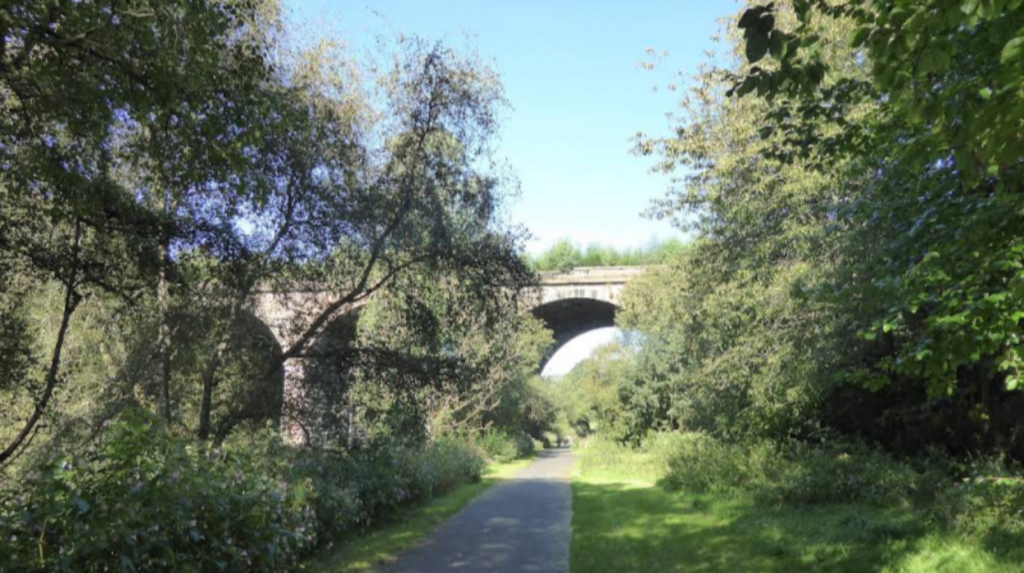
Maryhill’s natural assets shine in its parks. Maryhill Park, spanning 20 acres, invites walkers and runners through lush paths, a serene counterpoint to urban energy. The canal towpaths offer extended hikes, linking to the Millennium Link restoration project.
Ruchill and nearby greens support biodiversity, with council plans enhancing resilience. Maryhill Lochs hosted the 2017 Red Bull Neptune Race, underscoring recreational appeal. These spaces foster health, community gatherings, and quiet reflection amid the district’s evolution.
Sports, Entertainment, and Notable Figures
Firhill Stadium thrills with Partick Thistle matches, a fixture since the club’s move from Partick. Local clubs like Maryhill Harriers promote athletics, embedding fitness in community life.
Maryhill’s media footprint includes Taggart episodes, Trainspotting scenes at Jaconelli’s café, and Chewin’ the Fat filming. Icons hail from here: actor Robert Carlyle, singer Donovan, footballer Bertie Auld, blues-rocker Maggie Bell, and politician Jamesina Anderson, among others like Sean Biggerstaff and Charlie Nicholas.
Living, Visiting, and Investing in Maryhill Today
Maryhill endures as Glasgow’s northwest heartbeat, where canal locks whisper of industrial glory, parks invite escape, and regeneration promises brighter tomorrows. Families find solid schools and housing mixes, professionals access services, and history buffs explore endlessly. For Glaswegians and newcomers, it offers authentic charm without the city center bustle—evergreen allure in a changing world.
Whether strolling Maryhill Road, catching a match at Firhill, or tracing Roman walls, this district rewards discovery. Its story, from Mary Hill’s naming covenant to today’s green visions, cements Maryhill as a cornerstone of Glasgow’s enduring legacy.