Key Points
- National Recognition: Time Out has officially named The Laurieston in Bridgegate/Gorbal area as one of the best pubs in the United Kingdom.
- Preserved Heritage: The pub’s interior remains virtually untouched since a major redesign in 1965, featuring original Formica counters, timber cladding, and vintage memorabilia.
- Famous Pint: Renowned across Scotland for serving one of the highest-rated pints of Guinness, maintaining precise draught temperature and pouring traditions.
- Cultural Landmark: Celebrated as a historic community hub that spans generations, attracting locals, tourists, and architectural enthusiasts alike.
- Listing Status: Designated as a Category Clisted building by Historic Environment Scotland for its rare and intact mid-century pub design.
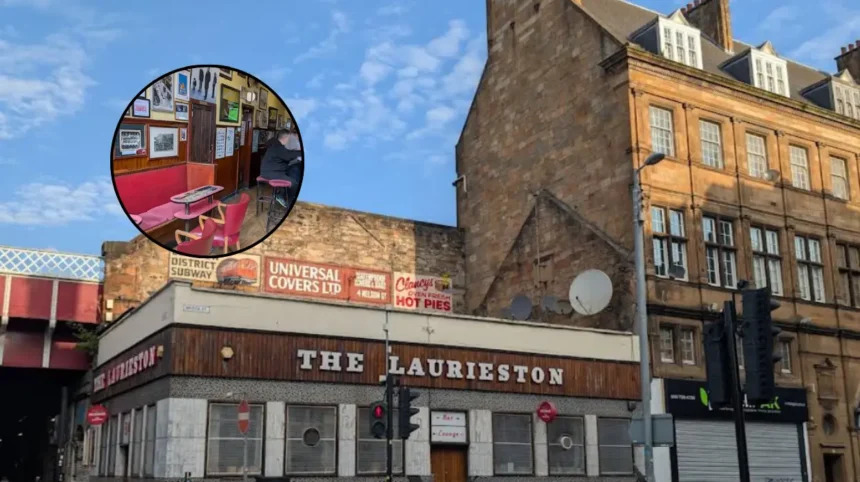
Glasgow (Glasgow Express) August 8, 2026 — The Laurieston Bar, an iconic traditional pub situated on Bridgegate near the River Clyde, has been formally named one of the top public houses in the United Kingdom by global cultural authority Time Out. Celebrated for its perfectly poured Guinness and an unyielding commitment to its mid-twentieth-century aesthetic, the family-run venue continues to serve as an enduring monument to classic Scottish pub culture amidst a rapidly evolving city landscape.
- Key Points
- Why Has The Laurieston Received National Acclaim?
- What Makes Their Guinness Stand Out Across Glasgow?
- How Has the Venue Preserved Its 1960s Interior Intact?
- Who Visits This Historic Gorbal Landmark?
- Background of the Particular Development
- Prediction: How This Development Can Affect the Local Audience and Industry
Why Has The Laurieston Received National Acclaim?
The recognition from Time Out highlights the venue’s unvarnished authenticity in an era where traditional drinking establishments are increasingly undergoing modern refurbishments. The publication’s assessment focused heavily on the atmosphere created by its preserved mid-century fittings, fair pricing, and a long-standing reputation for cellarmanship.
Patrons entering the establishment step directly into the mid-1960s. The bar features a distinctive horseshoe-shaped counter covered in original Formica, warm timber paneling, vintage vinyl seating, and retro jukebox selections.
The layout divides the venue into a traditional public bar and a lounge area, maintaining the classic spatial organization once standard across urban Glasgow public houses.
What Makes Their Guinness Stand Out Across Glasgow?
While traditional pubs rely heavily on atmosphere, The Laurieston has gained a dedicated following specifically for the standard of its draught stout.
Beer enthusiasts and critics frequently cite the establishment as serving the finest pint of Guinness in Glasgow, an achievement attributed to short line lengths from the cellar, meticulously maintained draught equipment, and steady product turnover.
The bar staff adhere strictly to standard two-stage pouring methods, serving the stout in clean, room-temperature glassware at precise cellaring temperatures.
This attention to detail has transformed the Gorbal-adjacent pub into a primary destination for draught stout connoisseurs across the central belt of Scotland.
How Has the Venue Preserved Its 1960s Interior Intact?
The current appearance of The Laurieston stems from a comprehensive redesign undertaken in 1965. Unlike many contemporary establishments that updated their decor over subsequent decades, the custodians of The Laurieston chose to maintain every structural and decorative detail.
What Architectural Features Are Included in the Historic Listing?
Historic Environment Scotland granted the property Category C listed status due to the rarity of surviving 1960s pub interiors. Key architectural features preserved inside the building include:
- Original Formica Counters: Curved, hard-wearing counter surfaces fitted during the 1965 refit that show remarkably little wear despite decades of heavy daily use.
- Mid-Century Lighting: Vintage overhead light fixtures and wall sconces that cast a soft, warm amber glow throughout the public bar.
- Integrated Picture Framing: Wall-mounted display cases displaying local historical imagery, vintage beer coasters, and neighborhood memorabilia accumulated over half a century.
- Classic Jukebox Setup: A functional, non-digital jukebox loaded with classic tracks, serving as the main source of ambient music in place of modern audio systems.
Who Visits This Historic Gorbal Landmark?
The demographic profile of The Laurieston is notable for its breadth. On any given day, the public bar hosts a mixture of long-time local residents from the Gorbals, university students, visiting tourists following national pub guides, and architectural historians documenting post-war commercial interiors.
The pub serves as an informal community archive. Regular patrons note that conversation remains the primary form of entertainment, facilitated by the absence of loud televisions or modern digital distractions. The staff maintain a welcoming atmosphere that balances neighborhood hospitality with accommodation for first-time visitors seeking out the famous establishment.
Explore More Area Guide
Best Free Glasgow Museums & Galleries Guide | Glasgow 2026
Free Bus Travel for Under 22 Students Scotland Explained 2026 | Glasgow
Background of the Particular Development
The Laurieston sits on a site that has accommodated licensed premises since the nineteenth century, serving the working-class communities living near the River Clyde docks and surrounding tenement districts.
The neighborhood underwent massive urban clearance and redevelopment projects during the late twentieth century, which saw much of the original housing stock demolished and replaced.
Despite the sweeping transformation of the surrounding area, the pub survived intact. Its internal redesign in 1965 coincided with a period when Scottish pubs were shifting from basic, functional drinking shops to more comfortable spaces featuring carpeted lounges and modern laminate surfaces.
By retaining this specific design iteration without modification through the 1980s, 1990s, and 2000s, the venue transitioned from simply being an older pub to an irreplaceable historical artefact.
In recent years, traditional Scottish public houses have faced unprecedented financial pressures, rising operational costs, and changing social habits, leading to widespread closures across major cities.
The national recognition of venues like The Laurieston highlights a growing appreciation among consumers and heritage bodies for authentic, unmodified hospitality spaces that offer a distinct sense of place.
Prediction: How This Development Can Affect the Local Audience and Industry
The national recognition of The Laurieston is expected to have several distinct impacts on different segments of the local community and the wider hospitality industry:
The increased profile will likely bring a steady influx of new visitors from outside the neighborhood. While this economic support helps secure the financial viability of the venue, it may alter the traditional quiet atmosphere enjoyed by long-time regulars during peak trading hours.
However, given the venue’s historical commitment to local hospitality, the core community functions of the bar are expected to remain solid.
The endorsement from a global platform positions the Gorbals and Bridgegate area as an essential stop for heritage and culinary tourism.
This can drive foot traffic to neighboring businesses and cultural venues south of the Clyde, encouraging tourists to explore areas outside the immediate city center.
The ongoing success of The Laurieston provides a clear commercial argument for preserving historic pub interiors rather than modernizing them.
Publicans across Scotland may view this national acclaim as incentive to retain original mid-century or Victorian fittings, recognizing that authentic heritage and quality service represent a powerful competitive advantage in the modern market.