Glasgow, Scotland’s largest city, masterfully blends its industrial heritage with expansive green havens that offer residents and visitors alike a refreshing escape from urban hustle. These green spaces, ranging from historic parks to botanical wonders, play a vital role in enhancing quality of life, promoting biodiversity, and supporting community well-being. This evergreen guide explores the rich tapestry of Glasgow’s parks and gardens, highlighting their history, unique features, and enduring appeal for locals exploring “green spaces in Glasgow.”
- Historical Roots of Glasgow’s Green Legacy
- The Strategic Role of the Green Belt
- Kelvingrove Park: A Victorian Masterpiece
- Glasgow Botanic Gardens: Botanical Excellence
- Pollok Country Park: Glasgow’s Premier Country Escape
- George Square: Urban Green Heart
- Lesser-Known Treasures and Country Parks
- Health and Community Benefits Explored
- Activities and Seasonal Delights
- Preserving Glasgow’s Green Future
Historical Roots of Glasgow’s Green Legacy
Glasgow’s commitment to green spaces traces back to the Victorian era, when rapid industrialization prompted civic leaders to prioritize public recreation amid dense urban growth. In the mid-19th century, as the city expanded westward, forward-thinking officials acquired land to create accessible parks, addressing the need for fresh air and leisure for the burgeoning middle class and working population.
The establishment of early parks like Kelvingrove Park in 1852 marked a pivotal moment, with designs influenced by renowned landscaper Sir Joseph Paxton, known for his work at Chatsworth House. This era saw Glasgow’s town council invest significantly—over £99,000 for Kelvingrove alone, equivalent to millions today—to transform former estates into public realms, setting a precedent for municipal environmentalism that continues to define the city’s landscape.
By the late 1800s, international exhibitions in these spaces, such as the 1888 International Exhibition in Kelvingrove, showcased Glasgow’s ambition, drawing global attention while temporarily enhancing the parks with elaborate pavilions and fountains. This historical interventionism not only preserved green corridors but also embedded them into the city’s cultural fabric, ensuring their protection through strategies like those outlined in Glasgow City Council’s Open Space Strategy.
The Strategic Role of the Green Belt
Encircling Glasgow, the green belt serves as a crucial buffer against urban sprawl, safeguarding open land and directing sustainable growth. Established as part of broader regional planning, including the Glasgow and the Clyde Valley Strategic Development Plan, it protects separation between communities, supports regeneration, and maintains environmental objectives like low-carbon living.
This policy has preserved vast areas around the city, preventing encroachment and fostering habitats for wildlife while providing recreational trails for cyclists and walkers. In practical terms, it ensures that developments prioritize brownfield sites, allowing green lungs to thrive and contribute to Glasgow’s identity as a green city within Scotland’s urban network.
The green belt’s effectiveness is evident in comparisons with other Scottish cities, where Glasgow ranks highly in accessible greenspace per capita, underscoring its role in balancing population density with natural preservation.
Kelvingrove Park: A Victorian Masterpiece
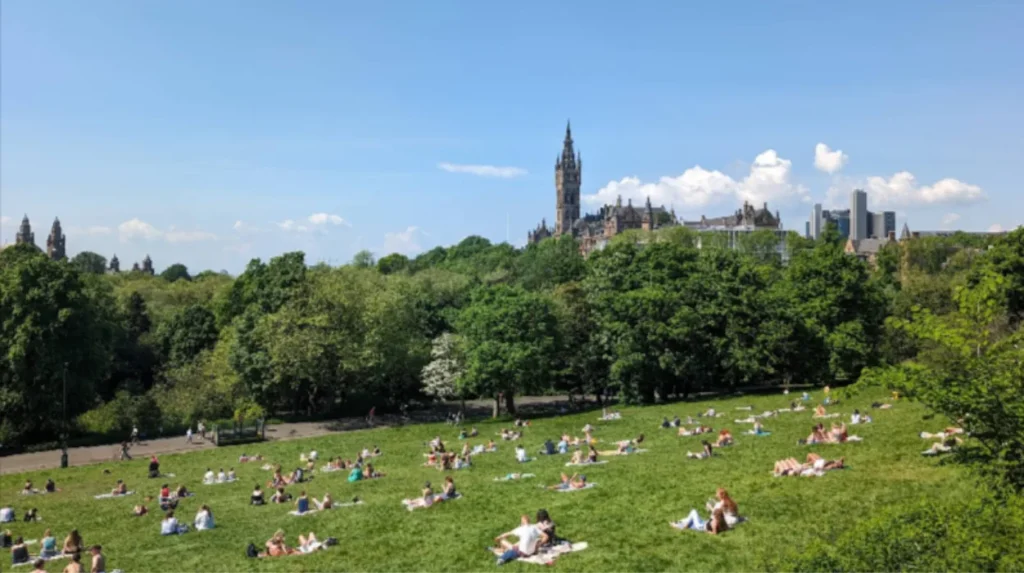
Nestled along the River Kelvin in Glasgow’s West End, Kelvingrove Park spans 34 hectares and stands as one of the city’s most cherished green spaces. Opened as the West End Park in 1852, it was designed primarily by architect Charles Wilson and surveyor Thomas Kyle, with input from Paxton, to offer respite from the slums near Glasgow Green.
The park’s diverse terrain, contouring a large hill, supports a vibrant ecosystem with sightings of grey herons, kingfishers, otters, and red foxes, making it an urban wildlife sanctuary. Flanked by the University of Glasgow and home to the iconic Kelvingrove Art Gallery and Museum, it attracts joggers, dog-walkers, and tourists via nearby subway stations like Kelvinbridge.
Monuments like the Stewart Memorial Fountain, a granite-and-bronze tribute to clean water provision from Loch Katrine, add historical depth, while the restored 1924 bandstand hosts summer festivals featuring acts like Teenage Fanclub. The Suffrage Oak, planted in 1918 to celebrate women’s voting rights, symbolizes social progress amid its natural splendor.
Glasgow Botanic Gardens: Botanical Excellence
Tucked in the West End, the Glasgow Botanic Gardens have flourished since 1817, founded by botanist Thomas Hopkirk with University of Glasgow support on an initial eight-acre site at Sandyford. Relocated to its current 42-acre home by 1840, it serves as a living classroom, supplying plants for medical studies and showcasing global flora.
Managed today by the Friends of Glasgow Botanic Gardens, the site features 15 glasshouses, including the renowned Kibble Palace with its Victorian fernery and exotic orchids. Pathways wind through themed areas like the Chronometer Garden, highlighting plant evolution, offering serene strolls year-round.
This green space emphasizes conservation, with rare species and educational programs that engage visitors in biodiversity preservation, solidifying its status as a must-visit for nature enthusiasts in Glasgow.
Pollok Country Park: Glasgow’s Premier Country Escape
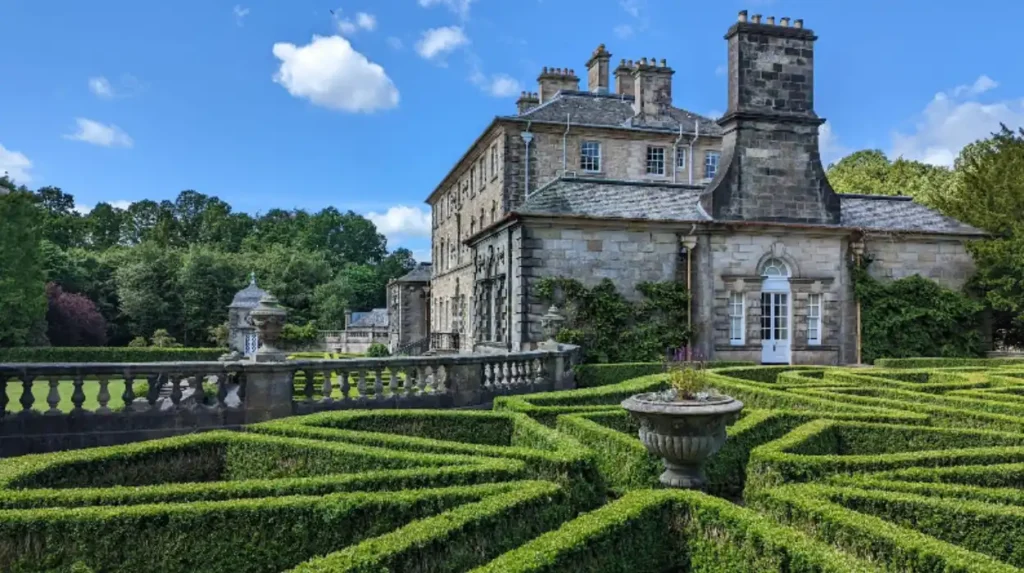
As Glasgow’s largest green space at over 800 acres, Pollok Country Park in the south side captivates with its ancient woodland and Highland cows roaming free. Rooted in 800 years of Maxwell family history—the 11th baronet fought at the 1568 Battle of Langside—the estate was gifted to the city in 1966 by Anne Maxwell Macdonald, alongside Pollok House.
The park cradles The Burrell Collection and features the White Cart Water, ideal for woodland walks and spotting fairy houses or dinosaur bones, delighting families. Its country park designation ensures protected status, blending history with modern amenities like cycle paths and adventure play areas.
Visitors appreciate its scale for peaceful hikes, picnics, and events, embodying Glasgow’s shift from industrial past to green future.
George Square: Urban Green Heart
At Glasgow’s civic core, George Square functions as a verdant public realm amid towering statues and architecture. Developed in the 1850s, it honors King George III and serves as a gathering spot for events, markets, and protests, with manicured lawns contrasting its statues of figures like Queen Victoria and Sir Walter Scott.
Refurbished in recent years, the square integrates sustainable planting and seating, enhancing its role as a daily green oasis for city workers and tourists. Its central location near Buchanan Street makes it an accessible entry point to Glasgow’s broader green network.
Lesser-Known Treasures and Country Parks
Beyond the stars, Drumchapel Country Park in the northwest offers rugged trails through woods once tied to industrial blowing engines, providing panoramic city views and quiet reflection. Other hidden gems include Victoria Park with its palm trees and rose gardens, and Queen’s Park in the south, known for its rugby pitches and community vibe.
These spaces extend the green belt’s reach, offering diverse experiences from wild meadows to formal layouts, ensuring every Glaswegian neighborhood benefits.
Health and Community Benefits Explored
Glasgow’s green spaces significantly boost physical and mental health, with studies showing improved access correlates to lower stress and higher activity levels. Proximity to parks encourages walking and cycling, combating urban health challenges amid Scotland’s city rankings.
Community initiatives, like Fields in Trust protections for 27 sites, underscore their social value, fostering inclusivity and events that strengthen bonds. Environmentally, they mitigate flooding via river corridors and support pollinators, aligning with COP26 legacies hosted in Glasgow.
Research highlights how these areas reduce air pollution and promote biodiversity, making Glasgow a model for urban greening.
Activities and Seasonal Delights
Spring bursts with cherry blossoms in Botanic Gardens, while summer bandstand concerts in Kelvingrove draw crowds. Autumn foliage in Pollok enchants hikers, and winter illuminations transform parks into festive wonders.
Year-round pursuits include yoga sessions, birdwatching, and guided tours, with cycling networks linking spaces for immersive adventures. Families thrive on playgrounds and trails, ensuring enduring appeal.
Preserving Glasgow’s Green Future
Ongoing council strategies and community groups like Friends of Kelvingrove safeguard these assets against climate pressures. Investments in restoration, such as bandstands and fountains, paired with green belt policies, promise sustainability.
Volunteering opportunities abound, inviting locals to nurture this legacy, keeping Glasgow’s green spaces vibrant for generations.
Glasgow’s green spaces weave nature seamlessly into city life, offering timeless havens that elevate everyday experiences. Whether strolling Kelvingrove’s paths or exploring Pollok’s woods, these areas invite discovery, affirming the city’s green soul.