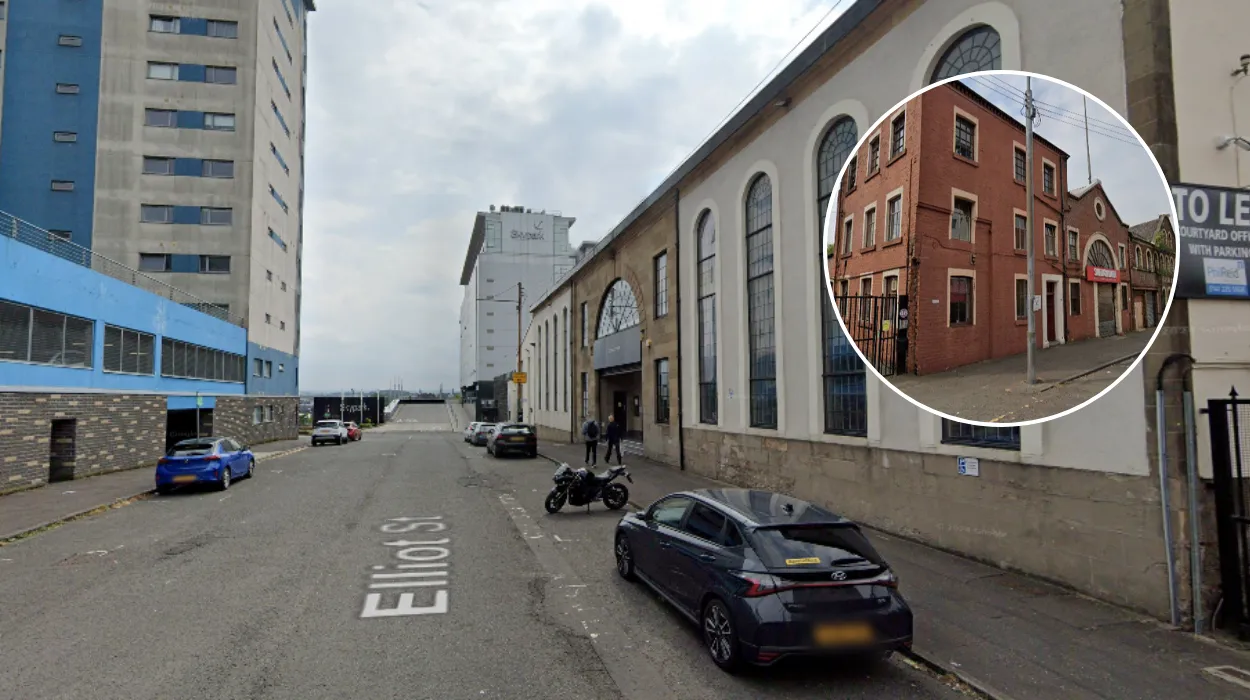
Anderston Glasgow stands as a dynamic corner of Scotland’s largest city, blending rich industrial heritage with modern urban revival. Nestled on the north bank of the River Clyde, this area captivates with its evolution from a weavers’ village to a bustling hub of commerce and community life.
- Origins of Anderston Glasgow
- Industrial Boom in 19th Century Anderston
- Challenges and Redevelopment in the 20th Century
- Modern Revival and Regeneration
- Iconic Landmarks Shaping Anderston’s Identity
- Connectivity and Daily Life in Anderston
- Community and Cultural Fabric Today
- Notable Figures from Anderston Glasgow
- Exploring Anderston: Why Visit Today
Origins of Anderston Glasgow
The story of Anderston Glasgow begins in the early 18th century amid the expansive Bishop’s Forest lands west of medieval Glasgow. Granted to the Bishop of Glasgow by King James II in 1450, these territories included the Stobcross Estate, owned by the Anderson family from the mid-16th century, where they constructed Stobcross House—a mansion later demolished in 1875 for Queen’s Dock.
In 1725, James Anderson of Stobcross House feued unproductive land for weavers’ cottages, naming the settlement Anderson Town, which evolved into Anderston. Centered near Gushet Farm—now the site of Anderston Cross under the Kingston Bridge—this village featured bleachfields by the Clyde and rows of weavers’ homes along Main Street. Ownership shifted to John Orr in 1735, spurring growth as trade flourished.
By the late 18th century, Anderston thrived with industries like the Delftfield Pottery from 1748, Anderston Brewery in the 1760s, and Verreville Glassworks in 1776. The first church, Anderston Relief Church on Heddle Place, rose in 1770 to serve the expanding population of around 3,900 by 1794. Nearby estates like Hydepark and Lancefield inspired enduring street names as urbanization advanced.
Industrial Boom in 19th Century Anderston
The 19th century marked Anderston Glasgow’s transformation into an industrial powerhouse, fueled by Glasgow’s cotton surge and Clyde proximity. Henry Houldsworth pioneered a steam-powered spinning mill on Cheapside Street in the early 1800s, complemented by the 1809 Cranstonhill reservoir drawing Clyde water.
Elevated to Burgh of Barony status in 1824 with a population nearing 10,000, Anderston elected its first council led by Provost Henry Houldsworth. The motto Alter Alterius Auxilio Veget—”the one flourishes by the help of the other”—reflected communal spirit, though independence ended with Glasgow’s incorporation in 1846 under John Houldsworth.
Shipbuilding, iron-founding, engineering, and toolmaking proliferated, alongside whisky bonds, grain stores, and timber yards near the docks. Bakeries like Cranstonhill (1865) and Bilsland (1882) emerged, as did Thomas Lipton’s inaugural shop on Stobcross Street in 1871. Irish immigrants swelled numbers, comprising a quarter by 1831, prompting solid stone tenements and churches such as St Mark’s Lancefield (1850), St Patrick’s RC (1850), and Anderston Parish (1865).
Challenges and Redevelopment in the 20th Century
Anderston retained a village-like identity into the mid-20th century, with local shops, cinemas, and tight-knit communities fostering strong bonds. World War II air raids in May 1941 damaged buildings on Finnieston, Hill, Hydepark, and Lancefield Streets, underscoring vulnerabilities.
Post-1945, the Bruce Report drove Comprehensive Development Areas to tackle slums. Designated in 1961, Anderston’s plan bisected the area into Commercial, Residential, and Industrial Zones, carving through Anderston Cross for the M8 motorway. Demolitions in the 1960s displaced residents to suburbs like Knightswood and Easterhouse, slashing population from 31,902 in 1951 to 9,265 by 1971.
Tragedies struck: a 1960 Cheapside Street whisky bond explosion killed 14 firemen and five salvage workers; a 1968 James Watt Street factory blaze trapped 22. The Anderston Centre’s underpasses became notorious for vice in the 1980s, while the Kingston Bridge and M8 reshaped the landscape.
Modern Revival and Regeneration
Entering the 21st century, Anderston Glasgow rebounded with Glasgow’s financial district boom, sprouting sleek offices, hotels like Hilton and Marriott, and luxury residences. Tower blocks, once slated for demolition, were refurbished by Glasgow West Housing Association, reclad to harmonize with new builds.
Sanctuary Scotland’s multi-phase Anderston Regeneration, partnering with Glasgow City Council and Scottish Government, delivered 542 social-rent homes in tenement-style blocks from four to seven storeys. Phases 1-3 earned awards for masterplanning, community engagement, and fuel-poverty combat via high environmental standards, integrating retail, cycle paths, and Clyde links.
By 2011, demolitions like Shaftesbury Tower restored Argyle Street’s grid, featuring an Andy Scott statue of Charles Rennie Mackintosh. Population in Yorkhill and Anderston rebounded 33% from 1996-2012 to 10,775, with minority ethnic groups doubling to 26%—above Glasgow’s average—while life expectancy rose, though trailing city norms.
Iconic Landmarks Shaping Anderston’s Identity
The Pyramid at Anderston, originally Anderston Kelvingrove Parish Church, exemplifies brutalist architecture from 1968 redevelopment. This Category B-listed community centre at 759 Argyle Street, now owned by The Pyramid at Anderston Trust since 2019 via Scottish Land Fund, boasts 22 rooms, halls, and a stained-glass Sanctuary. Renovations, including £1.1 million from National Lottery and Glasgow City Heritage Trust grants, preserve its concrete bell tower and fascias.
Anderston Cross, once the village heart with trams until 1962 and a station closed in 1959, now lies beneath the M8’s Kingston Bridge—a symbol of lost heritage amid progress.
Stobcross-era remnants like the Savings Bank on Washington Street (1899-1900) by James Salmon Junior and J Gaff Gillespie showcase thrift motifs with Henry Duncan’s bust. Bonded warehouses from 1896-1907, once the world’s largest, highlight whisky trade legacy.
Connectivity and Daily Life in Anderston
Anderston railway station, opened 1896 by Glasgow Central Railway, closed 1959, then reopened 1979 on the Argyle Line post-M8 demolition. This underground island platform, refurbished in 2022 with new lifts and finishes, offers frequent ScotRail services: 2tph to Dalmuir, Milngavie, Whifflet/Motherwell, Larkhall; Sundays to Balloch.
Proximity to Glasgow Central (1-minute trains), buses, and M8 ensures seamless city access, ideal for financial district workers and tourists near Riverside Museum.

Community and Cultural Fabric Today
Anderston’s schools nurture diversity: Anderston Primary (1973, Port Street), St Patrick’s RC Primary (1962, Perth Street), and Glasgow Gaelic School (1999, Berkeley Street). Sports include Anderston Athletic in Glasgow Colleges FA Division 2.
The area’s vibrancy shines in regeneration’s community focus, from housing to hubs like The Pyramid hosting events. Ethnic diversity enriches life expectancy gains and urban renewal.
Notable Figures from Anderston Glasgow
Anderston birthed icons like comedian Billy Connolly (1942), Labour leader Arthur Henderson (1863-1935, Nobel Peace laureate), tea magnate Thomas Lipton (1848-1931), Speaker Michael Martin (1945-2018), and singer Eddi Reader (1959). Others include actor Roddy McMillan (1923-1979), boxer Peter Keenan (1928-2000), and politician Johann Lamont (1957).
Exploring Anderston: Why Visit Today
Anderston Glasgow merges history with modernity, from Pyramid tours to regenerated streets linking Clyde paths. Its resilient spirit, industrial echoes, and contemporary edge make it essential for Glasgow enthusiasts seeking authentic urban tales.