

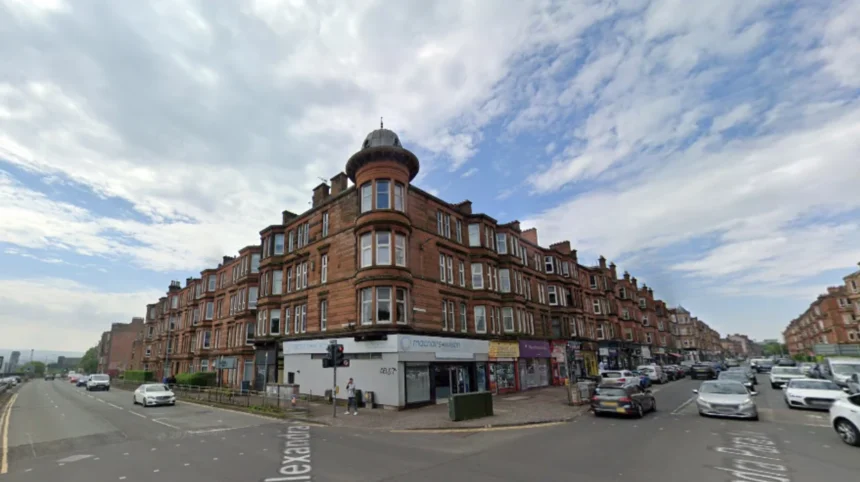
Dennistoun is one of Glasgow’s most overlooked neighbourhoods because it combines a strong local identity, historic tenements, green space, and fast access to the city centre, yet it stays less promoted than the West End and Southside. Its reputation rose sharply after Time Out ranked it the UK’s coolest neighbourhood in 2020.
- What is Dennistoun in Glasgow?
- Why is Dennistoun considered underrated?
- What is the history of Dennistoun?
- What makes Dennistoun attractive to residents?
- How good is Dennistoun for transport?
- What role does Alexandra Park play in the area?
- How has Dennistoun changed over time?
- What evidence supports the idea that Dennistoun is rising in profile?
- Is Dennistoun good value compared with Glasgow’s better-known areas?
- What should buyers, renters, and visitors know about Dennistoun?
- So, is Dennistoun Glasgow’s most underrated neighbourhood right now?
What is Dennistoun in Glasgow?
Dennistoun is a mostly residential district in Glasgow’s East End, about 1.25 miles east of the city centre, with a distinct street grid, tenement housing, parks, and local shops that give it a self-contained urban character.
Dennistoun sits in the G31 postal area and forms part of Glasgow’s east-side urban fabric. Understanding Glasgow describes the neighbourhood as having a population of 11,305, which places it firmly in the category of a medium-sized inner-city district rather than a small local enclave.
Its identity comes from its role as a planned suburban extension of Victorian Glasgow. The Glasgow Story records that the area was originally made up of country estates before development began in the 19th century, and that Alexander Dennistoun’s land purchases gave the neighbourhood its name.
Why is Dennistoun considered underrated?
Dennistoun is considered underrated because it offers central-city convenience, historic housing, parks, and local amenities without the higher profile or pricing pressure associated with Glasgow’s most marketed districts.
The neighbourhood has long sat in the shadow of Glasgow’s West End, Merchant City, and Southside. Those areas dominate city branding, while Dennistoun keeps a lower public profile despite strong local interest, especially from residents who value its independent feel. Time Out described it as a “secluded island” with “a sense of independence unlike any other corner of this city.”
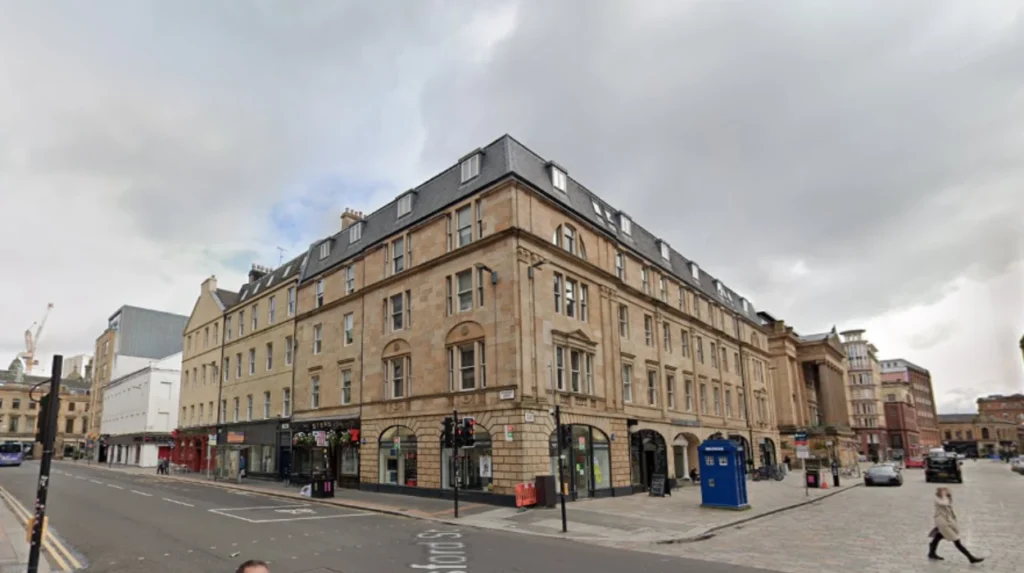
The area also attracts attention because it balances character and practicality. Local commentary and feature coverage repeatedly highlight affordable housing, pubs, cafes, community initiatives, and a walkable layout. That mix creates a strong value proposition for people who want urban living without a premium central address.
What is the history of Dennistoun?
Dennistoun developed from former merchant estates into a planned middle-class suburb in the 19th century, and that origin still shapes its architecture, street pattern, and civic identity today.
The Glasgow Story explains that by the 1830s the area consisted of country estates owned by wealthy Glasgow merchants. In 1838, John Reid began acquiring land to build a new middle-class suburb, and later Alexander Dennistoun expanded that vision and left his name on the district.
That historical pattern matters because the neighbourhood was designed as housing for an expanding city, not as a rural village absorbed later. As a result, Dennistoun has wide streets, traditional tenements, and a stronger sense of planned urban form than many newer districts.
The area’s historical class profile also explains its current appeal. It retains substantial late-19th and early-20th-century housing stock, which supports the long-standing image of Dennistoun as a place with architectural character and a recognisable local grain.
What makes Dennistoun attractive to residents?
Dennistoun attracts residents through its combination of tenement housing, local shops, food venues, green space, and direct links to central Glasgow, which creates a practical and livable inner-city environment.
The housing stock is one of its main strengths. Dennistoun is known for traditional Glasgow tenements, which support high ceilings, compact urban streets, and the dense neighbourhood feel many city residents prefer. That housing form also reinforces walkability and active street life.
The local food and social scene adds another layer. Time Out’s 2020 profile praised pubs, cultural activity, and community initiatives, while later commentary continued to describe the area as strong on everyday amenities rather than purely destination attractions.
Green space is another major attraction. Alexandra Park is located in Dennistoun, spans about 42 hectares, and opened in 1870. It gives the neighbourhood a major public park at walking distance from the residential core, which is rare in an inner-city setting.
How good is Dennistoun for transport?
Dennistoun has strong transport access because it is close to Glasgow city centre and served by rail and bus connections, including Duke Street station in the neighbourhood itself.
ScotRail lists Duke Street station directly on Duke Street in Dennistoun, confirming rail access within the neighbourhood. National Rail also identifies the station as Duke Street, Dennistoun, Glasgow City G31 1LL.
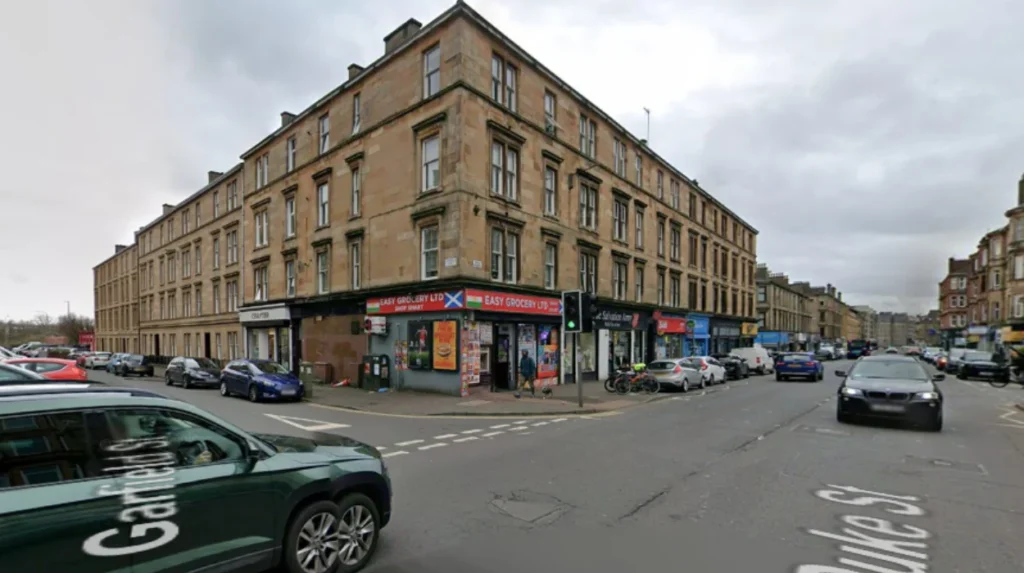
Route-planning data shows that Glasgow Central to Dennistoun is a short trip by train, bus, taxi, or foot, with rail from Queen Street Low Level to Bellgrove taking only minutes. That matters because fast access to the city centre increases a neighbourhood’s usefulness for commuters, students, and hybrid workers.
Transport access is a core reason Dennistoun performs well as a residential area. The neighbourhood is close enough to central Glasgow to support daily commuting, yet far enough east to maintain its own local identity.
What role does Alexandra Park play in the area?
Alexandra Park is a defining asset for Dennistoun because it provides large-scale green space, recreation, and views that are unusual for an inner-city neighbourhood.
The park opened in 1870 and is operated by Glasgow City Council. It is about 42 hectares, or 100 acres, making it one of the most substantial public parks in the East End.
Its importance is practical as well as visual. Parks improve access to outdoor exercise, family recreation, and everyday leisure, and in Dennistoun the park anchors local life rather than sitting on the fringe of the neighbourhood.
The presence of a major park also strengthens the area’s image in housing searches. Buyers and renters often prioritise green space, and Alexandra Park gives Dennistoun a measurable advantage over denser districts with weaker access to public open land.
How has Dennistoun changed over time?
Dennistoun has shifted from a historically working-class and middle-class mixed district into a more varied inner-city neighbourhood with students, professionals, long-term residents, and new housing pressure.
Time Out and other local coverage noted that the area’s demographic mix changed over the past decade, especially with an influx of students. That shift reflects a wider Glasgow pattern in which centrally located neighbourhoods become more attractive to younger renters seeking shorter commutes and distinctive housing.
Understanding Glasgow’s local profile also shows age structure change. It notes 2,753 children and young people aged 0–24 and reports shifts in several age groups since 2011, which indicates that Dennistoun remains demographically active rather than static.
This evolution matters because neighbourhood reputation often lags behind reality. Dennistoun is still associated by some people with older images of the East End, while current media coverage presents a more mixed, more liveable, and more sought-after place.
What evidence supports the idea that Dennistoun is rising in profile?
Dennistoun has gained profile through national media recognition, local community activity, and a growing reputation for independent urban living in Glasgow’s East End.
The most visible signal was Time Out naming Dennistoun the eighth coolest neighbourhood in the world in 2020 and the highest-ranked in the UK. That ranking put Dennistoun into wider public discussion beyond Glasgow, which still affects search interest and perception today.
Community institutions also matter. The Dennistoun Community Council publishes planning responses, local development commentary, and action-plan material, showing organised civic engagement rather than a purely passive residential district.
That combination of media visibility and active neighbourhood governance is important for evergreen audience interest. It shows that Dennistoun is not just a trendy label; it is a functioning urban community with ongoing planning, transport, and public-space issues.
Is Dennistoun good value compared with Glasgow’s better-known areas?
Dennistoun often appears better value than Glasgow’s most famous districts because it delivers central access, character housing, and a strong neighbourhood identity without the same level of prestige pricing or tourist pressure.
Glasgow’s best-known inner areas, such as the West End and Merchant City, receive more marketing attention and broader name recognition. Dennistoun offers a different proposition: historic housing, a local community feel, and access to major services without requiring a premium lifestyle postcode.
Value is not only about purchase price. It also includes time saved in commuting, access to amenities, and day-to-day convenience. Dennistoun performs strongly on those measures because it is close to the city centre and has transport links, shops, parks, and local institutions.
For many households, that combination defines real value more accurately than branding. Dennistoun’s appeal rests on utility, character, and urban accessibility rather than on status alone.
What should buyers, renters, and visitors know about Dennistoun?
Dennistoun suits people who want an urban Glasgow neighbourhood with local identity, practical transport, traditional housing, and a substantial park, while keeping expectations grounded in a real residential district rather than a polished lifestyle zone.
Buyers and renters should understand that Dennistoun is primarily residential. That means the area’s strengths come from everyday liveability: walkable streets, rail access, local shops, and a recognisable community structure. It is not built around a single flagship attraction.
Visitors should start with Alexandra Park, Duke Street, and the residential side streets that show the area’s tenement character. Those places explain the neighbourhood better than any generic city guide because they reveal how Dennistoun functions as a lived-in part of Glasgow.
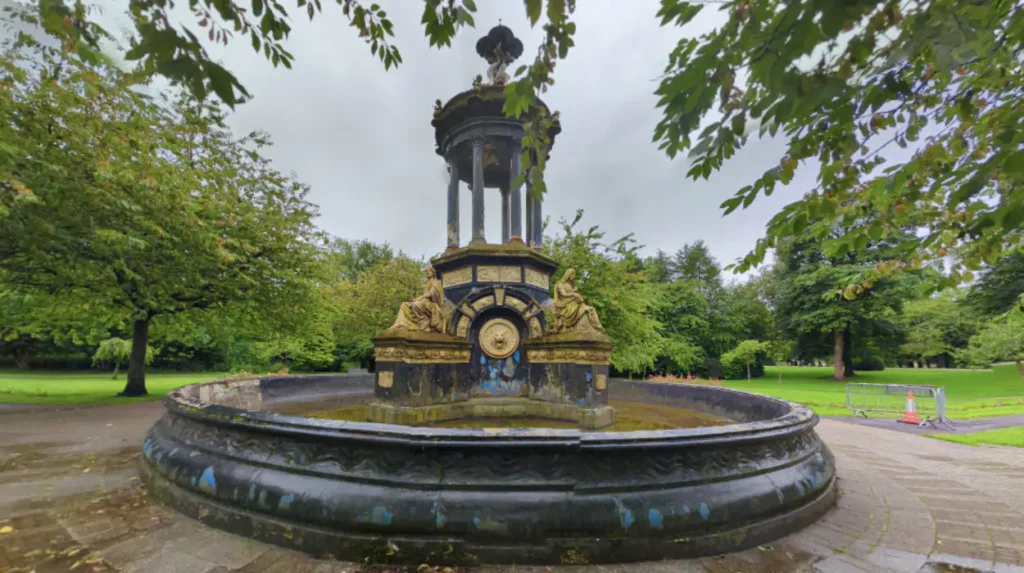
Local planning activity also deserves attention. Dennistoun Community Council has recently engaged with traffic management and parking proposals, showing that access, movement, and public realm remain live issues in the area.
So, is Dennistoun Glasgow’s most underrated neighbourhood right now?
Dennistoun fits the description of Glasgow’s most underrated neighbourhood because it combines history, green space, transport, and community identity while still receiving less mainstream attention than the city’s most promoted districts.
The case is strongest when “underrated” means overlooked relative to quality. Dennistoun has a clear historical identity, a population large enough to support services, direct rail access, a major park, and a growing national profile. Those features make it more substantial than a passing trend.
It stays underrated because many outside Glasgow still describe the city through the West End, Merchant City, and Southside. Dennistoun remains one of the best examples of an area with strong real-world appeal that has not always received equal attention in broader city narratives.
If the question is about lived experience rather than branding, Dennistoun ranks very high. Its combination of heritage, convenience, community, and open space makes it one of the most credible answers to the question of where Glasgow’s hidden value sits today.