

Key Points
- Silent Night received 42% of votes in a nationwide Postcode Lottery poll.
- O Come, All Ye Faithful finished second with 25%.
- The study surveyed 2,015 people and found eight in 10 believed carol singing had declined.
- Sixty-five per cent wanted more carol singers on their streets, while 57% preferred traditional carols to festive pop songs.
- The carol was first performed in Austria on Christmas Eve in 1818 and has since been translated into about 300 languages and dialects.
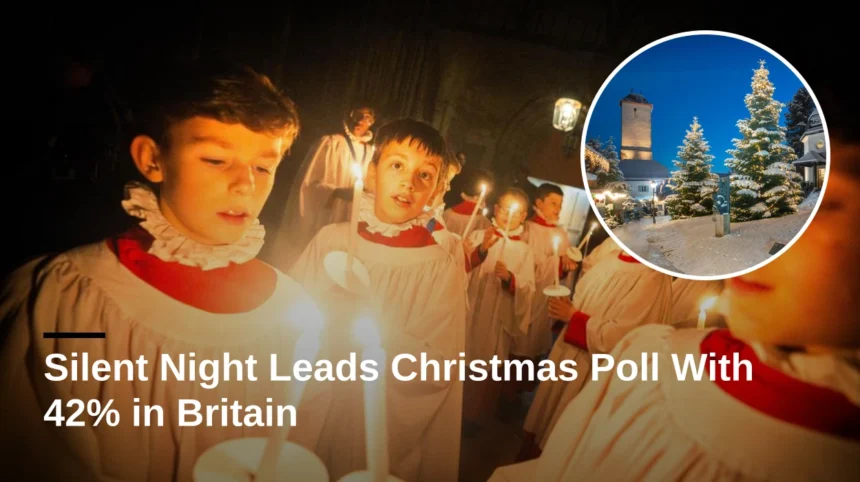
Anderston (Glasgow Express) November 27, 2026 – Silent Night has been named Britain’s favourite Christmas carol after receiving 42% of votes in a nationwide poll commissioned by Postcode Lottery. The 19th-century ballad finished ahead of O Come, All Ye Faithful, which received 25%, while Away in a Manger and Hark! The Herald Angels Sing each secured 23%.
The survey of 2,015 people also examined attitudes towards carol singing and traditional Christmas music. Eight in 10 respondents said carol singing had declined in recent years, while 65% said they wanted more carol singers on their streets.
As reported by The Independent, 57% of respondents said they preferred traditional carols to festive pop songs performed by artists including Wham!, Slade and Mariah Carey. A separate report by Daily Mail said 86% of those surveyed associated carol singers with feeling Christmassy.
What did the Postcode Lottery say about carol singing?
David Miller, communications director at Postcode Lottery, said Christmas was about bringing people together and that festive singing strongly supported that tradition.
“Our research shows how much we still love these traditions,” David Miller said.
The comments were reported by The Independent and followed the publication of the survey findings.
How did Silent Night become a Christmas carol?
Silent Night was written after damage to a church organ left it unavailable for a Christmas Eve service at St Nicholas Church in Oberndorf, Austria, according to the account cited in reports about the carol.
Father Joseph Mohr asked Franz Gruber to compose music for a poem Mohr had written two years earlier. The carol was arranged for choir and guitar and first performed on Christmas Eve in 1818.
It was translated into English in 1863 and was later sung by soldiers during the Christmas truce of 1914. The carol has since been translated into about 300 languages and dialects and received UNESCO Intangible Cultural Heritage status.
How could the result affect Silent Night’s audience?
The poll result may reinforce Silent Night’s appeal among people who favour traditional carols and community singing, particularly the 57% who preferred traditional Christmas music to festive pop songs. The findings may also encourage more public and neighbourhood performances for the 65% who wanted additional carol singers on their streets. For listeners who value the carol’s history, its association with the 1818 performance and the 1914 Christmas truce could add to its continuing cultural significance.