Key Points
- Three-quarters of nearly 145 surveyed businesses said rejoining the European Union would have the most positive effect on their business.
- Only 10 per cent backed maintaining the current approach to relations with the European Union.
- Andy Burnham is due to attend a United Kingdom–European Union summit in Brussels on November 20, 2026.
- Expected agreements cover food and agricultural trade, emissions trading and youth mobility.
- The consultation identified border costs and paperwork as businesses’ leading concerns.
Inverted pyramid:
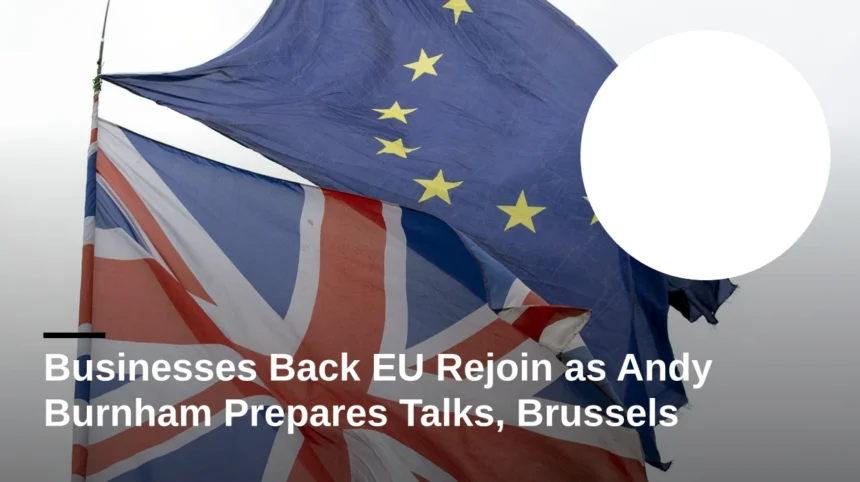
Brussels (Glasgow Express) November 18, 2026 – British businesses have overwhelmingly backed the United Kingdom rejoining the European Union, according to a United Kingdom Trade and Business Commission consultation published as Prime Minister Andy Burnham prepares for talks with European leaders in Brussels. Three-quarters of nearly 145 respondents said renewed membership would have the most positive effect on their businesses, while 10 per cent supported maintaining the current approach to relations with the bloc. The summit on November 20 is expected to address food and agricultural trade, emissions trading and a youth mobility scheme.
What did businesses say about the United Kingdom’s relationship with the European Union?
The Independent reported that companies of different sizes, including small and medium-sized businesses, sole traders and major corporations, described rejoining the European Union as the best outcome for growth. Respondents identified Brexit-related costs and border paperwork as their main problems, with one in three ranking those issues as their top priority.
The consultation found that only four per cent of businesses selected freedom to set an independent trade policy as their top priority, while one per cent chose regulatory independence. Winterwood Farms Ltd owner Steve Taylor told The Independent that delays and paperwork had made it impossible for his company to continue exporting short-shelf-life soft fruit to the Netherlands.
Peter Norris, chair of Virgin Group and a member of the United Kingdom Trade and Business Commission, said closer ties with the European Union, including discussion of membership, had become a crucial condition for business success. Lillian Jones, the commission’s chair and a Labour Member of Parliament, said businesses wanted future arrangements to remove barriers and support growth across the country.
What agreements are expected at the Brussels summit?
Andy Burnham is expected to pursue agreements covering food and agricultural trade, emissions trading and youth mobility. The Independent reported that the youth arrangement would make it easier for people under 30 from the United Kingdom and European Union countries to live and work in each other’s territories.
ITV News reported that Burnham said any agreement would prioritise opportunities for British young people. The BBC reported that the proposed package would represent closer cooperation rather than immediate rejoining of the European Union.
Burnham has said the British public would ultimately decide whether the country pursued membership or another relationship with the bloc. The proposed agreements could increase United Kingdom gross domestic product by 0.4 per cent, according to reporting cited by The Independent and other outlets.
What has Andy Burnham said about Brexit?
According to The Independent, Burnham told Members of Parliament that the Brexit agreement negotiated by Boris Johnson had not been good enough for Britain. He criticised Conservative Members of Parliament who continued to defend the agreement and said closer European ties could bring growth to the British economy.
Former Labour leader Neil Kinnock described the business findings as rational and patriotic, arguing that renewed access to the United Kingdom’s nearest major market would support stability, security and opportunity. The Cabinet Office was approached for comment, according to The Independent.
What is the background to the development?
The United Kingdom left the European Union after the 2016 referendum and subsequently established a trading relationship involving additional checks and documentation. The consultation was launched after Burnham’s government said it would consider options for the country’s future relationship with the bloc. Earlier analysis cited by The Independent found declines in exports of chemicals, pharmaceuticals and agrifood products after Brexit. The Centre for European Reform attributed falls in those sectors partly to new trade barriers, while economist Nick Bloom separately estimated a substantial economic cost from lost trade, red tape and delays.
How could the talks affect businesses and young people?
If concluded, agreements on food and agricultural trade could reduce checks and delays for exporters, while cooperation on emissions trading could link British and European carbon markets more closely. A reciprocal youth mobility scheme could widen work and travel opportunities for young people in the United Kingdom and European Union, although opponents have warned that European workers could compete for entry-level jobs. The business consultation indicates that companies would welcome measures that reduce border friction, but the longer-term effect will depend on the final terms and implementation. The summit is therefore likely to influence future debate about whether limited cooperation is sufficient or whether businesses will continue pressing for a much closer relationship with the European Union.