Key Points
- Former Oakley Mayor Zane Woolstenhulme narrowly defeated Republican Tiara Auxier in Utah House District 4.
- Don Rogers, editor and publisher of The Park Record, described the result as a source of hope after the election.
- Former Midway Mayor Celeste Johnson also won a close race in District 59.
- Republican United States Representative Mike Kennedy retained his congressional seat and emphasised working across party lines.
- Election coverage showed a stronger Democratic performance in Utah, although Republicans retained most congressional seats.
Inverted pyramid:
- Key Points
- Why did Zane Woolstenhulme’s victory matter to Don Rogers?
- What did Don Rogers say about the election’s wider meaning?
- How did Mike Kennedy respond to the changed political landscape?
- What is the background to the Utah election results?
- Could this election encourage more constructive journalism?
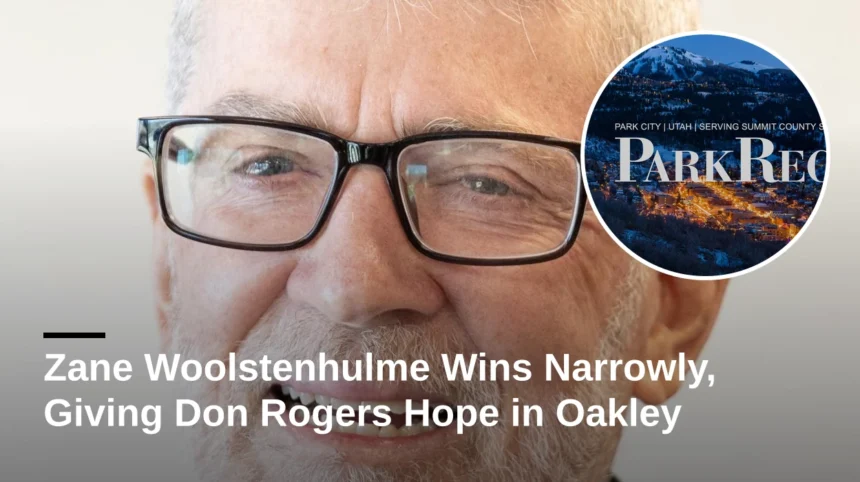
Oakley (Glasgow Express) November 18, 2026 – Former Oakley Mayor Zane Woolstenhulme narrowly defeated Republican Utah House Representative Tiara Auxier in House District 4, a result The Park Record editor and publisher Don Rogers identified as a rare source of hope after an election marked by significant political change. Woolstenhulme’s victory was reported after a close count covering Summit, Morgan and Rich counties, while former Midway Mayor Celeste Johnson also defeated Wasatch County Councilor Luke Searle in District 59.
Why did Zane Woolstenhulme’s victory matter to Don Rogers?
In a November 18 article titled “Journalism Matters: Where I find hope from this election”, Don Rogers wrote that he was particularly pleased by Woolstenhulme’s win. Rogers said he had expected the former mayor to face the same defeat experienced by many Utah Democrats on election night, but Woolstenhulme instead secured a narrow victory over Tiara Auxier, an incumbent who had entered the seat by appointment.
Rogers also highlighted Celeste Johnson’s victory over Luke Searle. He linked both contests to a broader shift that reduced the Republican supermajority in the Utah House, although the Republican Party retained control of the state Senate.
What did Don Rogers say about the election’s wider meaning?
Rogers wrote that voters may have been influenced chiefly by household costs, particularly fuel and groceries, rather than by legislation or wider political issues. He questioned whether voters were paying sufficient attention to the day-to-day work of lawmakers.
He also criticised what he described as national political conduct involving tariffs, immigration enforcement, appointments and personal enrichment, while stressing that his confidence in the Democratic Party remained limited. Rogers said Republicans had earned electoral punishment in his view, but he did not present the Democratic Party as an unquestioned alternative.
How did Mike Kennedy respond to the changed political landscape?
Rogers described a conversation with United States Representative Mike Kennedy at a private gathering and said Kennedy had worked to build relationships with Democrats during his first term. Rogers interpreted that approach as both personal and practical, given that congressional majorities can change even when one party is dominant in a state legislature.
State Senator Todd Weiler, who leads the Sutherland Institute, introduced Kennedy as a work-focused lawmaker rather than a showman, according to Rogers. Kennedy later said he was determined to meet the challenges of the next two years, work with others where possible and stand firm when necessary.
Separate election coverage reported that Kennedy won the Utah congressional contest, while Democrat Jonny Larsen performed more strongly than recent Democratic candidates in the district. The final district breakdown cited by the Sanpete Messenger was 54 per cent for Kennedy, 39 per cent for Larsen and 7 per cent for minor-party candidates.
What is the background to the Utah election results?
Zane Woolstenhulme announced his campaign for Utah House District 4 in January 2026 and defeated Republican incumbent Tiara Auxier in the general election. Local reporting described the race as exceptionally close before remaining Summit County ballots gave Woolstenhulme an advantage of nearly 600 votes and about three percentage points.
The wider election also produced stronger Democratic results in Utah’s congressional contests, although Republicans retained three of the state’s four seats. Coverage of the congressional results said Ben McAdams won the First District, while Blake Moore, Mike Kennedy and other Republicans secured victories elsewhere.
Rogers is the editor and publisher of The Park Record, which published the commentary. His article focused on personal relationships between politicians and the possibility that practical cooperation could produce results despite partisan disagreement.
Could this election encourage more constructive journalism?
The development gives journalism a clear role in examining how close local races are decided, how voters assess legislative performance and whether elected officials cooperate after campaigns end. Rogers’s account places particular emphasis on direct contact with politicians and on reporting the human relationships behind public decisions.
Woolstenhulme’s victory, Johnson’s win and Kennedy’s stated willingness to work across party lines may create opportunities for coverage focused on policy outcomes rather than political spectacle. The election also demonstrates why local reporting remains necessary: statewide trends can obscure narrow contests whose consequences are felt directly by communities.