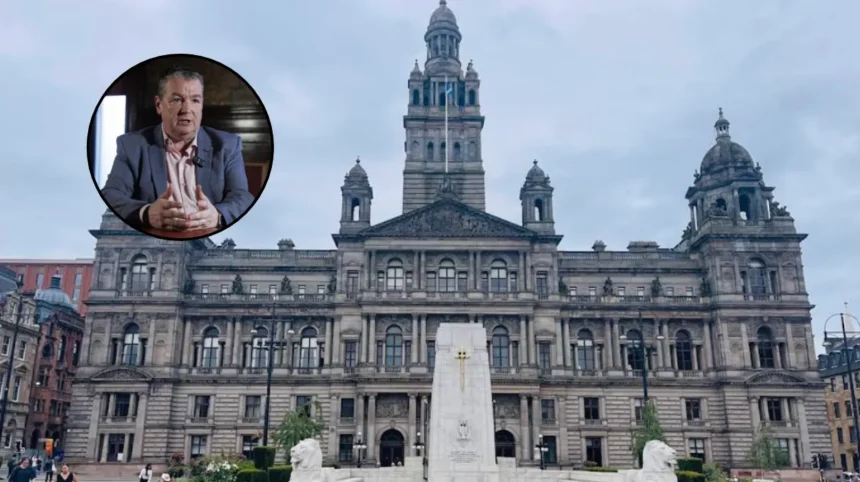
Key Points
- Glasgow City Council leader Ricky Bell has stated that Glasgow “hasn’t had its fair share” of funding from the UK Budget.
- Bell has formally called for greater economic powers to be devolved to the Glasgow region.
- The council leader warned that Glasgow risks falling behind English city regions, which have already secured increased control over local investment and economic development.
- New fiscal powers and targeted funding are deemed necessary by Bell to address the city’s long-standing economic challenges.
Glasgow Council (Glasgow Express) November 14, 2026 – Glasgow City Council leader Ricky Bell has declared that the city “hasn’t had its fair share” from the UK Budget, issuing an urgent call for greater economic powers and targeted funding to be devolved to the region to prevent it from falling behind English city regions.
Why does Glasgow City Council leader Ricky Bell believe the city is missing out?
As stated in the report, Ricky Bell argued that Glasgow requires new economic powers and substantial funding to effectively tackle long-standing economic challenges across the city. Bell specifically highlighted a growing disparity in regional governance across the United Kingdom, noting that English city regions have been granted greater control over their own investment strategies and economic development initiatives.
Without comparable devolution of powers and direct financial backing from Westminster, Bell warned that Glasgow faces a heightened risk of being left behind economically. The council leader’s remarks underline ongoing concerns within the local authority regarding the distribution of UK Budget allocations and the autonomy of Scottish local governments to drive their own regional growth.
What is the background of regional economic powers in the UK?
Across the United Kingdom, the devolution of economic powers to local and regional authorities has become a central mechanism for driving local growth and regeneration. In England, the establishment of combined authorities and metro mayors has provided major urban centres—such as Greater Manchester and the West Midlands—with multi-year funding settlements and direct authority over transport, housing, and regional investment.
In Scotland, while significant powers are devolved to the Scottish Parliament at Holyrood, local councils like Glasgow City Council operate within a different fiscal framework. Civic leaders in Glasgow, Scotland’s largest city and primary economic engine, have frequently campaigned for fiscal devolution and regional empowerment mechanisms similar to those implemented in English city regions, arguing that bespoke local control is essential to address post-industrial deprivation, infrastructure needs, and productivity gaps.
How could this development affect Glasgow residents and businesses?
If the call by Ricky Bell for greater economic powers and an increased share of UK Budget funding is answered by central government, the shift could significantly alter the economic landscape for Glasgow residents, local businesses, and regional investors. Enhanced fiscal autonomy would allow Glasgow City Council to tailor capital investment directly toward local priorities, potentially accelerating urban regeneration projects, improving public transport networks, and expanding skills training programmes for the local workforce.
Conversely, if current funding structures and governance limits remain unchanged, local businesses and civic organisations may continue to face constrained public investment compared to their counterparts in empowered English city regions. For residents, the outcome of this debate will directly influence the pace of local economic recovery, job creation, and the availability of funding for essential public services and infrastructure upgrades across the city.