

Key Points
- A train fault occurred on a service operating from Greenock West to Glasgow Central, leading to its complete cancellation.
- ScotRail warned that the cancellation is likely to trigger knock-on delays, service alterations, and widespread disruption across the line.
- Disruption is expected to linger through the morning journey window, directly impacting commuters as rush hour approaches.
- Rail passengers have been advised by transport operators to check live digital timetables before setting off for their journeys.
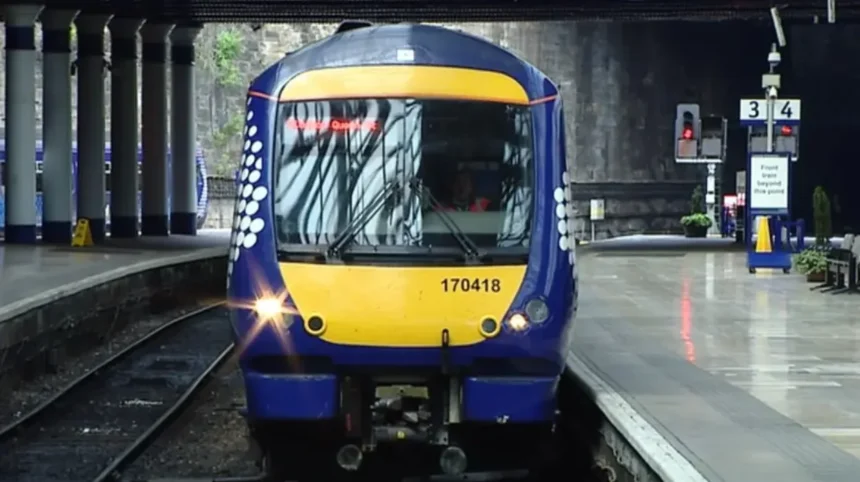
Glasgow (Glasgow Express) November 2026 — Rail passengers travelling across Glasgow and the surrounding Inverclyde commuter belt face widespread morning disruption following an operational failure on the network. As reported by Kevin Maguire of the Glasgow Times, a train fault identified at Greenock West forced the cancellation of a key service heading towards Glasgow Central. Transport operator ScotRail subsequently warned passengers that the single cancellation would create cascading delays and alterations across multiple connecting services on the line.
What caused the initial train cancellation at Greenock West?
As reported by Kevin Maguire of the Glasgow Times, the initial breakdown occurred when a train unit experienced a technical fault while at Greenock West station. The mechanical failure prevented the train from completing its scheduled transit to Glasgow Central, leaving rail operators with no option but to withdraw the service entirely from the morning timetable.
In an official public announcement issued via social media, ScotRail confirmed the incident, stating:
“Due to an earlier train fault at Greenock West, services may be subject to delay and alteration. Please check our app and website before heading out for journey information”.
Transport chiefs indicated that Network Rail and ScotRail maintenance teams were working to resolve the vehicle issue, but warned that services running along the route would feel the knock-on effects for several hours.
How is the train fault impacting wider Glasgow commuter lines?
As reported by The Herald, the breakdown at Greenock West has disrupted operations along one of the busiest rail corridors serving commuters travelling into central Glasgow. Because suburban rail corridors operate on tight, interconnected scheduling intervals, a single broken-down train unit can cause significant track congestion, preventing subsequent services from passing through key stations on time.
According to reports published by Kevin Maguire of the Glasgow Times, the disruption was expected to persist until around 8.30 am, directly overlapping with the peak morning rush hour. Commuters travelling from stations across Inverclyde and Renfrewshire towards Glasgow Central have faced extended waiting times, altered stopping patterns, and unexpected cancellations. Passengers heading to work and study were urged to allow extra travel time and to monitor live station departure boards prior to arriving at platforms.
What is the historical context of Inverclyde rail line disruptions?
The Inverclyde rail route, connecting Gourock and Wemyss Bay through Greenock to Glasgow Central, is a vital artery for daily commuters in western Scotland. Over recent years, the line has proven particularly sensitive to operational bottlenecks, rolling stock faults, severe weather events, and infrastructure repairs. Because substantial sections of the route rely on shared tracks and complex junction points approaching Paisley and Glasgow Central, any localized failure—such as a signaling fault, overhead line damage, or a broken-down train—quickly propagates across the broader suburban transport network. Network Rail and ScotRail have undertaken ongoing maintenance and track upgrade programs across the region to modernize aging infrastructure, but unexpected vehicle faults remain a recurring challenge during peak traffic windows.
How will this development affect daily commuters and local travelers?
The short-term impact of this service failure will fall primarily on daily workforce commuters, students, and morning travelers who rely on the Inverclyde-to-Glasgow line for their morning routine. Passengers are likely to encounter overcrowding on surviving services as commuters attempt to board alternative trains. Furthermore, missed connections at major hubs like Glasgow Central could cause secondary travel delays across connecting national and regional services.
In the longer term, repeated instances of morning peak-time disruption risk eroding public confidence in suburban rail reliability. Commuters may increasingly seek alternative road transport along the M8 corridor or local bus services during periods of operational uncertainty, placing additional pressure on Glasgow’s broader urban transport infrastructure. Continued focus will remain on how swiftly ScotRail and Network Rail can recover timetabled operations following unexpected mechanical failures.


