Key Points
- Controversial Spot-Kick: Match referee Nick Walsh awarded Rangers a penalty following an incident involving defender James Penrice and St Mirren player Samuel Ramos.
- VAR Affirmation: The Video Assistant Referee (VAR) checked the incident and opted to allow Nick Walsh’s on-field decision to stand.
- Refereeing Experts Divided: Three prominent former match officials—Mark Clattenburg, Bobby Madden, and Dermot Gallagher—offered differing assessments of the call.
- Analogy Drawn: Mark Clattenburg compared the movement of James Penrice to a “swan flying through the air,” questioning the severity of the contact required to award a spot-kick.
- Support for On-Field Protocol: Dermot Gallagher highlighted the high threshold for VAR intervention, noting the difficulty of overturning the original on-field ruling.
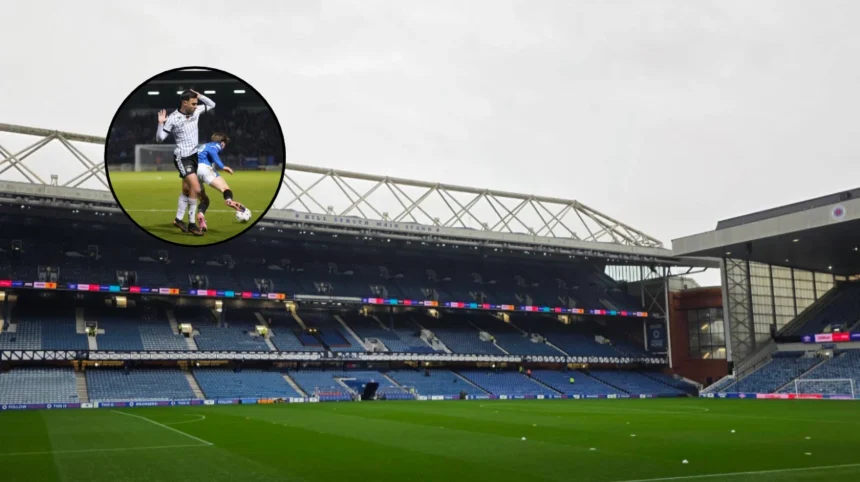
Rangers (Glasgow Express) November 9, 2026 – A controversial penalty decision awarded to Rangers against St Mirren has ignited intense discussion across Scottish football, with three former top-level referees offering contrasting opinions on the call made by match referee Nick Walsh and the Video Assistant Referee (VAR) team. The incident centred around Rangers defender James Penrice, who went down in the penalty area following a challenge by St Mirren player Samuel Ramos. On-field official Nick Walsh awarded a spot-kick, which was subsequently checked and upheld by the VAR team, allowing the decision to stand.
- Key Points
- Why Did Mark Clattenburg Describe James Penrice as a “Flying Swan”?
- Why Was Bobby Madden Unconvinced by the Penalty Decision?
- How Did Dermot Gallagher Defend the Role of VAR in the Decision?
- Background of the Particular Development
- Implications and Predictions: How This Development Can Affect Scottish Premiership Clubs, Referees, and Supporters
Why Did Mark Clattenburg Describe James Penrice as a “Flying Swan”?
Addressing the incident in detail, former Premier League and FIFA referee Mark Clattenburg expressed strong reservations regarding the validity of the spot-kick awarded to Rangers. As reported by the commentary team, Mark Clattenburg compared the trajectory of the defender to a “swan flying through the air,” arguing that the degree of contact initiated by Samuel Ramos was insufficient to cause the fall. Mark Clattenburg stated that while contact occurred, the reaction of the player was disproportionate, suggesting that on-field officials should exercise greater discretion before penalising defenders in such scenarios.
Why Was Bobby Madden Unconvinced by the Penalty Decision?
Echoing similar concerns, former Scottish FA referee Bobby Madden expressed scepticism regarding the decision to award the penalty. As reported by match analysis coverage, Bobby Madden stated that there was not enough contact in the challenge from Samuel Ramos to warrant a spot-kick. Bobby Madden pointed out that modern officiating protocols require a clear and obvious threshold for foul play inside the penalty box, suggesting that the incident between James Penrice and Samuel Ramos fell below the necessary criteria for an on-field penalty call.
How Did Dermot Gallagher Defend the Role of VAR in the Decision?
Offering a alternative perspective on the officiating mechanics, former English Premier League referee Dermot Gallagher explained the structural reasons why the VAR protocol did not overturn Nick Walsh’s original verdict. As reported by sports broadcasting analysts, Dermot Gallagher stressed how difficult it would have been for VAR to intervene once Nick Walsh made the initial ruling on the pitch. Dermot Gallagher noted that because physical contact was present between Samuel Ramos and James Penrice, the VAR team could not classify the on-field decision as a “clear and obvious error,” thereby upholding the original penalty award in accordance with established officiating guidelines.
Background of the Particular Development
The implementation of Video Assistant Referee (VAR) technology in Scottish football has remained a central topic of discourse among clubs, managers, supporters, and media analysts since its introduction. Designed to assist match officials in identifying subjective errors and redressing missed clear infractions, the application of VAR in penalty box incidents continues to provoke technical debates regarding the definition of “clear and obvious.”
In Scottish Premiership fixtures, the interpretation of physical contact within the penalty area has frequently drawn scrutiny. The protocol dictates that VAR serves to review decisions rather than re-referee matches. Consequently, when an on-field referee awards a penalty based on visible physical contact, the threshold required for a VAR overturn is significantly elevated. The ongoing dialogue involving former professional referees highlights the persistent challenge in establishing consistent interpretations of physical contact across domestic competitions.
Implications and Predictions: How This Development Can Affect Scottish Premiership Clubs, Referees, and Supporters
This latest officiating debate regarding the penalty awarded to Rangers is likely to influence several key stakeholder groups across Scottish football in the following ways:
- Impact on Match Officials and VAR Operation: Continued scrutiny from former top referees may prompt officiating bodies to further clarify the threshold for on-field penalty decisions. Referees may face increased pressure to evaluate the nature and intensity of contact before blowing the whistle, minimizing instances where VAR is restricted by protocol from intervening.
- Impact on Scottish Premiership Clubs and Managers: Team management and players will scrutinise these rulings to better understand how physical contact is assessed in the penalty box. Attackers may continue to leverage contact in tight spaces, knowing that VAR is unlikely to overturn an on-field award if contact is established on video replay.
- Impact on Football Supporters and Public Perception: Differing evaluations from established refereeing experts could reinforce existing debates among supporters regarding consistency in domestic match officiating. Transparency in VAR communication will remain essential to maintaining trust in competitive outcomes across the league.