Key Points
- Glasgow City Council has allocated £7 million in funding to introduce dedicated “Neighbourhood Clean Teams” across the city.
- Every single one of Glasgow’s 23 municipal council wards will receive its own dedicated team focused on hyper-local environmental upkeep.
- The operational scope of the new teams includes tackling illegal fly-tipping, removing street litter, addressing overgrown vegetation, and restoring public space presentation.
- The local authority initiated this capital expenditure following feedback in the council’s annual household survey, where local residents identified the physical cleanliness of streets and parks as a top priority.
- The investment aims to improve rapid response times to environmental complaints and provide visible, routine enforcement and maintenance across all residential neighborhoods.
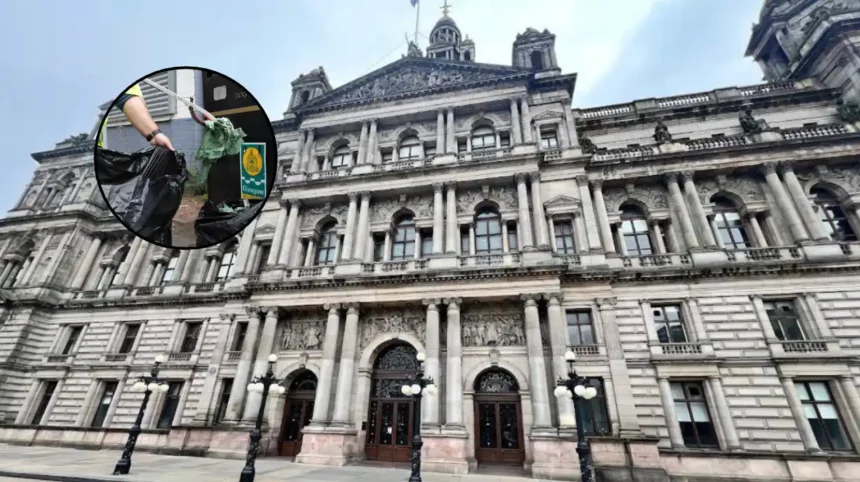
Glasgow (Glasgow Express) November 5, 2026 – Glasgow City Council has officially unveiled a £7 million environmental investment strategy that places dedicated “Neighbourhood Clean Teams” into every single ward across the city. Under the newly established scheme, each of Glasgow’s 23 council wards will be assigned a localized, frontline operational crew tasked specifically with eradicating fly-tipping, removing roadside litter, clearing choked alleyways, and maintaining public open spaces. Municipal administrators approved the substantial funding allocation directly in response to findings from the local authority’s latest annual household survey, in which local residents consistently cited the cleanliness of streetscapes and neighborhood parks as their primary community concern.
What Is the Scope of the £7 Million Neighbourhood Clean Team Investment?
The £7 million financial commitment marks a structural shift toward localized municipal maintenance within the City of Glasgow. Rather than relying solely on centralized, city-wide rapid response units that move between high-density hotspots, the new model establishes permanent, ward-specific operational boundaries. Each unit will operate with dedicated vehicles, specialized equipment, and personnel tasked with addressing immediate localized degradation.
The core duties assigned to the ward teams encompass a broad range of frontline environmental interventions:
- Fly-Tipping Removal: Rapid identification and clearance of illegally dumped household items, construction debris, and discarded furniture on public land.
- Litter Abatement: Intensive manual and mechanical sweeping of residential pavements, green corridors, and shopping lanes.
- Vegetation Management: Clearing overgrown weeds, unkempt verges, and encroaching brush around pedestrian walkways and municipal property.
- Public Amenity Maintenance: Washing down public infrastructure, removing street hazards, and managing back-lane waste accumulation.
By embedding these teams within individual electoral wards, council leadership aims to shorten the timeframe between localized incident reporting and physical remediation.
Why Did Household Survey Results Drive Council Intervention?
The decision to channel £7 million into localized cleansing operations stems directly from the empirical data gathered in Glasgow City Council’s annual household survey. Year-on-year data highlighted a growing divergence between public expectation and visible environmental conditions across residential areas.
When asked to rank civic services and urban quality-of-life factors, residents across diverse socio-economic demographics within the 23 wards identified the physical condition of local streets, green spaces, and neighborhood parks as a “top priority.” Survey respondents expressed concern regarding the persistence of bulk waste items left on footpaths, back lanes, and vacant ground, noting that neglected spaces frequently invite further anti-social behavior and environmental crime.
Recognizing that public satisfaction with municipal administration is closely tied to the day-to-day cleanliness of local surroundings, elected members prioritized this targeted investment within the municipal budget framework to deliver direct, visible improvements to residents’ immediate surroundings.
Background of Glasgow’s Environmental Cleanliness Strategy
Glasgow’s municipal infrastructure has faced persistent operational challenges regarding waste management, bulk refuse collection, and street cleansing over recent years. The city’s dense urban topology—characterized by historic tenement blocks with shared rear lanes, expansive suburban housing schemes, and extensive park networks—creates distinct operational demands across different wards.
In recent years, changes to bulk waste collection policies, alongside rising waste processing costs, coincided with increased instances of illegal fly-tipping across urban centers statewide. Community councils, neighborhood associations, and local business groups frequently raised concerns regarding the accumulation of trade and domestic waste in public thoroughfares.
Prior to the rollout of the £7 million Neighbourhood Clean Teams, environmental maintenance relied heavily on a combination of scheduled routine sweeps and centralized rapid-response units. However, localized backlogs led to calls from both opposition councilors and community groups for a decentralized model that places accountability and labor resources directly within local neighborhoods. The introduction of ward-based clean teams represents a formal policy response to those long-standing structural challenges.
Prediction: How Will This Development Affect Glasgow Residents and Business Owners?
The deployment of £7 million in dedicated cleansing resources across all 23 wards is projected to yield notable operational and societal impacts for local stakeholders:
- For Residential Communities: Householders can expect a measurable reduction in the lead time for resolving reported fly-tipping and litter incidents. The presence of dedicated ward staff is anticipated to restore pride in local streetscapes, improve public health standards in high-density tenement lanes, and increase public usability of local parks and green spaces.
- For Local Businesses and High Streets: Commercial corridors outside the central business district are likely to benefit from enhanced footfall conditions. Cleaner pavements and well-maintained public realms reduce environmental blight, creating safer and more welcoming environments for local commerce.
- For Municipal Enforcement and Costs: Over the medium-to-long term, visible daily maintenance and rapid waste removal may serve as a psychological deterrent against illegal dumping. If successful, the proactive removal of waste before it accumulates could reduce expensive, large-scale remediation actions and lower total municipal litigation and clearance costs associated with chronic fly-tipping hotspots.