Key Points
- Strathclyde Partnership for Transport (SPT) has announced two full Sunday closures of the Glasgow Subway network.
- The closures will take place on Sunday, 15 November, and Sunday, 22 November.
- Shutting down the circle on these dates will allow engineering and operational teams to carry out essential testing on newly integrated systems.
- The testing scope focuses on upgraded signalling networks, operational communications, and modernised system infrastructure.
- Subway management confirmed that these measures are critical to ensuring safe and reliable ongoing operations following the overall modernisation project.
- Regular Sunday service is scheduled to resume fully after the testing window concludes on each respective weekend.
Glasgow (Glasgow Express) November 5, 2026 – Strathclyde Partnership for Transport (SPT) has officially confirmed that the Glasgow Subway will suspend all passenger operations across two consecutive Sundays later this month to facilitate system testing. The scheduled network suspensions are set for Sunday, 15 November, and Sunday, 22 November. During these intervals, technical crews will be granted full, uninterrupted track access across the entire inner and outer circles to perform comprehensive trials on upgraded signalling, operational communications, and overarching system architecture.
As reported by transport journalists covering the announcement for local media outlets, an SPT spokesperson stated that the planned closures “will allow engineers and operational teams to undertake a programme of comprehensive testing across the network, ensuring the systems and infrastructure delivered through Subway modernisation continue to operate safely and reliably.” Management noted that full-day suspensions on Sundays are necessary due to the intensive nature of the diagnostic procedures, which cannot be adequately completed within the brief overnight maintenance window.
Why Is the Glasgow Subway Closing on 15 and 22 November?
The decision to temporarily halt services stems from the ongoing, multi-million-pound Glasgow Subway Modernisation Programme. Over recent years, SPT has been systematically updating the network’s legacy infrastructure, replacing aged rolling stock, upgrading track beds, and retrofitting advanced control systems.
The upcoming Sunday closures mark a critical testing milestone for the integrated command and control platforms. Engineers require extended periods without passenger traffic to run simulated train movements, verify real-time signalling communication between train cars and the control room, and test safety fail-safes under stress scenarios. Conducting these trials during full-day track possessions ensures that system data can be evaluated in controlled conditions, minimising the risk of unplanned disruptions during peak weekday commuter periods.
What Travel Alternatives Are Available for Passengers During the Closures?
With the underground network suspended on 15 November and 22 November, passengers who routinely rely on the Subway will need to make alternative travel arrangements across the city centre, West End, and Southside.
First Bus and other local public transport providers operate surface bus routes that run parallel to significant portions of the Subway loop, particularly connecting Buchanan Street, St George’s Cross, Partick, Govan, and Shields Road. Additionally, ScotRail operates regular rail services connecting key hubs such as Glasgow Central, Queen Street, Partick, and Exhibition Centre. Passengers intending to travel on the affected Sundays are advised to plan their journeys in advance, check local bus timetables, and allow extra travel time to reach their destinations.
Background of the Glasgow Subway Modernisation
The Glasgow Subway is the third-oldest underground rail system in the world, having originally opened in December 1896, behind only the London Underground and the Budapest Metro. The system operates on a unique 4-foot (1,219 mm) narrow gauge across a six-mile double-tunnel loop serving 15 stations.
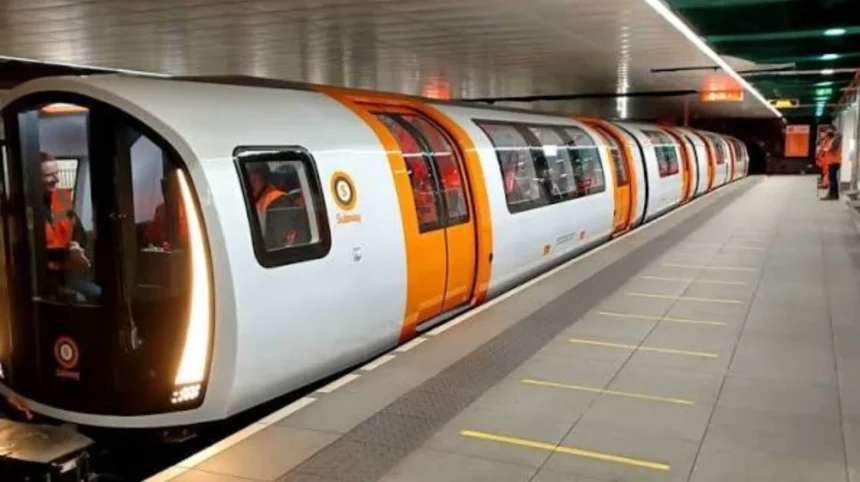
To bring the Victorian-era infrastructure into the modern age, SPT launched a major overhaul covering station refurbishments, trackbed replacement, updated ticketing installations, and a completely replaced fleet. Central to this project was the introduction of modern custom-built trains designed by a joint venture of Stadler and Ansaldo STS (now Hitachi Rail), alongside state-of-the-art Communications-Based Train Control (CBTC) signalling systems. The testing phase scheduled for November forms an integral part of validating these smart technological systems before the modernisation initiative reaches its final operational milestones.
Prediction: How Will These Closures Affect Passengers, Local Businesses, and Transport Operators?
The planned closures on 15 November and 22 November will directly impact various groups across the Greater Glasgow area in distinct ways:
- Sunday Commuters and Leisure Travellers: Passengers who rely on the Subway for travel between the West End, Southside, and City Centre will face longer journey times and modified routes. Football fans attending local weekend matches, shoppers visiting the central retail district, and hospitality workers on weekend shifts will need to shift to surface bus routes or suburban rail services.
- Local Businesses and Retailers: Retail outlets, cafes, and restaurants situated near key Subway hubs—such as Byres Road (Hillhead), Buchanan Street, and Argyle Street—may experience a temporary shift in footfall patterns on the two affected Sundays. Customers traveling from outer districts may prove less inclined to travel into the city centre without direct Subway access, potentially increasing reliance on local high street businesses instead.
- Surface Transport Operators: Private hire vehicles, taxis, and local bus operators are likely to experience an uptick in demand across both Sundays. Operators such as First Bus may see increased passenger loads along key corridor routes that mirror the Subway alignment, requiring efficient capacity management to handle shifted transit demand.