Key Points
- Schools and nurseries across Scotland, including in East Renfrewshire, South Lanarkshire, and Glasgow, received malicious “threatening messages” on Monday morning (October 19).
- Police Scotland launched an investigation after confirming that the messages claiming explosive devices had been placed inside educational facilities were being treated as a hoax.
- Precautionary evacuations took place at several premises across the region before emergency procedures cleared staff and pupils to return to buildings or normal operations.
- Local authorities, including East Renfrewshire Council, confirmed that staff executed safety protocols immediately upon receiving the communications.
Glasgow (Glasgow Express) October 19, 2026 – Police Scotland has launched an investigation following a security alert that saw primary schools and secondary institutions across Scotland targeted with malicious hoax bomb threats sent on Monday morning.
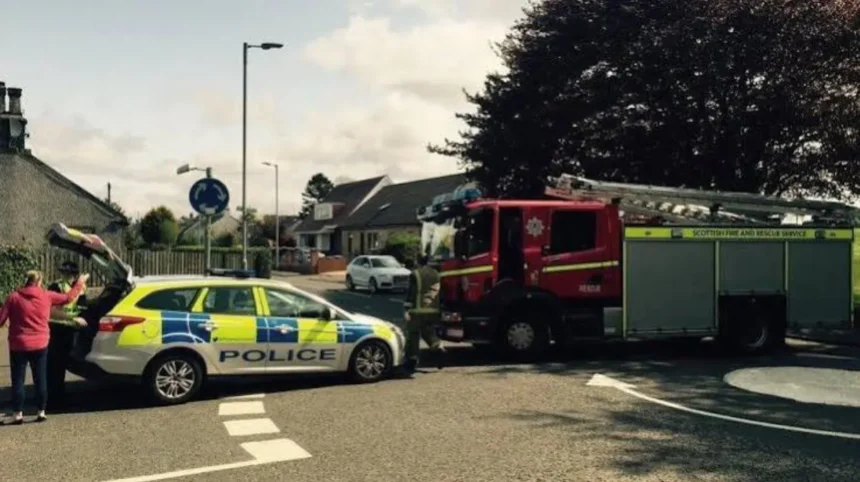
As reported by Glasgow Live, educational facilities across the Greater Glasgow area, including local authority zones in East Renfrewshire and South Lanarkshire, were forced to initiate safety protocols after receiving messages warning of potential explosive devices. Several premises immediately evacuated students and educational staff while law enforcement conducted urgent safety checks. The emergency services subsequently declared the messages to be non-viable hoaxes, allowing affected institutions to resume normal day-to-day operations.
How Did Local Authorities and Police Respond to the Threatening Messages Sent to Scottish Schools?
Following the receipt of the security threats, local government authorities and law enforcement moved swiftly to evaluate the risk and establish control across affected campuses.
As detailed by a spokesperson for Police Scotland, law enforcement confirmed the scope of the nationwide incident. As reported by Glasgow Live, a Police Scotland spokesperson stated:
“We are aware of threatening messages being sent to a number of schools across Scotland. These are being treated as a hoax and officers are investigating”.
Local council authorities across the region confirmed that staff followed established security guidelines immediately upon discovering the warnings. As reported by Glasgow Live, a spokesperson for East Renfrewshire Council stated:
“A malicious threat was received by many of our primary and secondary schools on 19 October and staff immediately followed all the relevant procedures. After notifying Police Scotland, the communication is being investigated as a hoax, and our schools are operating as normal”.
It is understood that several schools were evacuated when the alleged “bomb threats” were made. After the threats were identified as a hoax, school operations began running as normal.
Background of the Particular Development
Hoax security threats targeting academic institutions across the United Kingdom represent a recurring operational challenge for law enforcement and local authorities. Over recent years, automated mass communication campaigns and digital threat generators have been deployed against primary schools, secondary colleges, and higher education facilities across England, Scotland, Wales, and Northern Ireland.
Historically, malicious actors have utilized anonymized network routing, virtual private networks (VPNs), and temporary distribution lists to send batch threats designed to trigger emergency response protocols. Under current UK counter-terrorism and civil contingencies legislation, emergency services and local councils must treat all initial communications regarding explosive devices as credible threat vectors until specialists perform preliminary risk assessments.
In previous incidents across Scotland, coordinated hoaxes have targeted civic infrastructure to cause maximum systemic disruption during peak morning hours. Police Scotland works alongside cyber security specialists and regional intelligence units to trace digital footprints, track routing histories, and identify the perpetrators responsible for orchestrating mass public alarms.
Prediction: How This Development Can Affect School Communities, Parents, and Emergency Infrastructure
The execution of coordinated hoax bomb threats across Scottish schools carries significant multi-tiered implications for local education authorities, emergency responders, parents, and school staff.
1. Operational Protocol Refinements for Local Councils
In light of this event, local authorities across East Renfrewshire, South Lanarkshire, and surrounding regions are likely to review their emergency digital filtering and threat verification procedures. While immediate physical evacuation remains standard procedure during unverified explosive claims, councils may implement enhanced initial screening tools in partnership with cyber crime units. This will allow administrators to rapidly distinguish between automated mass spam hoaxes and localized safety risks, minimizing unnecessary disruption to instruction hours.
2. Psychological Impact on Students, Staff, and Families
Even when rapidly declared a hoax, evacuation events generate considerable anxiety among young pupils, teaching personnel, and parents. Educational trusts and council authorities will likely need to deploy additional support resources, including child guidance personnel and school counsellors, to address safety concerns in impacted primary and secondary schools. Parents will also demand clearer, real-time communication channels from school administration platforms to prevent panic caused by unverified social media rumours during emergency protocols.
3. Legal Consequences and Increased Cyber Law Enforcement Focus
Police Scotland and law enforcement agencies are expected to escalate efforts to trace the origin of the malicious messages. Should authorities identify and apprehend those responsible, prosecutors are likely to pursue severe criminal charges under communications and public order legislation. High-profile prosecutions in similar historical cases have served as legal precedents aimed at deterring malicious actors from targeting public infrastructure.