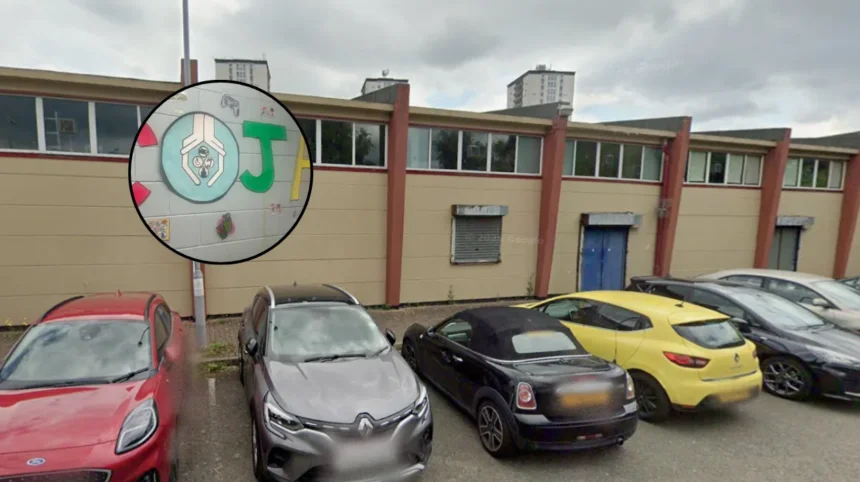
Key Points
- Severe Structural Warning: The COJAC Centre in Castlemilk has been forced to shut off approximately 50 per cent of its building after structural experts discovered Reinforced Autoclaved Aerated Concrete (RAAC) panels in danger of collapsing with little to no warning.
- Massive Financial Burden: The independent Glasgow charity is facing a £300,000 repair bill to safely extract the defective material and restore full operational capacity to its facility.
- Disruption to Essential Disability Services: The closure directly impacts vulnerable children, young adults, and older individuals with complex additional support needs, who rely on the centre’s specialized facilities.
- Loss of Facilities: Inaccessible areas due to the structural closure include a three-level soft play facility, sports hall, games console room, and specialized sensory lighting and drama setups.
- Dispute Over Repair Funding: The charity previously voiced extreme frustration over feeling “left to rot”, arguing that as long-term leaseholders from Glasgow City Council and City Property since 2000, they cannot shoulder mandatory structural costs alone.
- Emergency Fundraising Underway: In response to the crisis, COJAC has launched a GoFundMe appeal to raise the critical funds required to secure the building’s future.
Castlemilk (Glasgow Express) October 13, 2026 — A vital Glasgow charity providing crucial support to children and adults with disabilities has been forced to shutter large sections of its community hub over urgent structural fears that internal walls could collapse “with little warning”.
As reported by Jordan Shepherd of Glasgow Live, the Caring Operations Joint Action Council (COJAC) Centre in Castlemilk has identified Reinforced Autoclaved Aerated Concrete (RAAC) within its building structure. The discovery has placed the organisation under severe strain, leaving it facing an estimated £300,000 bill to safely decommission and remove the compromised material. To mitigate risks, management was compelled to seal off roughly half of the premises, severely curtailing day-to-day operations and access for vulnerable service users.
As detailed by Jordan Shepherd of Glasgow Live, the charity confirmed that service users are facing a “massive impact” following the shut-off of vital sectors inside their Castlemilk Drive base. Addressing the financial crisis, representatives from the charity noted: “We need to raise that to get it fixed”. To bridge the funding gap, the organisation has set up an emergency online fundraising campaign.
In an official statement published on their GoFundMe appeal, as highlighted by Jordan Shepherd of Glasgow Live, COJAC emphasised the essential role the facility plays within the community:
“Our COJAC Centre is much more than a building. It is a welcoming and supportive place for children and adults with disabilities, their families and the wider community.”
What Key Facilities Have Been Lost Due to the Sudden Closure?
As previously reported by Robert Perry and local reporting teams at the Glasgow Times, the structural discovery has rendered several key indoor spaces completely inaccessible to the community. While the charity has successfully maintained safe access to its custom-built outdoor play area and sensory garden, major indoor assets are entirely out of bounds.
According to statements gathered by the Glasgow Times, locked-off features include a comprehensive three-level soft play area, a large sports hall, and a dedicated games console suite. Furthermore, specialised audio-visual setups—including integrated microphones and stage lighting used for drama sessions and inclusive discos—remain trapped inside the restricted zones.
The loss of these tailor-made spaces restricts the range of activities COJAC can safely host, dampening the daily experience for children with complex needs, autistic young people, and adult care groups who rely on consistent routines in safe environments.
How Has the Dispute Over Lease Responsibility and Maintenance Unfolded?
As reported by the Glasgow Times, the discovery of RAAC has triggered long-running tension regarding property maintenance obligations between the independent charity, local authority leaders, and commercial landlords. Representatives of COJAC stated that they felt they had been “left to rot” after claiming that Glasgow City Council and City Property refused to cover the costly mandatory remediation work.
A spokesperson representing the COJAC board of management explained to the Glasgow Times:
“We have just been left to rot. We cannot possibly pay for these works as a small, independent charity. It has been like this for the last year, and we are so frustrated that we are receiving no help, especially when we have been leasing this building since 2000.”
In response to those claims, official representatives for Glasgow City Council and City Property maintained that dialogue had been ongoing, stating that they “will continue to work with our tenant until a solution can be reached”. However, with no direct public funding solution agreed upon to foot the entire repair bill, the financial burden has fallen squarely onto the charity’s emergency fundraising initiatives.
Background of the RAAC Crisis and COJAC Operations
The Caring Operations Joint Action Council (COJAC) was founded to deliver dedicated, fully accessible resource services for families and carers navigating disability. Operating under the guiding ethos “nothing about us, without us”, the organisation offers comprehensive out-of-school care, holiday play schemes, youth clubs, adult day groups, and dedicated carer respite sessions. Registered with the Care Inspectorate and holding silver Investors in People accreditation, COJAC serves as a vital lifeline across South Glasgow.
Reinforced Autoclaved Aerated Concrete (RAAC) is a lightweight, bubbly form of concrete widely utilized in roof construction, floors, and internal walls across public sector buildings from the mid-1950s through to the 1990s. Although cheaper and easier to install than standard structural concrete, RAAC has a limited design lifespan of around 30 years. Over time, particularly when exposed to moisture or structural fatigue, the material is susceptible to sudden structural degradation and catastrophic collapse without prior visible signs of warning.
In recent years, local councils, health boards, and government bodies across Scotland and the wider United Kingdom have carried out systematic survey inspections across public buildings, schools, and leased facilities. The discovery of RAAC in community buildings has routinely led to immediate precautionary closures due to strictly enforced safety guidelines, creating vast unbudgeted repair liabilities for local authorities, private owners, and charitable tenants.
Prediction: How This Development Will Affect Disabled Service Users and the Local Community
The ongoing closure and structural uncertainty at the COJAC Centre are predicted to create profound, far-reaching consequences for disabled children, adult service users, family carers, and the broader Castlemilk community.
Direct Impact on Service Users
For children and adults with complex physical disabilities, severe learning difficulties, or sensory needs like autism, routine and environmental familiarity are fundamental to their well-being. The prolonged loss of half the facility—specifically high-engagement zones such as the soft play structure and interactive sports hall—severely restricts physical activity, social development, and therapeutic play. If repair funds are delayed, service capacity may have to be permanently scaled back, potentially leading to waiting lists or reduced operational hours.
Increased Strain on Family Carers
COJAC serves as a crucial respite provider, giving parents and unpaid carers essential relief from round-the-clock care duties. Any reduction in service capacity risks escalating carer fatigue, mental stress, and domestic pressure across households in South Glasgow. Families unable to access alternative specialized respite facilities locally may be forced to look further afield at greater personal expense.
Wider Community and Financial Implications
Should the emergency appeal fall short of its £300,000 target, COJAC faces potential long-term financial insolvency or structural eviction from its long-standing home. For the Castlemilk area—an urban district already navigating socio-economic challenges—the potential degradation or loss of an accredited, accessible disability hub would leave a substantial void in community support infrastructure. Conversely, if community fundraising and local authority dialogue succeed in securing the structural restoration, it could establish a clear precedent for how third-sector tenants and public landlords co-manage legacy infrastructure crises across Scotland.