Key Points
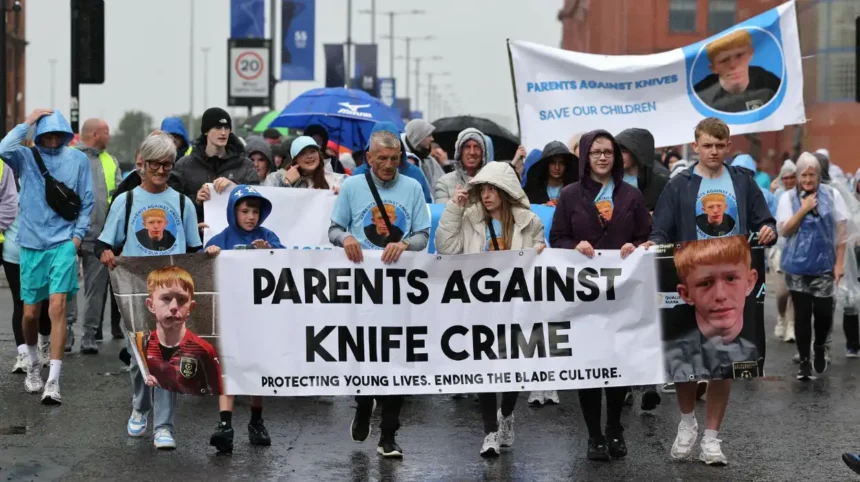
- The grieving father of a 16-year-old boy, Kory McCrimmon, who was fatally stabbed in Glasgow’s east end in 2024, has strongly backed calls for urgent government intervention regarding knife crime.
- Victim Support Scotland has demanded a comprehensive review into the root causes of youth involvement in knife crime and an evaluation of existing prevention programmes.
- The charity is also pushing for tougher controls surrounding the retail sale of knives and the nationwide, widespread availability of bleed kits.
- Other bereaved family members, including Lisa Petrie (whose son John McNab was murdered in Leith) and Ashleigh Mullan (whose brother Peter Mullan was murdered in Edinburgh), have united in a video message campaign to demand systemic change.
- First Minister John Swinney held talks with police officials in Leith, emphasizing the importance of early intervention, prevention, and support structures for young people.
Glasgow (Glasgow Express) September 25, 2026 – As reported by Jordan Shepherd of Glasgow Live, families devastated by fatal stabilities have united to demand immediate and drastic measures from authorities to tackle escalating violence. At the heart of this national appeal is Neil McCrimmon, whose 16-year-old son Kory lost his life in a devastating knife attack in Glasgow’s east end. Sharing the profound trauma experienced by his household, Neil McCrimmon stated in a poignant video message:
“As a parent you try and hold it together but you can’t. Your heart has just been ripped out.”
Detailing the harrowing reality of the incident, Neil McCrimmon recalled receiving the initial phone call informing him of the attack. As reported by Glasgow Live, he described how visiting his son in hospital offered a brief glimmer of false hope before reality set in, forcing him and Elizabeth to break the tragic news to their 10-year-old daughter that her older brother was gone.
What Are the Core Demands Made by Victim Support Scotland?
Amplifying the voices of grieving relatives, Victim Support Scotland has stepped forward to demand a comprehensive, nationwide review into why young people gravitate toward knife crime. According to Debbie Adams, the director of development and external affairs at Victim Support Scotland, staff members witness first-hand the devastating ripple-effect that penetrates far beyond individual grief, affecting wider families and communities.
As highlighted by Glasgow Live, Debbie Adams asserted:
“Swift and drastic action must be taken to support community initiatives throughout Scotland, to help prevent these crimes from occurring and reduce the likelihood of offending.”
Furthermore, the charity’s official blueprint demands a strict reassessment of current controls governing the commercial sale of knives alongside the national provision and rollout of bleed kits to control traumatic blood loss at attack scenes. Debbie Adams emphasized:
“The Scottish Government must commit to decisive, concrete, evidence-based actions if we have any chance of preventing more people having their lives taken by knife crime.”
How Are Other Affected Families Responding Across Scotland?
The movement has drawn strength from a collective front of other grieving relatives across Scotland who have endured similar tragedies. Lisa Petrie, whose 22-year-old son John McNab was murdered by a teenager wielding a hunting knife in Leith, has been actively distributing bleed kits in memory of her son. Reflecting on the solidarity she has discovered through her shared grief, Lisa Petrie noted:
“On the one hand I lost my baby, but then I have gained an army.”
Noting the statistical rise in convictions for bladed weapon possession over the past decade, she added that citizens are stepping up to declare that change is non-negotiable.
Similarly, Ashleigh Mullan, whose 30-year-old brother Peter Mullan was murdered in Edinburgh, described her family’s loss as “indescribable.” According to Debbie Adams, these individuals bravely shared their personal accounts in the hope of altering societal attitudes and stopping tragedies before they strike, ensuring no other household suffers identical heartbreak.
What Response Has the Scottish Government Provided?
Responding directly to these mounting community pressures, First Minister John Swinney addressed the crisis during discussions with Superintendent Neil Wilson at Leith Police Station. As reported across regional outlets, John Swinney acknowledged that while he could not begin to fathom the agony carried by bereaved relatives, Scotland remains safer overall than it was two decades prior. However, he conceded that sustained effort is critical.
The First Minister stated that his discussions underscored the vital role of early intervention, prevention, and ensuring vulnerable youth receive adequate guidance before turning to violence. Pledging formal commitment from public institutions, John Swinney vowed:
“We will continue to do all we can, alongside Police Scotland and other partners, to prevent harm, support those affected and build safer communities.”
Background of the Particular Development
The renewed push for stringent legislative and community action stems from a steady accumulation of knife-related homicides that have punctured communities across Glasgow, Leith, and Edinburgh over recent years. Statistics compiled by justice agencies and advocacy groups over the past decade indicate persistent challenges regarding bladed weapon possession among youths. Despite previous educational campaigns, public sector budget constraints and post-pandemic shifts in youth behavior have strained local intervention networks. Consequently, charities like Victim Support Scotland have increased advocacy efforts, moving beyond general awareness campaigns to demand structural policy overhauls, tighter retail restrictions on dangerous instruments, and emergency medical equipment integration like public access bleed kits.
Prediction and Impact on the Particular Audience
For parents, young people, and local communities across Scotland, this intensified debate carries significant weight regarding daily safety and public policy. If the Scottish Government yields to demands for a comprehensive review, local authorities and community-led initiatives can anticipate increased funding, sharper preventative educational frameworks in schools, and stricter merchant checks on weapon sales. For families living in urban centers heavily impacted by youth violence, these measures could translate into heightened police vigilance coupled with proactive social intervention programs. Ultimately, the development signals a cultural shift where victims’ families are actively shaping public safety legislation, potentially fostering lower weapon carriage rates and enhanced emergency response readiness through widespread bleed kit deployment.