Key Points
- Around 200 Unison ward clerks at NHS Greater Glasgow and Clyde successfully secured a regrading after taking industrial action.
- Workers walked out for two days the previous month following years of delays and a lengthy dispute over job evaluation and pay reviews.
- Affected staff will now be moved to band 3 on the NHS Scotland pay scales.
- The settlement includes up to three years of back pay for eligible workers.
- Union representatives emphasized that the victory highlights the growing responsibilities taken on by ward clerks, who act as a vital bridge between clinical teams, patients, and families.
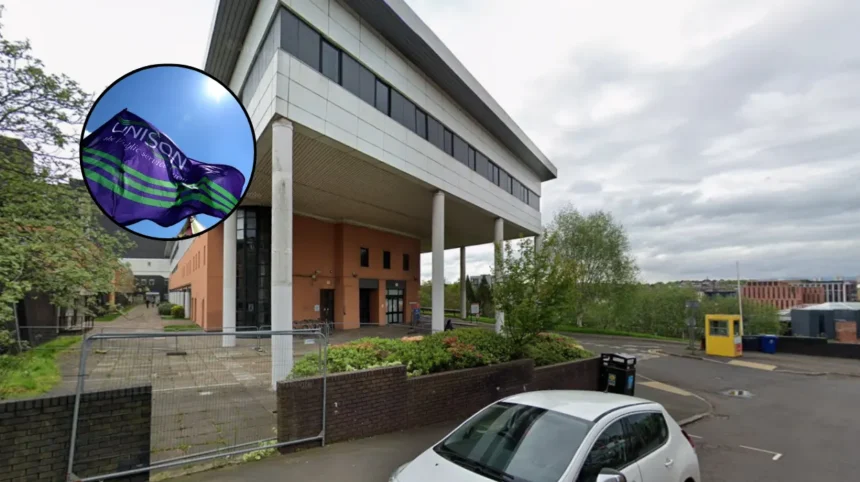
Glasgow (Glasgow Express) September 17, 2026 — Strike action has officially paid off for approximately 200 Unison ward clerks employed by NHS Greater Glasgow and Clyde, who have successfully won their hard-fought battle for regrading following decisive industrial action.
How Did the Dispute and Subsequent Strike Action Unfold for NHS Greater Glasgow and Clyde Ward Clerks?
The administrative staff, who previously walked out for two days to urge a critical rethink from health bosses, will now be officially regraded to band 3 on the official NHS Scotland pay scales. According to details confirmed by the trade union, a significant number of these workers will also receive up to three years of back pay as part of the negotiated resolution.
The breakthrough comes after months of escalating tensions that included high-profile picket lines outside major medical facilities such as the Queen Elizabeth University Hospital, Glasgow Royal Infirmary, Inverclyde Royal, and the Royal Alexandra Hospital in Paisley. Union representatives previously pointed out that a ballot had yielded a 98% vote in favour of industrial action, driven by mounting frustration over years of administrative delays regarding job evaluation reviews.
What Have Union Leaders and Health Authorities Said Regarding the Settlement?
Welcoming the finalized deal, Unison NHS Greater Glasgow and Clyde branch secretary Frances Carmichael stated, as reported by the Morning Star and the Greenock Telegraph, that
“Ward clerks are essential to the running of hospitals and allow clinical teams to focus on patient care.”
Frances Carmichael further added, in coverage shared across multiple regional titles including the Glasgow Times, that
“They’re also a vital link to patients and their relatives while they’re in hospital. This significant victory means they’ll now be recognised for the work they do and paid properly.”
Echoing these sentiments, Unison Scotland regional organiser Lorcan Mullen highlighted the broader implications of the dispute’s outcome. As documented by the Morning Star and Glasgow Times, Lorcan Mullen stated:
“This is a great result for staff who stood together to fight for fair pay.”
Lorcan Mullen also noted, as detailed by the Greenock Telegraph, that “They shouldn’t have had to go on strike to get the recognition they deserved, but their determination has secured a significant improvement in their wages and the back pay will make a real difference.” Concluding his remarks, Lorcan Mullen emphasized that
“This victory should send a clear message to other NHS boards; health workers must be paid properly for the work they do.”
Meanwhile, offering an institutional perspective on the resolution, an official spokesperson for NHS Greater Glasgow and Clyde stated, as covered by the Glasgow Times, that
“We highly value our Ward Clerk staff and are pleased to have worked constructively with UNISON to reach a resolution to this matter.”
The health board spokesperson further added, in statements recorded by local media, that
“We would like to acknowledge the significant contribution made by all those involved in the job evaluation process, and we will now undertake the next steps required to implement the outcome and communicate it with affected staff.”
Background of the Particular Development
The path to this agreement was paved by a prolonged structural grievance regarding how administrative duties within Scotland’s largest health board were classified. Over recent years, hospital ward clerks absorbed a substantial increase in daily responsibilities, ranging from complex digital system management and appointment scheduling to coordinating patient transport and fielding sensitive inquiries from distressed relatives.
Despite taking on tasks traditionally managed by higher-paid clinical or nursing support personnel, a vast majority of these workers—predominantly women—remained anchored on lower pay bands. Following protracted local negotiations that stalled over a multi-year period, union members mobilized an overwhelming mandate through ballot boxes, culminating in coordinated strike action that ultimately forced health board executives back to the negotiating table to re-evaluate the true value of front-line administrative roles.
Prediction
This successful settlement is anticipated to trigger a widespread morale boost across public sector workers throughout Scotland, potentially inspiring similar administrative and support grades in other health boards to scrutinize their own job evaluations. For the immediate audience—encompassing NHS administrative employees, regional health board executives, and trade union strategists—this development signals that concerted industrial pressure and cohesive union solidarity can successfully pierce through administrative gridlock.
Consequently, other NHS trusts across the United Kingdom may face heightened scrutiny and proactive demands from staff unions seeking similar retrospective pay adjustments and formal band upgrades, placing additional financial planning pressures on public healthcare administrators moving forward.