Key Points
- North Lanarkshire Council has initiated an official investigation into the existence of an extensive unauthorized dump site located close to Lochend Road.
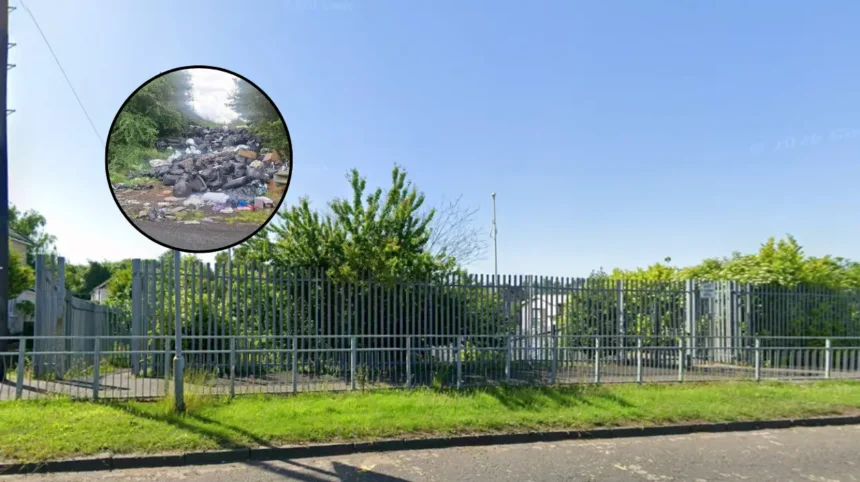
- Pictures taken at the site clearly show the presence of an extensive pile of rubbish comprising multiple black garbage bags and other domestic waste.
- While North Lanarkshire Council was officially informed about the dump site on Thursday, 3 September, the authorities have deemed this event as a crime.
- Even though an investigation into the individuals involved has already started, due to local authority regulations, the entire cost of cleaning this mess is to be borne by the private owner of the property.
- This investigation takes place within the framework of a wider crackdown on fly tipping in the region, with the neighboring South Lanarkshire Council referring more than 25 fly tipping cases to the Procurator Fiscal.
- Legally, statutory fly tipping crimes in the region incur fines of up to £40,000, as well as penalty fees of £500 issued directly by the council officials.
Lanarkshire (Glasgow Express) September 5, 2026 — Local authority enforcement officers have formally launched a investigation following the discovery of an extensive illegal waste deposit in North Lanarkshire. As reported by Glasgow Live, North Lanarkshire Council confirmed it was initially alerted to the massive rubbish accumulation situated in the vicinity of Lochend Road on Thursday, 3 September. Photographic material obtained and published by Glasgow Live demonstrates a significant mound of discarded material, comprising dense clusters of black bin liners alongside mixed household debris strewn across the landscape. Municipal officials have characterized the dumping as explicit criminal activity, initiating active enquiries to trace those responsible whilst simultaneously confirming that legal responsibility for clearing the site rests with the private landowner.
- Key Points
- What Action Is North Lanarkshire Council Taking Regarding the Lochend Road Waste Dump?
- How Does This Incident Compare to Broader Enforcement Efforts Across Lanarkshire?
- Who Bears the Cost and Responsibility for Removing Illegally Dumped Waste?
- Background of Illegal Waste Dumping in the Region
- Prediction: How This Development Will Affect Local Landowners and Communities
What Action Is North Lanarkshire Council Taking Regarding the Lochend Road Waste Dump?
Following the discovery of the site on Thursday, 3 September, municipal officers began probing the origins of the debris to identify the perpetrators. Addressing the ongoing inquiry, a spokesperson for North Lanarkshire Council stated to Glasgow Live that
“We were made aware of this fly tipping yesterday and we are investigating the matter. It is the responsibility of the landowner to remove the waste, which is the result of criminal activity”.
The council’s enforcement team is currently reviewing available evidence to establish how such a substantial volume of refuse was transported to and deposited near Lochend Road without immediate detection. Under current Scottish environmental protection legislation, fly-tipping constitutes a strict liability criminal offence. Consequently, local authority officers possess statutory powers to issue fixed penalty notices of up to £500 on the spot, whilst more severe cases referred through judicial channels can result in court-mandated fines reaching £40,000 or potential custodial sentences.
How Does This Incident Compare to Broader Enforcement Efforts Across Lanarkshire?
The investigation in North Lanarkshire coincides with an intensified regional enforcement campaign across local authority boundaries. As detailed in previous reporting by Glasgow Live, neighbouring South Lanarkshire Council has adopted an aggressive prosecution policy as part of a dedicated anti-fly-tipping initiative. This concerted campaign of enforcement has already seen more than 25 separate fly-tipping incidents officially reported to the Procurator Fiscal for criminal prosecution.
Both local authorities have publicly reaffirmed that illegal waste disposal places an unsustainable strain on public infrastructure and local environments. The systematic referral of cases to the Procurator Fiscal underscores a growing strategy across Scottish municipal regions to deter organized fly-tipping syndicates and irresponsible commercial operators who intentionally bypass licensed waste management facilities to avoid disposal fees.
Who Bears the Cost and Responsibility for Removing Illegally Dumped Waste?
Under existing statutory framework, a distinct legal line separates the criminal prosecution of fly-tipping from the operational responsibility of environmental remediation. Whilst North Lanarkshire Council retains authority to investigate and prosecute those who carry out illegal dumping, the duty to clear and lawfully dispose of waste deposited on private property falls entirely upon the affected landowner.
This legal distinction often creates substantial financial hardship for private property owners, who must absorb the costs of specialist removal, haulage, and landfill tipping fees despite being the primary victims of the underlying crime. Unless the individuals responsible for the dumping near Lochend Road are formally identified, apprehended, and successfully sued for civil damages, the proprietor of the land will remain solely responsible for funding the complete restoration of the site.
Background of Illegal Waste Dumping in the Region
The issue of illegal waste disposal across Lanarkshire has increasingly developed from sporadic domestic littering into a persistent, large-scale environmental challenge. Over recent years, peri-urban roadways, agricultural land, and quiet thoroughfares such as Lochend Road have frequently been targeted by unauthorized waste collectors. These operations—often colloquially termed “unlicensed man-and-van” services—charge householders cut-rate fees for rubbish removal before illegally discharging the collected contents onto unmonitored land.
In response to rising public anger and substantial municipal cleanup expenditure, local authorities across Scotland have progressively tightened enforcement measures. The introduction of higher fixed penalty caps, alongside expanded surveillance and closer cooperation with the Crown Office and Procurator Fiscal Service, reflects a deliberate shift toward treating commercial-scale fly-tipping as organized environmental crime rather than a simple civil nuisance. Despite these measures, the disparity between council-maintained public highways and privately owned land continues to leave non-public sites particularly vulnerable to high-volume illegal dumping.
Explore More UK News
UK High Street Closures: Over 200 Brands Shutting Down (London News, 2026)
Met Office Names Best Locations For Major Solar Eclipse, UK 2026
Prediction: How This Development Will Affect Local Landowners and Communities
The discovery of the Lochend Road waste site and the subsequent municipal response signal significant practical implications for key local stakeholders, most notably private landowners, local residents, and independent waste contractors.
- Impact on Private Landowners: Landowners throughout North and South Lanarkshire face heightened financial exposure. As reaffirmed by council officials, property owners remain legally obliged to clear illegally deposited refuse at their own expense. This reality will likely force farmers and commercial landowners to invest heavily in preventive security infrastructure, including physical perimeter barriers, locked gates, security lighting, and private closed-circuit television (CCTV) systems to safeguard vulnerable access roads.
- Impact on Local Residents and Taxpayers: For nearby residents, unresolved fly-tipping poses immediate environmental and public health hazards, including potential vermin infestations, unpleasant odours, and the visual degradation of local green spaces. Furthermore, as local councils dedicate greater resources toward criminal probes, forensic investigations, and legal proceedings, public administrative costs rise—potentially impacting municipal budget allocations for other community services.
- Impact on Waste Management Practices: The ongoing surge in enforcement actions and referrals to the Procurator Fiscal is anticipated to prompt stricter scrutiny of third-party waste disposal services. Householders and local businesses will need to exercise greater due diligence by verifying that any hired waste removal contractors possess valid Scottish Environment Protection Agency (SEPA) registrations, as failure to do so could increasingly leave duty-of-care liabilities resting upon the original waste producers.