Key Points
- Scottish Labour Councillor Fiona Higgins has formally complained to public spending watchdog Audit Scotland over allegations that Glasgow City Council officials monitored her scrutiny work.
- The Canal Ward councillor said council officers added internal information about her to an “ongoing list” of issues she was “interested in” while she questioned officials about matters affecting her ward, including Ruchill Community Centre.
- Higgins said the information emerged through a Subject Access Request (SAR), which showed she had been discussed internally as a possible meeting with Chief Executive Susanne Millar, while further issues were added to the list.
- Higgins alleged that senior officers were collecting or coordinating negative information about her because of her elected status, describing the situation as “humiliating and frustrating.”
- Glasgow City Council denied the allegations of inappropriate monitoring and said it was prepared to meet Audit Scotland regarding any requests.
- The dispute comes amid a wider legal battle at the Court of Session, where Lord Sandison ruled that the Standards Commission for Scotland had acted unlawfully in attempting to prevent certain papers from being used at a misconduct hearing involving Councillor Higgins.
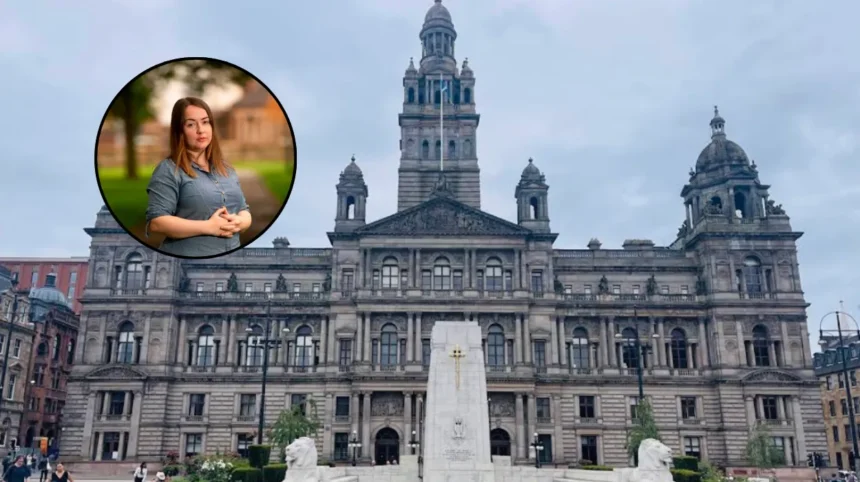
Glasgow (Glasgow Express) August 2026 – Scottish Labour representative Councillor Fiona Higgins has formally requested that Audit Scotland launch an investigation into Glasgow City Council to determine whether municipal officials engaged in systematic monitoring of her oversight duties.
- Key Points
- Why Has Councillor Fiona Higgins Referred Glasgow City Council to Audit Scotland?
- How Has Glasgow City Council Responded to the Surveillance Allegations?
- What Is the Background to the Dispute Between Councillor Higgins and Public Watchdogs?
- The Social Media Complaint and Proposed Teacher Cuts
- Court of Session Ruling Against the Standards Commission
- What Are the Future Predictions and Potential Impacts of This Development?
As reported by Local Democracy Reporter Sarah Hilley of Glasgow Live, Councillor Higgins has publicly accused senior council officers of assembling a “list” of material regarding her activities as she sought to query municipal decision-making, including the financial and operational direction of the Ruchill Community Centre.
Why Has Councillor Fiona Higgins Referred Glasgow City Council to Audit Scotland?
As detailed by Sarah Hilley of Glasgow Live, Councillor Higgins took the step of contacting Scotland’s national public sector audit body after discovering evidence through a Subject Access Request (SAR). The internal documentation obtained via the request highlighted an email thread between council staff discussing an arrangement to bring the local politician into a meeting with Glasgow City Council Chief Executive Susanne Millar. Within this internal correspondence, explicit reference was made to adding another matter concerning Councillor Higgins to a compile list.
As reported by Sarah Hilley of Glasgow Live, Councillor Higgins stated:
“I had suspicions for some time that there were coordinated efforts to collect information.”
She voiced serious concern that this accumulated material was intended to form the basis for a formal complaint to the Ethical Standards Commissioner in an effort to stifle her democratic oversight.
As noted by Neil Mackay of The Herald, Councillor Higgins previously stated that her suspicions were heightened after learning that other elected members involved in probing controversial council exit payments had received anonymous correspondence warning that senior officials were compiling files on representatives whose questions made the administration “uncomfortable”.
Explaining her perspective on the statutory role of an elected politician, Councillor Higgins told Glasgow Live:
“It was humiliating and frustrating feeling surveilled. The whole point of being a councillor is representing the interests of the public. It is about asking questions to understand what is happening and getting information about decisions being made. We need to be able to seek answers and ask questions freely.”
How Has Glasgow City Council Responded to the Surveillance Allegations?
Glasgow City Council has maintained that its administrative processes remain appropriate and transparent, firmly denying any wrongful conduct regarding the oversight of elected representatives.
As recorded by Sarah Hilley of Glasgow Live, an official spokesperson for Glasgow City Council stated:
“Councillor Higgins has made a series of allegations that we understand she has also referred to Audit Scotland. The council is happy to answer any questions Audit Scotland has and will engage fully with any process it puts in place.”
The local authority has indicated complete willingness to cooperate with the watchdog should Audit Scotland choose to open a formal governance review into how officer-councillor communications and records are maintained.
What Is the Background to the Dispute Between Councillor Higgins and Public Watchdogs?
The referral to Audit Scotland comes against the backdrop of an ongoing legal and ethical clash involving Councillor Higgins, Glasgow City Council officials, and Scotland’s standards watchdogs.
The Social Media Complaint and Proposed Teacher Cuts
The friction between Councillor Higgins and council leadership initially intensified following proposed cuts of £30 million to Glasgow’s education budget, which included reductions in teaching posts. As reported by Scottish Legal News, Councillor Higgins used social media to criticise a former Glasgow City Council finance director, posting comments asserting that the official had abused their position of influence to “wilfully and cynically mislead councillors and the public” regarding how education budget options were presented.
Following those public comments, a complaint was lodged with the Ethical Standards Commissioner, alleging that Councillor Higgins had breached the Councillors’ Code of Conduct by making disparaging remarks about a senior officer.
Court of Session Ruling Against the Standards Commission
The complaint led to proceedings before the Standards Commission for Scotland. However, as reported by Scottish Legal News and The Herald, Councillor Higgins mounted a judicial review challenge at the Court of Session in Edinburgh to challenge procedural decisions made by the ethics body.
As detailed by legal reporter coverage in Scottish Legal News, presiding judge Lord Sandison issued a ruling finding that the Standards Commission for Scotland had acted unlawfully by refusing to allow Councillor Higgins to submit seven key internal documents as part of her defence. The excluded documents contained email exchanges regarding how budget options were framed, as well as internal assessments concerning the impact of teacher cuts on Scottish Government funding targets.
As reported by Scottish Legal News, Lord Sandison stated in his judgment that by excluding the documentation, the Standards Commission had “shut its ears” to Councillor Higgins’ submissions and acted irrationally. Lord Sandison noted:
“By refusing to allow the productions in issue to be used at the substantive hearing, the commission was not allowing the petitioner to be properly heard. It had shut its ears to her proposed submissions and in so doing acted unlawfully.”
The court affirmed that the documents were relevant to evaluating her rights under Article 10 of the European Convention on Human Rights, which safeguards freedom of expression for political figures debating matters of public interest.
As reported by The Herald, solicitor advocate Peter Watson, representing Councillor Higgins, highlighted that the court’s decision establishes a vital precedent regarding due process during municipal disciplinary hearings. The Standards Commission confirmed it would examine the judge’s findings carefully before rescheduling the substantive misconduct hearing.
Explore More Glasgow Council News
Glasgow Council Under Fire as Household Satisfaction Rates Plunge: Glasgow 2026
Glasgow City Council Advances Major Sign Ordinance Overhaul in Glasgow 2026
What Are the Future Predictions and Potential Impacts of This Development?
The formal referral of Glasgow City Council to Audit Scotland, coupled with the recent Court of Session judicial review ruling, carries notable implications for multiple stakeholders across Scottish local government.
Impact on Local Government Officers and Elected Members
If Audit Scotland chooses to launch a full investigation into Glasgow City Council’s internal officer monitoring practices, it could lead to stricter statutory guidelines on how council officers document interactions with elected politicians. For councillors across Scotland, a finding in favour of Councillor Higgins could strengthen protections for backbench and opposition members performing scrutiny roles, reducing the risk of administrative retaliation or tactical code-of-conduct complaints when challenging executive decisions. Conversely, if Audit Scotland clears council leadership, it will re-affirm the authority of non-elected senior directors to manage working relationships and uphold administrative decorum without facing accusations of improper surveillance.
Impact on Public Watchdogs and Taxpayers
The Court of Session’s ruling against the Standards Commission for Scotland has already established that ethical watchdogs must grant broad latitude for councillors to present contextual evidence in their defence, particularly where freedom of expression under Article 10 is invoked. As the Standards Commission revises its hearing procedures to comply with Lord Sandison’s ruling, public bodies face increased legal scrutiny over their disciplinary processes. Furthermore, with Councillor Higgins’ legal team seeking an order for the Standards Commission to cover legal expenses following their court defeat, Scottish taxpayers could ultimately bear a substantial six-figure legal bill arising from the procedural dispute.