Key Points
- Bangor-based musical theatre student Lauren Cobey has spoken about the emotional impact of her mother’s death from Motor Neurone Disease (MND).
- Nicola Filshie was formally diagnosed with a rare and severe form of MND, known as Bulbar ALS, on 20 November 2024. The condition affects speech, swallowing and facial muscles.
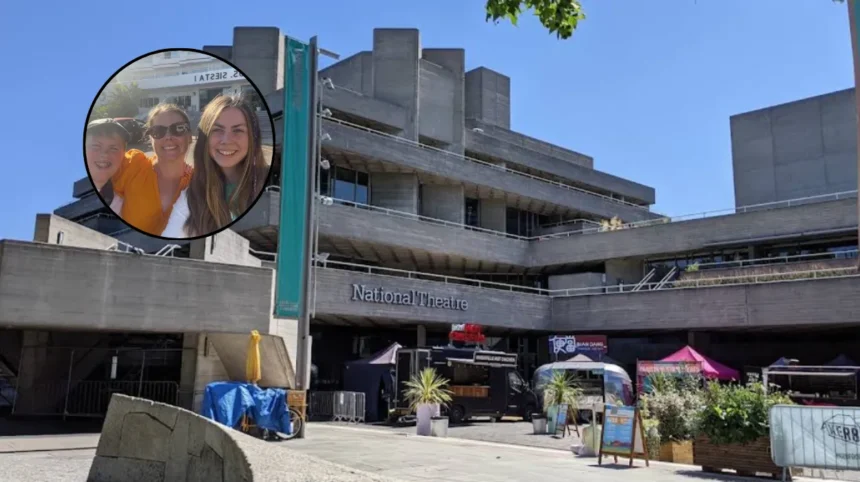
- Filshie began her stage career in London with Annie in 1978 and went on to perform for 15 years, appearing in productions for the National Theatre, Royal Shakespeare Company and the West End, including Annie, Sunset Boulevard and Oliver!.
- Cobey said watching her mother’s physical deterioration was the worst thing she has experienced.
- Cobey is working towards a degree at Leeds Conservatoire and is raising money for MND Scotland by taking part in the TCS London Marathon.
Glasgow (Glasgow Express) August 28, 2026 – A Glasgow musical theatre student has spoken publicly about the emotional burden of supporting her family following her mother’s diagnosis with a severe, terminal neurological condition. Lauren Cobey described the experience of watching her mother, former West End performer Nicola Filshie, experience progressive physical decline as a result of Motor Neurone Disease (MND). Filshie, a mother of two who spent more than a decade performing in high-profile theatrical productions across the United Kingdom, received a formal diagnosis of Bulbar ALS on 20 November 2024. The disclosure highlights the specific challenges associated with the rapid onset of bulbar-onset motor neurone conditions and the impact on families navigating care.
How Has Nicola Filshie’s Diagnosis Impacted Her Family?
The diagnosis of Bulbar ALS marked a sudden turn for the family, altering the daily life of the former professional dancer, actor, and performing arts teacher. Cobey, who grew up surrounded by performance arts and is currently training in musical theatre, shared the personal toll the illness has taken on their household, reflecting on the distress of observing rapid physical deterioration in a parent.
Cobey stated that watching someone decline is the hardest thing.
She detailed how the condition has transformed her family’s lifestyle, shifting their focus toward daily care and support. The emotional weight of the diagnosis has been acute given her mother’s lifelong career in an industry reliant on voice, movement, and physical stamina. Cobey noted that her family faced a year-long wait before receiving answers, as early symptoms like slurred speech were initially dismissed as signs of ageing.
What Is Bulbar ALS and How Does It Progress?
Bulbar ALS is a specific subtype of Amyotrophic Lateral Sclerosis (ALS), which itself is the most common form of Motor Neurone Disease. Unlike limb-onset ALS, which typically begins by affecting the arms or legs, Bulbar ALS attacks the motor neurones located in the brainstem—the bulbar region.
This form of the disease specifically affects the muscles responsible for speech, swallowing, chewing, and facial expression. Initial symptoms frequently manifest as slurred speech, changes in vocal tone, or difficulty swallowing liquids and solids. As the disease advances, it leads to progressive weakness of the facial and throat muscles, eventually spreading to the limbs and respiratory system. Because of its early effect on communication and nutrition, Bulbar ALS presents distinct clinical management challenges compared to other forms of MND.
What Was Nicola Filshie’s Career in the Performing Arts?
Before her diagnosis, Filshie established a notable career in the British performing arts industry spanning several decades. Her early training began in Scotland at Betty Stewart’s dance school in Clydebank, where she developed her foundational skills in dance and stagecraft. She subsequently joined the Minerva Juniors Amateur Dramatics Society, gaining early performance experience in local productions.
Her professional breakthrough occurred at age 11, when she secured a role in the West End production of the musical Annie. Following this early success, Filshie relocated to London at age 16 to pursue full-time training and work in theatre.
Over the course of a 15-year professional career in London, Filshie performed across prestigious venues and institutions, including:
- West End Productions: Featuring in major long-running musical productions such as Annie, Sunset Boulevard, and Oliver!
- The National Theatre: Participating in critical dramatic works and ensemble productions.
- The Royal Shakespeare Company (RSC): Performing in classical theatre repertoires and national tours.
Following her stage career, Filshie continued to teach voice, choreography, and drama, passing on her expertise to younger generations before the onset of her illness.
Background of Motor Neurone Disease Development
Motor Neurone Disease refers to a group of neurodegenerative disorders that selectively target motor neurones, the specialized nerve cells that transmit signals from the brain and spinal cord to the voluntary muscles of the body. When these neurones degenerate and die, the brain loses the ability to initiate and control muscle movement.
Disease Classifications
MND encompasses several distinct clinical presentations, categorized by the location of initial neurone degeneration:
- Amyotrophic Lateral Sclerosis (ALS): The most prevalent form, involving both upper and lower motor neurones.
- Progressive Bulbar Palsy (PBP): A form focused initially on the bulbar muscles, often classified alongside Bulbar ALS.
- Progressive Muscular Atrophy (PMA): A rarer form affecting primarily lower motor neurones.
- Primary Lateral Sclerosis (PLS): A slowly progressing form affecting upper motor neurones.
Epidemiological Factors
MND affects hundreds of adults across Scotland and thousands across the UK at any given time. The exact underlying causes of non-inherited MND remain subject to ongoing scientific research, though current medical consensus points to a complex combination of genetic susceptibility and environmental factors. There is currently no known cure for MND, with treatment protocols focusing on symptom management, maintaining quality of life, and slowing progression through disease-modifying therapies where applicable.
Prediction: How This Development May Affect Families and the Performing Arts Community
The public disclosure of Filshie’s condition and her daughter’s commentary is likely to influence several specific groups, ranging from the immediate care network to broader advocacy sectors.
Impact on MND Patients and Caregivers
For families navigating a recent MND diagnosis, particularly Bulbar ALS, accounts like Cobey’s provide visibility to the intense psychological demands placed on young caregivers. Increased public discussion regarding bulbar symptoms can lead to earlier clinical consultation for individuals experiencing subtle speech or swallowing changes, potentially reducing diagnostic delays.
Influence on Fundraising and Medical Research
Public narratives involving figures from the creative arts historically drive increased contributions toward disease-specific charities, such as MND Scotland. Elevated awareness around Bulbar ALS specifically may assist funding allocation toward targeted therapeutic research addressing speech preservation, alternative communication technologies, and specialized care systems.
Impact on the Performing Arts Community
Filshie’s extensive involvement with major institutions like the RSC, the National Theatre, and West End productions means her diagnosis resonates within the UK performing arts network. This development highlights the need for dedicated support structures and hardship funds for former performers facing severe health crises.