Key Points
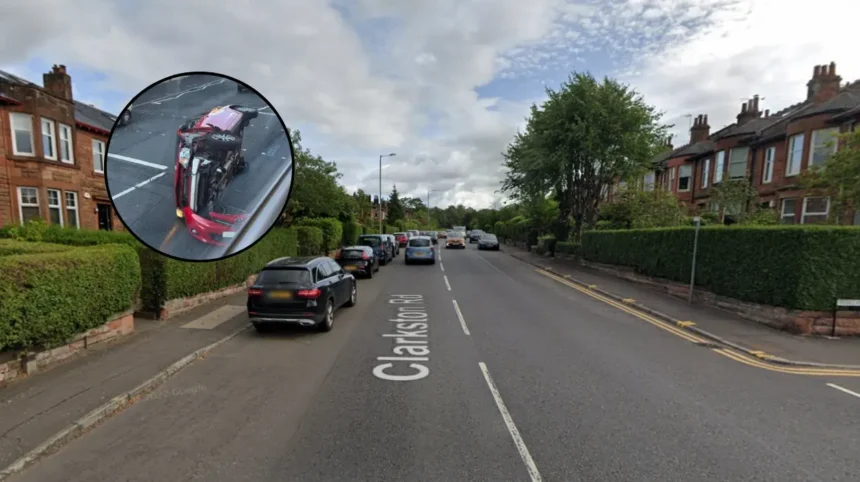
- A severe road traffic collision occurred at approximately 8:30 am on Clarkston Road in the Cathcart area of Glasgow.
- The crash involved at least two vehicles, leaving one car severely damaged and flipped onto its side.
- A second stationary vehicle was spotted nearby with extensive bodywork damage, indicating a multi-vehicle impact.
- The incident caused significant delays for morning commuters navigating through Glasgow’s Southside.
- Puzzled motorists passed the wreckage as the scene sparked local speculation regarding the cause of the collision.
Glasgow (Glasgow Express) August 21, 2026 –A severe morning collision left a vehicle heavily damaged and turned onto its side, causing major traffic disruption along Clarkston Road during peak morning travel. The incident unfolded in the Cathcart area of Glasgow’s Southside, drawing attention from passing commuters as wreckage obstructed the thoroughfare.
Alongside the overturned vehicle, a secondary car was observed with substantial bodywork damage, coming to a halt directly adjacent to the scene. The presence of both damaged vehicles created a bottleneck for morning traffic while onlookers sought to understand the sequence of events leading up to the crash.
What Happened During the Clarkston Road Crash?
The collision took place at roughly 8:30 am, directly coinciding with the start of peak morning traffic. Drivers traveling through Clarkston Road were met with significant delays as emergency responses and scene clearance slowed movement across Cathcart.
One vehicle sustained severe structural damage, resulting in the chassis being ripped open before the car landed on its side. Adjacent to this wreckage, another passenger vehicle exhibited visible impact damage across its body, fueling questions among witnesses regarding whether the collision was a side-impact strike or the result of a loss of vehicle control.
How Did the Collision Impact Glasgow Rush Hour Commuters?
The positioning of the overturned car caused immediate tailbacks along Clarkston Road, an arterial route for vehicles heading toward central Glasgow from the southern suburbs. Motorists navigating past the crash site were forced to slow down to a crawl, resulting in congestion across surrounding residential streets in Cathcart.
Local commuters expressed surprise at the extent of the damage given the residential layout of the road. While emergency services responded to manage the scene and assist those involved, traffic management efforts were required to redirect vehicles and clear debris from the carriageway.
Explore More Cathcart News
£1.5m Rail Upgrades Disrupt Glasgow South Side Train Routes: Glasgow 2026
Background of Road Safety and Infrastructure on Clarkston Road
Clarkston Road serves as one of the primary transport corridors connecting East Renfrewshire and the outer Southside suburbs to Glasgow city centre. Due to its mix of residential housing, commercial storefronts, and frequent bus routes, the street experiences dense traffic flow, particularly during morning and evening rush hours.
Over recent years, arterial thoroughfares across Southside Glasgow have been subject to ongoing debates regarding speed management, traffic-calming measures, and road safety interventions.
Urban arterial corridors that accommodate both heavy commuter traffic and street-side parking present complex operational challenges, particularly at busy junctions where sudden braking or lane changes can lead to high-impact collisions.
What are the Future Implications for Local Residents and Drivers?
The recent crash on Clarkston Road is likely to intensify discussions among Southside residents and local community councils regarding traffic regulation along busy residential routes. For commuters, recurrent incidents on key arteries highlight the ongoing risk of acute congestion during peak travel windows, emphasizing the necessity of clear alternative travel routes.
Local authorities and road safety planners may face renewed calls from the public to evaluate existing speed limits, junction visibility, and traffic-calming infrastructure on Clarkston Road.
As urban traffic density continues to recover and grow across Glasgow, the outcomes of investigations into severe collisions often inform future urban transport policies, potential enforcement measures, or structural road adjustments aimed at reducing similar high-impact accidents.