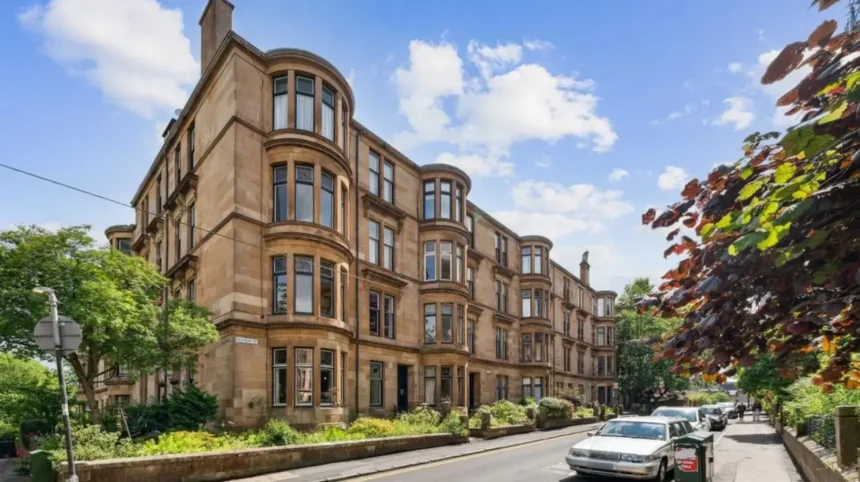
Glasgow tenement flats are a defining part of the city’s housing landscape. They combine historic architecture, central locations, substantial room sizes and distinctive communal living arrangements. Before moving into one, prospective residents need to understand the building’s age, construction, maintenance responsibilities, energy performance, communal areas, legal protections and ongoing repair costs.
- What is a Glasgow tenement flat?
- Why are Glasgow tenements historically important?
- What are the main features of a traditional Glasgow tenement?
- What should you inspect before moving into a Glasgow tenement?
- Who pays for repairs in a Glasgow tenement?
- What is a property factor and why does it matter?
- What repair problems are common in older Glasgow tenements?
- How does living on a different floor affect a Glasgow tenement flat?
- How energy efficient are Glasgow tenement flats?
- What should renters know about Glasgow tenement flats?
- What should buyers check in the title deeds before purchasing?
- How should you assess the cost of living in a Glasgow tenement?
- Why are Glasgow tenement flats still important to the city’s housing future?
- What is the most important thing to know before moving into a Glasgow tenement?
The term tenement has a specific meaning in Scottish housing law. A tenement is a building containing two or more separate flats divided horizontally. The definition covers traditional sandstone buildings, modern blocks, four-in-a-block properties, flats above shops and other shared residential structures.
Glasgow’s traditional tenements are particularly significant because many were constructed during the city’s rapid population and industrial expansion during the nineteenth and early twentieth centuries. Understanding that history helps explain their layouts, materials, communal stairs and maintenance requirements.
What is a Glasgow tenement flat?
A Glasgow tenement flat is a self-contained home within a multi-flat building, usually sharing a common entrance, stair, roof, external walls and other structural elements with neighbouring properties. Traditional examples commonly feature sandstone construction and communal closes.
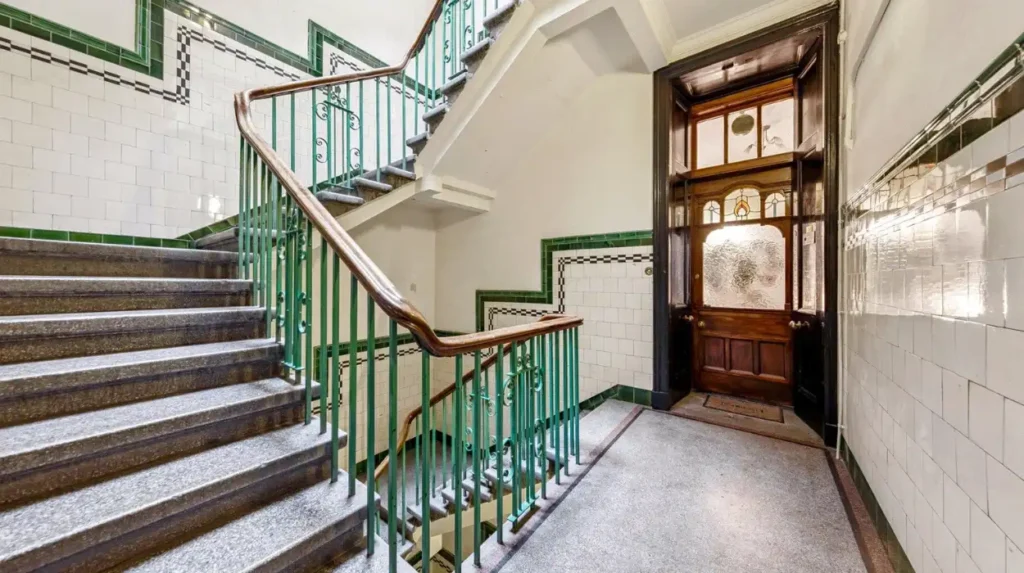
Traditional Glasgow tenements generally contain several flats arranged around a communal stair known locally as a close. The close provides access to individual homes and forms an important shared part of the building.
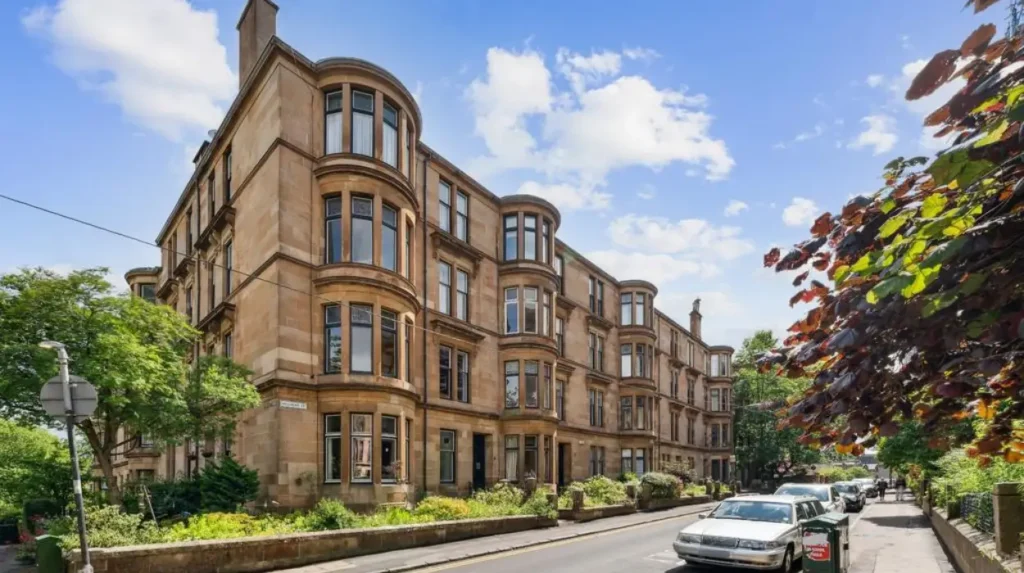
Many traditional tenements have three or four storeys. Their external façades often use sandstone, with Glasgow’s historic housing stock containing both blonde and red sandstone buildings.
The architectural form developed alongside Glasgow’s nineteenth-century expansion. Glasgow Life records that the traditional tenement had become established by the mid-nineteenth century. Buildings typically contained several homes reached through a common entrance and stair.
The Scottish Government’s definition is broader than the traditional Glasgow image. It includes high-rise blocks, modern apartment buildings, cottage flats and flats located above commercial premises.
This distinction matters when searching for a property. A listing described as a “tenement” does not automatically indicate a nineteenth-century sandstone building. The building’s construction date, structure and management arrangements need separate verification.
Why are Glasgow tenements historically important?
Glasgow’s traditional tenements developed alongside rapid nineteenth-century urban growth and became a major form of housing for the expanding population. Surviving examples reflect industrial-era architecture, local sandstone construction, changing housing standards and Glasgow’s long urban development.
Glasgow experienced major population growth during the nineteenth century. Industrialisation created employment and attracted large numbers of residents to the city.
Housing demand increased sharply. Dense residential construction became necessary in established urban districts where access to employment and transport was important.
Glasgow Life’s historical records state that traditional tenements were established by the middle of the nineteenth century. Buildings from 1885 to 1920 are particularly well represented in the city’s architectural records and photographic collections.
The materials also provide clues about construction periods. Older surviving Glasgow tenements commonly feature honey-blonde sandstone sourced from local quarries. After 1890, improved railway connections enabled builders to source sandstone from further away, including Ayrshire and Dumfriesshire. Red sandstone became prominent in many later buildings.
The architectural history remains relevant to modern residents because age affects maintenance requirements. Roofs, stonework, gutters, windows, chimneys and communal stairs require ongoing attention.
A historic appearance does not establish the condition of a building. A well-maintained tenement and a poorly maintained tenement can have very different ownership costs and living conditions.
What are the main features of a traditional Glasgow tenement?
Traditional Glasgow tenements commonly contain sandstone façades, communal closes, shared staircases, high ceilings, substantial masonry walls and multiple self-contained flats. Internal layouts vary by building, construction period, renovation history, floor level and individual ownership changes.
The close is one of the defining features of Glasgow tenement architecture. It connects the street entrance with the individual flats and usually contains the communal staircase.
External walls form part of the building’s shared structure. Roofs, foundations, structural walls and other common elements also affect every flat within the building.
Individual flats vary considerably. Some contain large front rooms facing the street and smaller rear rooms overlooking communal gardens or internal spaces. Others have been altered through refurbishment.
Ceiling heights also vary. Many older buildings have higher ceilings than modern apartments, although later renovations can alter the original internal character.
Windows require particular attention. Traditional timber sash-and-case windows appear in many historic properties, while other buildings have replacement windows installed during later refurbishment programmes.
Floor position also changes the living experience. Ground-floor properties have different exposure to entrances and external moisture. Top-floor flats have greater exposure to the roof structure. The Scottish House Condition Survey specifically identifies top-floor exposure to roofs as a factor affecting energy efficiency and living conditions in pre-1919 tenements.
What should you inspect before moving into a Glasgow tenement?
Inspect the roof, external stonework, gutters, windows, communal stair, entrance door, internal walls, ceilings, plumbing, heating, ventilation and signs of damp before moving in. Also check recent repair records, planned works and responsibilities for communal maintenance.
A visual inspection should cover the whole building rather than only the individual flat.
Start with the roof where access and inspection arrangements permit. Look for evidence of water penetration, staining or recent repair work inside the property.
Check ceilings and upper corners for water marks. Damp patches around windows and external walls require investigation because they can result from several building defects.
Examine external stonework for obvious cracking, deterioration or failed pointing. Historic masonry requires suitable repair methods because inappropriate materials can damage traditional stonework.
Inspect gutters and downpipes. Defective rainwater systems can contribute to moisture entering external walls.
The communal close deserves equal attention. Check the condition of stair treads, handrails, walls, lighting, entrance doors and other shared facilities.
Inside the flat, inspect windows, doors, flooring, radiators, boilers, electrical installations, plumbing fixtures and ventilation.
Ask whether significant repairs have recently been completed. Also ask whether additional works are planned.
For rented accommodation, the legal position is particularly important. Private landlords in Scotland are responsible for meeting the Repairing Standard and Tolerable Standard, including applicable communal areas.
Who pays for repairs in a Glasgow tenement?
Repair responsibility depends on the flat’s title deeds, the Tenement Management Scheme and the part of the building requiring work. Owners generally share responsibility for common structural elements, while individual owners normally maintain components serving only their own flat.
This is one of the most important issues for anyone buying a Glasgow tenement flat.
Scottish property law distinguishes between individual property and shared scheme property. Scheme property includes the ground beneath the tenement, foundations, external walls, roof structure, relevant gable walls and load-bearing walls, beams or columns.
Individual owners are generally responsible for parts serving only their own property. Examples include certain doors, windows, skylights, vents, chimney stacks, flues and extensions.
However, title deeds take priority where they clearly establish different responsibilities. The Scottish Government states that owners should check their title deeds to establish maintenance obligations, decision-making procedures and cost-sharing arrangements.
Where title deeds are unclear or contain gaps, the Tenement Management Scheme provides statutory rules for maintenance decisions and cost allocation.
The scheme can apply to decisions about repairs, inspections and property management. Each property has one vote under the scheme’s decision-making process.
This means a buyer should not assume that a repair belongs entirely to the flat immediately affected. A roof problem, structural defect or external wall issue can become a shared financial responsibility.
What is a property factor and why does it matter?
A property factor is a company or organisation responsible for managing shared parts of a building, including communal stairs, roofs, external walls, entrances, lifts and gardens. Factor arrangements affect communication, maintenance, insurance, fees and the organisation of common repairs.
Many Glasgow tenements use property factors to coordinate communal maintenance.
A factor can arrange inspections, contractors, repairs, building insurance and routine services. The factor can be a private company, council or housing association.
Before buying, ask whether the building has a factor. Request the factor’s written statement of services and information about current charges.
Factor fees are not fixed by the Scottish Government. They depend on the building, agreed services and contractor costs. Common charges include management fees, repair floats and maintenance funds.
The factor should also provide an annual financial statement showing expenditure and completed work.
A factor does not automatically remove owners’ responsibilities. Owners remain responsible for decisions and payments according to the title deeds and applicable legislation.
The Property Factors (Scotland) Act 2011 establishes a statutory framework for property factoring. Registered factors must follow the relevant code of conduct and maintain appropriate procedures for communication, finances, repairs and complaints.
A prospective buyer should therefore investigate both the building and the factor.
What repair problems are common in older Glasgow tenements?
Common maintenance concerns in older Glasgow tenements include roof defects, leaking gutters, deteriorating masonry, damp, defective windows, damaged communal areas, drainage problems and ageing services. Regular inspection and coordinated common repairs are essential for protecting the building.
Older masonry buildings require continuous maintenance because their external envelope is exposed to Glasgow’s wet climate.
Roof defects can allow water to enter upper-floor properties. Failed gutters and downpipes can also direct rainwater onto masonry.
Stonework requires inspection for cracks, erosion and defective pointing. Repairs should use methods compatible with the original construction.
Damp can have different sources. Penetrating damp can result from defects in roofs, walls or rainwater goods. Condensation relates to indoor humidity, ventilation and temperature. Rising damp is a separate building issue requiring professional assessment.
Windows are another important consideration. Historic sash windows can require repair, draught-proofing and regular maintenance. Replacement windows can alter ventilation and energy performance.
Communal areas also require attention. Staircases, entrance doors, lighting and shared drainage systems form part of the building’s overall condition.
A Scottish Government report on building reserve funds found that 53% of survey respondents wanted more to be done to maintain their buildings, while 30% reported problems associated with building condition, including damp, rot and leaking roofs or areas around windows.
These findings demonstrate why maintenance records matter when assessing a tenement flat.
How does living on a different floor affect a Glasgow tenement flat?
Floor level affects noise, accessibility, thermal performance, roof exposure and everyday convenience. Ground-floor flats provide easier access, middle floors reduce direct roof exposure, and top-floor flats require particular attention to roof condition and energy efficiency.
Ground-floor flats provide easier access and avoid regular stair climbing. They also sit closer to shared entrances and external areas.
Middle-floor flats sit between other dwellings and do not have direct roof exposure. Their internal environment depends on the condition of surrounding flats and shared building elements.
Top-floor flats require additional inspection of the roof structure. The Scottish House Condition Survey identifies roof exposure as a factor affecting energy efficiency and living conditions in pre-1919 tenement properties.
Noise transmission also deserves attention. Traditional buildings use substantial masonry and timber floor structures, but sound insulation differs between properties and refurbishment standards.
Ask about neighbours, communal doors, stair traffic and any previous noise complaints where appropriate.
Accessibility is another consideration. Traditional tenements often depend entirely on stairs. A property on an upper floor therefore requires careful consideration for residents with mobility requirements.
How energy efficient are Glasgow tenement flats?
Energy efficiency varies substantially between Glasgow tenements because construction age, wall exposure, windows, roof condition, heating systems and insulation differ between buildings. A flat’s Energy Performance Certificate provides important information about its current energy performance.
Older tenements were built before modern insulation standards existed.
Their solid masonry walls differ from the cavity-wall construction used extensively in later housing. Traditional windows and doors can also have greater air leakage when poorly maintained.
Energy performance is not determined by building age alone. Refurbishment, insulation, glazing and heating upgrades can substantially change a property’s performance.
The Scottish House Condition Survey reports that pre-1919 tenements represent approximately 7% of Scotland’s occupied housing stock, equivalent to around 177,000 dwellings in 2024. The report highlights differences within this category, including variations in size, layout and exposure.
Check the property’s Energy Performance Certificate (EPC) before committing to a purchase or tenancy.
Heating equipment should also be inspected. Confirm the boiler type, approximate age, service history and heating controls.
Ventilation requires equal attention. Older properties need adequate ventilation to control condensation while maintaining acceptable indoor temperatures.
Energy efficiency upgrades to historic masonry buildings require suitable technical approaches. Inappropriate alterations can create moisture and ventilation problems.
What should renters know about Glasgow tenement flats?
Private tenants in Glasgow have legal protections covering property condition and communal areas. Landlords must meet the Repairing Standard and Tolerable Standard, maintain required facilities and address qualifying defects within reasonable timescales.
A rented tenement flat remains subject to Scottish housing standards.
The landlord is responsible for ensuring that the property meets the required standards, even when a letting agent manages the tenancy.
The Repairing Standard covers the condition and safety of the rented property. Relevant communal areas, including closes and stairwells, also fall within the applicable requirements.
Private landlords must ensure that properties are structurally stable and maintained in reasonable condition.
Fire safety requirements include interlinked smoke alarms in specified areas, a heat alarm in the kitchen and carbon monoxide detection where required by fuel-burning appliances.
Tenements also require appropriate emergency exit arrangements.
If a rented property fails to meet the relevant standards, the tenant should report the problem to the landlord. If the landlord does not address qualifying issues, the tenant can apply to the First-tier Tribunal for Scotland (Housing and Property Chamber).
Tenants should keep written records of reported repair problems and communications with the landlord or letting agent.
What should buyers check in the title deeds before purchasing?
Buyers should review title deeds, real burdens, repair obligations, insurance arrangements, factor information, planned common works and previous repair costs before purchasing a Glasgow tenement flat. These documents establish important responsibilities that cannot be determined from the property listing alone.
Title deeds are central to understanding ownership in a Scottish tenement.
They establish real burdens and can specify responsibility for common areas, maintenance procedures and cost-sharing arrangements.
A buyer should establish which parts of the building are shared, how decisions are made and how repair costs are allocated.
The legal documents should also be checked against information supplied by the seller, solicitor and property factor.
Repair history is equally important. Ask whether the building has outstanding common repairs or planned major works.
Potential works involving roofs, stonework, windows, gutters or structural elements can generate significant shared expenditure.
Insurance documentation also matters. Owners must have insurance covering their share of common areas. Scottish Government guidance states that an owner has the right to request evidence from other owners that they have appropriate insurance and that premiums are paid.
Professional legal advice is appropriate when title conditions are unclear or complicated.
How should you assess the cost of living in a Glasgow tenement?
The true housing cost includes more than rent or mortgage payments. Buyers and renters should assess factor charges, utilities, insurance, maintenance exposure, repair liabilities, heating costs and planned common works to understand the property’s overall financial commitment.
For renters, the primary housing cost is usually rent plus household bills and any tenant-specific charges allowed under the tenancy.
For owners, the financial structure is more complex.
Mortgage payments are only one component. Owners also need to consider council tax, household energy, insurance, factor fees and potential common repair contributions.
Factor fees can include routine management charges, repair floats and maintenance funds.
Large repair projects can create additional liabilities. The amount depends on the building, scope of work, title deeds and applicable cost-sharing rules.
Ask for recent factor statements and information about planned projects before purchasing.
A building reserve fund is also relevant. Reserve funds provide money for future major repairs and reduce reliance on sudden individual contributions.
The Scottish Government has examined building reserve funds because maintenance financing is an important issue in Scotland’s tenement housing stock.
A lower purchase price does not automatically represent lower long-term housing costs.
Explore More Area Guide
How Long Does NHS GP Registration Take? Glasgow 2026
Moving to Glasgow Guide: Homes, Jobs & Life Glasgow 2026
Why are Glasgow tenement flats still important to the city’s housing future?
Glasgow’s tenements remain an important part of the city’s housing stock because thousands of older flats continue to provide homes in established urban neighbourhoods. Their future depends on effective maintenance, sustainable repair, energy improvements and coordinated ownership.
The continued presence of pre-1919 tenements across Scotland demonstrates the scale of this housing type. The 2024 Scottish House Condition Survey identifies approximately 177,000 occupied pre-1919 tenement dwellings across Scotland.
Glasgow contains a particularly important concentration of traditional tenement architecture.
Maintaining these buildings supports both housing supply and the historic character of established neighbourhoods.
Future housing policy also places greater importance on building condition, energy performance and coordinated maintenance.
The practical challenge is shared ownership. A tenement functions as one building even when different people own individual flats.
A roof cannot be maintained separately for one flat. External walls, foundations and structural elements serve the building as a whole.
Effective maintenance therefore requires owners, factors, landlords, tenants and contractors to understand their respective responsibilities.
For someone moving into a Glasgow tenement, this means the building itself deserves as much attention as the individual flat.
What is the most important thing to know before moving into a Glasgow tenement?
The most important point is that a Glasgow tenement is both an individual home and part of a shared building. Check its physical condition, title deeds, repair history, factor arrangements, insurance, energy performance and planned works before committing to the property.
A Glasgow tenement flat can offer distinctive architecture, established neighbourhoods and practical urban accommodation. Its long-term suitability depends heavily on the condition and management of the entire building.
Before renting, inspect the flat and communal areas, confirm the landlord’s repair responsibilities and check the required safety standards.
Before buying, investigate title deeds, real burdens, common repairs, factor charges, insurance and planned maintenance.
Pay particular attention to the roof, external walls, gutters, windows, close, drainage and structural condition.
The legal framework provides mechanisms for managing shared responsibilities. The Tenement Management Scheme, established under the Tenements (Scotland) Act 2004, provides rules for decision-making and maintenance when title deeds are incomplete or unclear.
The key principle is simple: the quality of a tenement flat depends on both the private property and the shared building.
A careful inspection and document review provide the strongest foundation for making an informed moving or purchasing decision.
Are Glasgow tenement flats good places to live?
Yes. Glasgow tenement flats provide spacious accommodation in established neighbourhoods and often feature traditional sandstone architecture, high ceilings and convenient access to local amenities. Their suitability depends on the condition of the individual flat and the wider building.