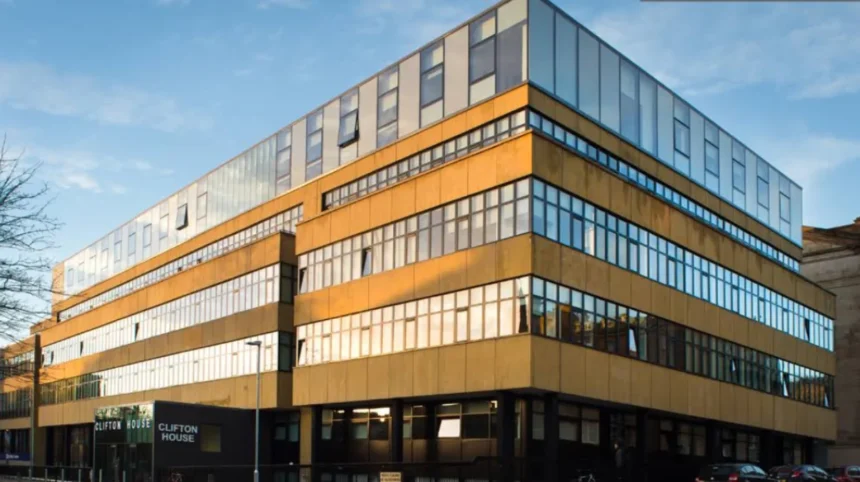
Glasgow City Council operates thirty state secondary schools alongside one unique grant-aided institution, whereas surrounding local authorities govern smaller, highly concentrated school networks. These surrounding areas include East Renfrewshire, East Dunbartonshire, Renfrewshire, North Lanarkshire, and South Lanarkshire Council local education authorities.
- How Are Secondary Schools Administered and Funded in Scotland?
- What Qualifications Framework Applies Across Scottish Secondary Schools?
- How Do Examination Attainment Rates Compare Between Glasgow City Council and Surrounding Councils?
- What Factors Account for SQA Attainment Disparities Across Local Authorities?
- How Do Advanced Higher Completion Rates Differ Across Regions?
- What Role Do Socioeconomic Factors and the Scottish Index of Multiple Deprivation Play in School Performance?
- How Does the Scottish Attainment Challenge Address Regional Inequalities?
- How Does School Meal Eligibility Reflect Socioeconomic Composition?
- How Do Catchment Area Policies and Placing Requests Work Across Council Boundaries?
- What Appeal Mechanisms Exist for Refused Placing Requests?
- How Do Denominational School Catchment Rules Differ?
- How Do Specific High-Performing Secondary Schools Compare Across Glasgow and Neighboring Authorities?
- What Specialized Curricular Centers Exist Across These Schools?
- How Do School Building Assets and Infrastructure Compare?
- What Are the Long-Term Outcomes and Positive Destination Rates for Leavers in Each Authority?
- How Do Articulation Agreements Support Glasgow City School Leavers?
- What Role Do Modern Apprenticeships Play in Post-School Outcomes?
- How Will Demographics and Education Policies Shape Secondary Schools in Greater Glasgow?
Secondary education in Scotland is organized under thirty-two local authorities created by the Local Government etc. (Scotland) Act 1994. The Greater Glasgow conurbation spans six distinct local education authorities. These local education authorities are Glasgow City Council, East Renfrewshire Council, East Dunbartonshire Council, Renfrewshire Council, North Lanarkshire Council, and South Lanarkshire Council. Each local education authority functions as the statutory education authority for its geographic boundary under the Education (Scotland) Act 1980.
Glasgow City Council manages thirty state-funded secondary schools serving an urban pupil population exceeding twenty-four thousand students. The city contains two main types of state secondary schools: nondenominational schools and Roman Catholic denominational schools. Nondenominational schools include institutions such as Hyndland Secondary School, uk/local/hillhead/">Hillhead High School, and Shawlands Academy. Roman Catholic denominational schools include institutions such as St Thomas Aquinas Secondary School, St Andrew’s Secondary School, and Holyrood Secondary School. In addition to municipal state schools, Glasgow host Jordanhill School. Jordanhill School is a direct grant-funded comprehensive school governed by an independent Board of Managers rather than Glasgow City Council.
East Renfrewshire Council operates seven state secondary schools serving suburban communities south of Glasgow. These seven schools include Mearns Castle High School, St Ninian’s High School, Eastwood High School, Woodfarm High School, Williamwood High School, Barrhead High School, and St Luke’s High School. East Dunbartonshire Council manages eight secondary schools located north and northeast of Glasgow. These eight schools include Bearsden Academy, Douglas Academy, Lenzie Academy, Boclair Academy, Turnbull High School, St Ninian’s High School in Kirkintilloch, Kirkintilloch High School, and Kilsyth Academy.
Renfrewshire Council operates eleven secondary schools west of Glasgow, including Gryffe High School, Castlehead High School, and Johnstone High School. South Lanarkshire Council operates seventeen secondary schools southeast of the city, including Strathaven Academy and Cathkin High School. North Lanarkshire Council administers twenty-three secondary schools east of Glasgow, including Chryston High School and Cumbernauld Academy.
All state secondary schools in Scotland deliver education using Curriculum for Excellence, a national framework established by the Scottish Executive in 2004. Curriculum for Excellence spans two main educational phases: the Broad General Education phase and the Senior Phase. Broad General Education covers Secondary 1 through Secondary 3 for pupils aged eleven to fourteen years. The Senior Phase covers Secondary 4 through Secondary 6 for pupils aged fourteen to eighteen years. During the Senior Phase, pupils sit national qualifications administered by the Scottish Qualifications Authority, the national awarding body in Scotland.
How Are Secondary Schools Administered and Funded in Scotland?
Municipal education funding in Scotland flows from the Scottish Government to individual council authorities through the Local Government Finance Settlement. Education authorities distribute core funding directly to secondary schools based on local Devolved School Management agreements. Devolved School Management frameworks allocate operational budgets according to total pupil enrolment figures, building floor areas, and specific socio-economic need indicators.
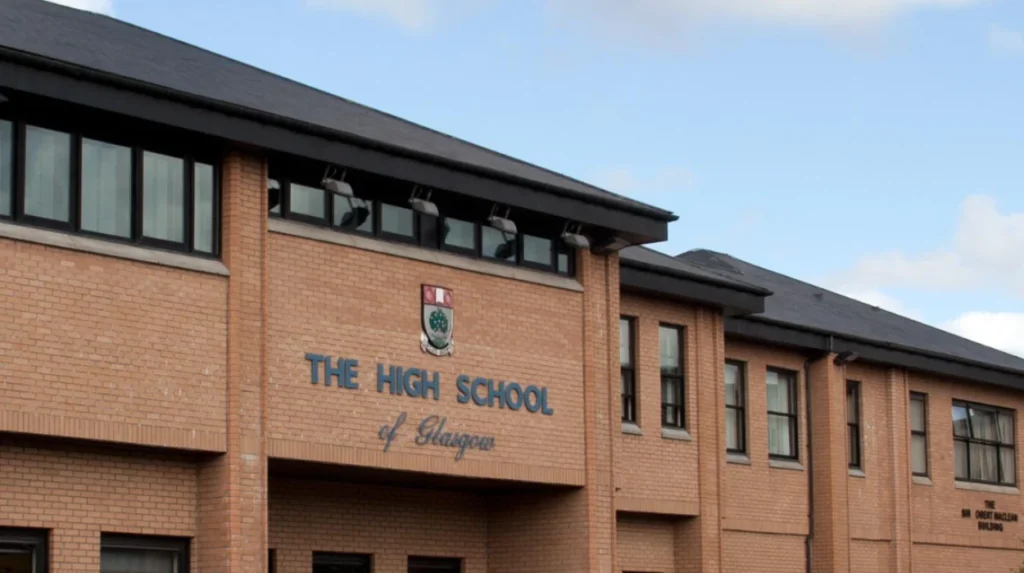
Grant-funded schools receive direct operational grants directly from the Scottish Government Education and Lifelong Learning Directorate. Independent fee-paying schools operate entirely outside municipal local authority management. Three examples of private independent schools located within the Glasgow City boundary are The High School of Glasgow, The Glasgow Academy, and St Aloysius’ College.
What Qualifications Framework Applies Across Scottish Secondary Schools?
All Scottish secondary schools assess Senior Phase students using qualifications designed and moderated by the Scottish Qualifications Authority. Scottish Qualifications Authority qualifications align with the Scottish Credit and Qualifications Framework, a twelve-level national framework. Secondary 4 pupils typically undertake National 4 and National 5 qualifications at Scottish Credit and Qualifications Framework levels four and five. Secondary 5 and Secondary 6 pupils undertake Higher qualifications at level six and Advanced Higher qualifications at level seven.
Scottish Higher qualifications represent the standard entry benchmark for Scottish university admission. Performance metrics published annually by the Scottish Government evaluate schools based on the percentage of candidates achieving specific Higher thresholds before leaving school. Three standard threshold metrics used in national reporting are the percentage of candidates achieving one or more Highers, three or more Highers, and five or more Highers.
Explore More Area Guide
Is Newton Mearns Good for Families Near Glasgow?
Best Primary Schools in Glasgow Southside for Families
How Do Examination Attainment Rates Compare Between Glasgow City Council and Surrounding Councils?
Secondary schools in East Renfrewshire and East Dunbartonshire consistently achieve higher Scottish Qualifications Authority attainment percentages than Glasgow City Council averages. Sixty percent of pupils in suburban authorities achieve five Highers, compared to thirty-six percent within Glasgow City Council state secondary schools.
Attainment metrics published by the Scottish Government reveal substantial performance differentials between Glasgow City Council state schools and surrounding suburban council areas. Annual Scottish Qualifications Authority examination results measure pupil success across National 5, Higher, and Advanced Higher qualifications. Suburban council authorities surrounding Glasgow record the highest average examination pass rates across state-funded education in Scotland.
East Renfrewshire Council and East Dunbartonshire Council rank consistently as the top two local education authorities in Scotland for SQA examination performance. Across East Renfrewshire secondary schools, sixty-seven percent of Senior Phase pupils achieve five or more Higher qualifications by the end of Secondary 5. In East Dunbartonshire secondary schools, sixty-three percent of pupils achieve five or more Higher qualifications by Secondary 5. Three specific examples of high-performing suburban schools achieving over seventy percent five-Higher attainment rates are Mearns Castle High School, Bearsden Academy, and St Ninian’s High School in Giffnock.
Glasgow City Council displays an overall authority average where thirty-six percent of Secondary 5 pupils achieve five or more Higher qualifications. However, academic performance varies across Glasgow City’s thirty state secondary schools. Top-performing municipal secondary schools in Glasgow achieve examination results that match top suburban schools. Three examples of high-attaining Glasgow City Council secondary schools are Hyndland Secondary School, Hillhead High School, and Notre Dame High School. Hyndland Secondary School records fifty-eight percent of Secondary 5 pupils achieving five or more Highers. Hillhead High School records fifty-five percent achieving five or more Highers. Notre Dame High School records fifty-two percent achieving five or more Highers.
Renfrewshire Council, South Lanarkshire Council, and North Lanarkshire Council record authority-wide SQA attainment averages between Glasgow City Council and East Renfrewshire Council. In Renfrewshire Council, forty-three percent of Secondary 5 pupils achieve five or more Highers. In South Lanarkshire Council, forty-four percent of pupils reach this benchmark. In North Lanarkshire Council, thirty-eight percent of pupils achieve five or more Highers.
What Factors Account for SQA Attainment Disparities Across Local Authorities?
Academic attainment differences between municipal authority areas stem primarily from structural socioeconomic variations rather than instructional quality differences. Teaching staff across all six authorities undergo identical professional registration through the General Teaching Council for Scotland. Education Scotland inspects all schools using identical quality indicators under the “How Good Is Our School?” evaluation framework.
Structural variations in attainment correlate directly with historical housing patterns, income distribution, and concentrated poverty. Suburban councils feature higher proportions of owner-occupied housing and professional households. Inner-city Glasgow authorities manage higher concentrations of social rented housing and lower median household incomes.
How Do Advanced Higher Completion Rates Differ Across Regions?
Advanced Higher qualifications evaluate undergraduate-level coursework at Scottish Credit and Qualifications Framework level seven. Advanced Highers serve as critical admission criteria for competitive degree programs at universities such as the University of Oxford, the University of Cambridge, the University of Edinburgh, and the University of Glasgow.
Suburban authorities maintain higher rates of Advanced Higher presentation and completion. In East Renfrewshire Council secondary schools, thirty-four percent of Secondary 6 pupils achieve one or more Advanced Highers. In Glasgow City Council secondary schools, eighteen percent of Secondary 6 pupils achieve one or more Advanced Highers. Three Glasgow state secondary schools maintaining Advanced Higher presentation rates above twenty-five percent are Hyndland Secondary School, Hillhead High School, and The Glasgow Gaelic School.
What Role Do Socioeconomic Factors and the Scottish Index of Multiple Deprivation Play in School Performance?
Socioeconomic deprivation measured by the Scottish Index of Multiple Deprivation directly correlates with secondary school attainment levels across all six Greater Glasgow local authorities. Glasgow City contains higher proportions of quintile one deprivations than affluent neighboring suburban council administrative areas.
The Scottish Index of Multiple Deprivation is the official statutory tool used by the Scottish Government to identify spatial concentrations of deprivation across Scotland. The Scottish Index of Multiple Deprivation divides Scotland into nearly seven thousand small areas called data zones. The index evaluates seven distinct domains of deprivation across each data zone. These seven domains are income, employment, health, education, geographic access, crime, and housing.
Data zones rank from one to six thousand nine hundred and seventy-six, where rank one represents the most deprived area in Scotland. Deprivation metrics divide data zones into five equal groups called quintiles. SIMD Quintile 1 represents the twenty percent most deprived data zones in Scotland. SIMD Quintile 5 represents the twenty percent least deprived data zones in Scotland.
Glasgow City Council contains the highest concentration of SIMD Quintile 1 data zones of any local authority in Scotland. Forty-four percent of Glasgow City Council’s population resides in data zones falling within SIMD Quintile 1. In contrast, East Renfrewshire Council has five percent of its population in SIMD Quintile 1. East Dunbartonshire Council has four percent of its population in SIMD Quintile 1.
Research published by the Scottish Government demonstrates that pupil attainment correlates directly with SIMD profiles. Across Scotland, thirty-two percent of pupils residing in SIMD Quintile 1 areas achieve three or more Highers by Secondary 5. Conversely, seventy-one percent of pupils residing in SIMD Quintile 5 areas achieve three or more Highers by Secondary 5.
Glasgow state secondary schools operating in catchment areas dominated by SIMD Quintiles 4 and 5 achieve academic results that equal suburban school averages. Hyndland Secondary School and Hillhead High School draw substantial pupil proportions from SIMD Quintile 5 areas in Glasgow’s West End. Conversely, Glasgow state secondary schools drawing predominantly from SIMD Quintile 1 areas face significant socioeconomic barriers to academic attainment. Three examples of Glasgow state secondary schools drawing over seventy percent of their pupil roll from SIMD Quintile 1 areas are Drumchapel High School, Lochend Community High School, and St Paul’s High School.
How Does the Scottish Attainment Challenge Address Regional Inequalities?
The Scottish Government launched the Scottish Attainment Challenge in 2015 to target resources toward closing the poverty-related attainment gap. The Scottish Attainment Challenge distributes Pupil Equity Funding directly to headteachers based on the number of pupils in Primary 1 through Secondary 3 eligible for free school meals.
Glasgow City Council receives the largest total allocation of Pupil Equity Funding in Scotland, receiving over eighteen million pounds annually. Headteachers utilize Pupil Equity Funding to hire additional literacy specialists, numeracy intervention teachers, and home-school link workers. Three examples of targeted interventions funded by Pupil Equity Funding in Glasgow secondary schools are small-group SQA exam tutoring, mental health counselling services, and digital device provision.
How Does School Meal Eligibility Reflect Socioeconomic Composition?
Free School Meal registration serves as an individual indicator of household income deprivation. Secondary pupils qualify for statutory Free School Meals if their parents receive qualifying state benefits, such as Income Support or Universal Credit with net earned income below specified thresholds.
In Glasgow City Council state secondary schools, thirty-four percent of enrolled pupils register for statutory Free School Meals. In East Renfrewshire state secondary schools, seven percent of enrolled pupils register for Free School Meals. In East Dunbartonshire, eight percent register for Free School Meals. In Renfrewshire Council, twenty-one percent register for Free School Meals.
How Do Catchment Area Policies and Placing Requests Work Across Council Boundaries?
Catchment area policies assign pupils to designated secondary schools based on primary residential postcodes under the Education (Scotland) Act 1980. Parents submit placing requests to cross council boundaries, but local authority residents receive statutory priority over outside non-resident educational place applicant families.
Every state secondary school in Scotland possesses a defined geographic catchment area established by the local education authority. Under Section 28 of the Education (Scotland) Act 1980, education authorities have a statutory duty to provide adequate secondary education for children residing within their administrative boundaries. Children living within a school’s designated catchment area hold primary statutory entitlement to attend that school.
Parents possess the legal right under the Education (Scotland) Act 1980 to request a school place outside their catchment area or outside their home local authority. This formal administrative procedure is known as a placing request. Parents submit placing requests directly to the education authority managing their preferred target school by statutory annual deadlines, typically February 15 for the upcoming August academic term.
Education authorities process placing requests according to formal priority criteria published in local authority admission policies. Catchment residents automatically receive top priority. When placing requests exceed available physical capacity or teaching staff ratios at a target school, the education authority refuses the excess placing requests based on statutory refusal grounds set out in Section 28A of the 1980 Act.
Three valid statutory reasons for refusing a placing request under Scottish law are:
- The placing would require the authority to employ an additional teacher or create an additional class.
- The placing would cause significant expenditure on physical accommodation layout adjustments.
- The placing would seriously detrimentalize the educational continuity or social wellbeing of existing pupils.
Cross-boundary placing requests between Glasgow City Council and surrounding suburban councils experience extreme capacity limitations. Suburban high schools in East Renfrewshire Council and East Dunbartonshire Council operate at or near one hundred percent physical capacity due to high resident catchment demand. Consequently, East Renfrewshire Council and East Dunbartonshire Council refuse nearly all cross-boundary placing requests submitted by non-resident parents living in Glasgow City.
Glasgow City Council receives placing requests from residents seeking entry into popular municipal schools located near council borders. Hyndland Secondary School, Hillhead High School, and Notre Dame High School regularly receive placing requests that exceed available non-catchment capacity.
What Appeal Mechanisms Exist for Refused Placing Requests?
When a local authority refuses a placing request, parents hold the statutory right under Schedule 2 of the Education (Scotland) Act 1980 to appeal the decision to an independent Education Appeal Committee. The Education Appeal Committee consists of council members and parent representatives independent of the local authority education department.
If the Education Appeal Committee upholds the local authority’s refusal, parents may submit a secondary legal appeal to the Sheriff Court under Section 28F of the Act. The Sheriff evaluates whether the local authority applied statutory refusal grounds correctly and whether the refusal decision was reasonable under all circumstances.
How Do Denominational School Catchment Rules Differ?
Roman Catholic denominational secondary schools operate dual catchment boundaries alongside nondenominational schools across all Greater Glasgow local authorities. Denominational schools serve defined Catholic parish catchments that overlay nondenominational geographic catchment zones.
Pupils residing in a denominational catchment zone who possess a Certificate of Catholic Baptism receive priority admission to the local denominational secondary school. Non-baptized pupils residing in the catchment area may attend the denominational school if capacity permits, but local authorities prioritize baptized catchment children during oversubscription scenarios. Three examples of prominent denominational secondary schools in Greater Glasgow are St Ninian’s High School in Giffnock, St Thomas Aquinas Secondary School in Glasgow, and St Ninian’s High School in Kirkintilloch.
How Do Specific High-Performing Secondary Schools Compare Across Glasgow and Neighboring Authorities?
Top-tier secondary schools in Glasgow City, such as Hyndland Secondary School and Hillhead High School, match academic metrics seen in suburban institutions like Bearsden Academy and Mearns Castle High School. Jordanhill School operates independently as Scotland’s top-ranked state-funded secondary institution.
Evaluating individual secondary school performance across Greater Glasgow requires examining specific academic metrics, Education Scotland inspection ratings, and specialized curricular programs. Comparative analysis shows that high-performing municipal state schools in Glasgow achieve examination outcomes comparable to leading suburban academies.
Jordanhill School, located in Glasgow’s West End, stands as an independent comprehensive state-funded school. Jordanhill School does not operate under Glasgow City Council control; it receives funding directly from the Scottish Government. Jordanhill School consistently ranks as the top-performing state school in Scotland, with eighty-four percent of S5 pupils achieving five or more Highers. Admission to Jordanhill School is restricted strictly to historic residential property boundaries divided into List A and List B catchment zones.
Within Glasgow City Council’s municipal network, Hyndland Secondary School leads in academic attainment. Hyndland Secondary School educates over one thousand pupils in the West End of Glasgow. Education Scotland awarded Hyndland Secondary School “Excellent” ratings across core quality indicators during its regular inspection cycle. Fifty-eight percent of Hyndland pupils achieve five or more Highers by S5.
Hillhead High School, situated near the University of Glasgow, educates over one thousand pupils representing diverse international backgrounds. Fifty-five percent of Hillhead pupils achieve five or more Highers. The Glasgow Gaelic School (Sgoil Ghàidhlig Ghàidheal) delivers full Gaelic-medium education from Secondary 1 through Secondary 6. The Glasgow Gaelic School draws pupils from across the city and achieves fifty-four percent five-Higher attainment.
In East Renfrewshire Council, Mearns Castle High School in Newton Mearns achieves seventy-four percent five-Higher attainment. St Ninian’s High School in Giffnock achieves seventy-one percent five-Higher attainment. Williamwood High School in Clarkston and Eastwood High School in Newton Mearns maintain five-Higher attainment figures above sixty-five percent.
In East Dunbartonshire Council, Bearsden Academy records seventy-two percent five-Higher attainment. Douglas Academy in Milngavie records sixty-eight percent five-Higher attainment. Douglas Academy houses the Music School of Douglas Academy, a specialist national centre of excellence that provides instrumental tuition alongside academic subjects.
What Specialized Curricular Centers Exist Across These Schools?
Several secondary schools across Greater Glasgow host specialized curricular centers serving pupils with specific talents or learning requirements. These centers accept applicants from outside standard geographic catchments through specialized selection auditions or educational assessment panels.
Three prominent examples of specialist educational provision in Greater Glasgow secondary schools are:
- The Music School of Douglas Academy in East Dunbartonshire, providing specialist musical instruction.
- The Glasgow School of Sport at Bellahouston Academy in Glasgow City, providing elite athletic training alongside academic education.
- The City of Glasgow Dance Academy at Knightswood Secondary School, delivering specialist vocational dance training.
How Do School Building Assets and Infrastructure Compare?
Capital investment programs over the past two decades have modernized secondary school infrastructure across all six local authorities. Glasgow City Council rebuilt or substantially refurbished its entire secondary school estate under public-private partnership contracts and municipal capital funding between 2000 and 2015.
Suburban local authorities have similarly renewed secondary school infrastructure. East Renfrewshire Council completed modern campus developments for Barrhead High School and Maidenhill educational facilities. East Dunbartonshire Council constructed modern replacement facilities for Boclair Academy and Lenzie Academy. Consequently, physical building standards, ICT infrastructure, and science laboratory facilities remain high across both urban and suburban secondary estates.
What Are the Long-Term Outcomes and Positive Destination Rates for Leavers in Each Authority?
Positive destination rates measure leavers entering higher education, further education, employment, or training within six months of graduation. Surrounding council areas report higher rates of direct university progression, while Glasgow City exhibits higher enrolment in local further education vocational colleges.
The Scottish Government publishes annual statistics tracking the post-school destinations of secondary school leavers. The metric measures the proportion of school leavers who enter what the national framework classifies as a positive destination within six months of departing secondary school. Six categories of post-school outcomes qualify as positive destinations under Scottish Government definitions. These six categories are higher education, further education, employment, voluntary work, modern apprenticeships, and formal training programs.
Across Scotland, ninety-six percent of state secondary school leavers achieve a positive destination. All six local authorities in Greater Glasgow maintain overall positive destination rates between ninety-four and ninety-eight percent. However, substantial differences exist when analyzing the specific pathways school leavers select.
In East Renfrewshire Council, seventy-four percent of school leavers progress directly into higher education institutions, such as degree courses at universities. In East Dunbartonshire Council, seventy-one percent of school leavers progress directly into higher education.
In Glasgow City Council, forty-seven percent of school leavers progress directly into higher education. However, thirty-four percent of Glasgow City school leavers enter local further education colleges, such as City of Glasgow College, Glasgow Kelvin College, and Glasgow Clyde College. Further education colleges offer Higher National Certificates, Higher National Diplomas, and vocational qualifications that provide articulation pathways into university degree programs.
How Do Articulation Agreements Support Glasgow City School Leavers?
Higher Education Articulation Agreements allow students completing Higher National Certificates or Higher National Diplomas at further education colleges to transition directly into the second or third year of degree programs at universities. This educational pathway is widely utilized by Glasgow City school leavers.
Glasgow Caledonian University, the University of the West of Scotland, and Strathclyde University maintain formal articulation partnerships with further education colleges across Greater Glasgow. These partnerships enable pupils leaving secondary school without full university entry qualifications to obtain degree qualifications within four years of post-secondary study.
What Role Do Modern Apprenticeships Play in Post-School Outcomes?
Modern Apprenticeships offer paid employment combined with work-based learning toward Scottish Credit and Qualifications Framework industry qualifications. Skills Development Scotland coordinates Modern Apprenticeship funding across all six local authority areas.
Modern Apprenticeship uptake is higher in Glasgow City Council, Renfrewshire Council, and North Lanarkshire Council than in East Renfrewshire or East Dunbartonshire. School leavers enter modern apprenticeships in key growth sectors across Greater Glasgow. Three examples of prominent modern apprenticeship sectors in Greater Glasgow are engineering and manufacturing, digital technology, and construction trades.
How Will Demographics and Education Policies Shape Secondary Schools in Greater Glasgow?
Demographic shifts and capital investment programs directly determine capacity constraints, teacher-to-pupil ratios, and curricular provision across Greater Glasgow. Population growth in suburban councils drives school expansion, while Glasgow City Council invests heavily in closing the poverty-related academic education achievement gap.
Future developments across Greater Glasgow secondary education are governed by changing population dynamics, national legislative reforms, and municipal infrastructure plans. National population projections compiled by National Records of Scotland indicate diverging demographic trends between Glasgow City and surrounding suburban local authorities.
Suburban council areas, particularly East Renfrewshire Council and South Lanarkshire Council, experience sustained housing expansion driven by private residential developments. This population expansion places upward pressure on secondary school capacities. East Renfrewshire Council expanded physical capacities at St Ninian’s High School and Mearns Castle High School to accommodate rising local catchment numbers.
Glasgow City Council experiences localized demographic shifts. Population density in central and western districts creates sustained high demand for secondary schools such as Hyndland Secondary School and Hillhead High School. To manage capacity pressures, Glasgow City Council adjusts catchment boundaries and invests in expanding existing school estates.
At the national level, education in Scotland is undergoing structural reform following independent reviews of assessment and qualifications. The Scottish Government committed to replacing the Scottish Qualifications Authority with a new national awarding body. Additionally, Education Scotland will be restructured to separate statutory inspection functions from curriculum policy development.
Glasgow City Council leads national implementation of digital learning strategies. Glasgow’s Connected Learning Programme provided individual iPad tablet devices to every secondary pupil across the thirty state secondary schools. Teachers integrate digital tools into daily classroom instruction, SQA assignment preparation, and remote learning platforms.
Suburban local authorities are also expanding digital learning infrastructure. East Dunbartonshire Council and East Renfrewshire Council maintain high-speed network connections and digital learning environments across all secondary campuses.
How Do Future Assessment Reforms Impact Greater Glasgow Schools?
Proposed reforms to Senior Phase assessment seek to reduce reliance on final end-of-year written examination papers. Independent reviews advocate increasing continuous internal assessment, project-based coursework, and digital portfolios at Scottish Credit and Qualifications Framework levels five, six, and seven.
Secondary schools across all six Greater Glasgow local authorities are preparing teaching staff for modified SQA course specifications. Schools with established digital learning programs, such as Glasgow City Council state secondary schools, possess structural advantages in managing continuous digital assessment frameworks.
What Strategies Are Closing the Attainment Gap across Council Borders?
Closing the poverty-related attainment gap remains the primary strategic objective of Scottish education policy. Inter-authority collaboration through the West Partnership Regional Improvement Collaborative brings together education professionals from all six Greater Glasgow councils.
The West Partnership facilitates shared professional learning, cross-authority moderation of SQA coursework, and joint research into effective pedagogical strategies. Secondary schools across Greater Glasgow utilize shared data frameworks to track pupil progress, implement targeted literacy interventions, and improve positive destination outcomes for vulnerable leavers.