
Key Points
- Ryan Ferguson, 26, from Bootle in Merseyside, appeared at Glasgow Sheriff Court on charges linked to a protest in Glasgow on 8 July.
- He is accused of “stirring up hatred” by shouting racist abuse at an unnamed person in Castlemilk, and of communicating material that would be considered threatening, abusive or insulting in Cranhill on the same day.
- Court papers say Ferguson acted in a racially aggravated manner and posted a social media video containing racist remarks, which allegedly was intended to stir up hatred against a group of people.
- Ferguson pleaded not guilty to both charges.
- The court case follows large gatherings in Castlemilk and Cranhill last week after online speculation that men accused of serious crimes were living in those areas.
- Ferguson is said to have travelled around 200 miles from England to attend the demonstrations in the two Glasgow neighbourhoods.
- No further details on bail, custody, or the trial timetable were included in the initial reports available at the time of writing.
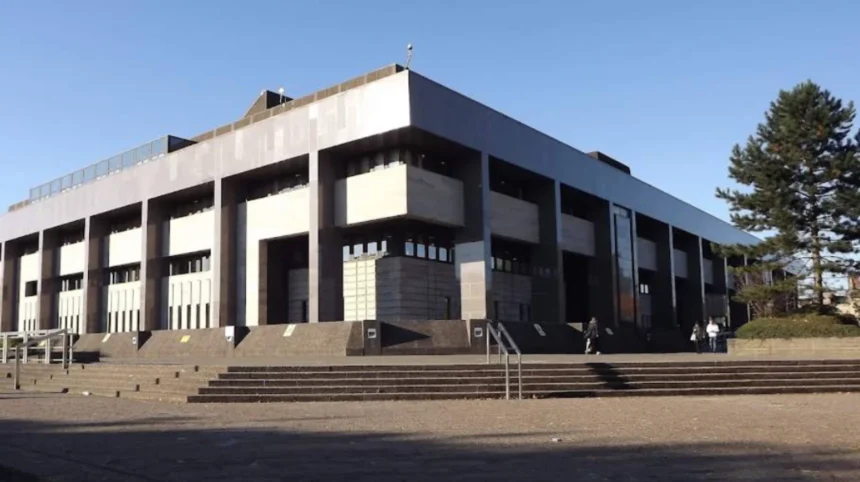
Glasgow (Glasgow Express) July 14, 2026 – A 26-year-old man who travelled from Merseyside to attend protests in Glasgow has appeared in court on charges of stirring up hatred, including an allegation that he shouted racist abuse in Castlemilk and posted a racially charged video online. Ryan Ferguson, from Bootle, pleaded not guilty to two charges at Glasgow Sheriff Court, with the cases now set to proceed further through the Scottish justice system.
- Key Points
- What charges has Ryan Ferguson faced at Glasgow Sheriff Court?
- Why did protests take place in Castlemilk and Cranhill?
- What exactly is Ferguson alleged to have done in Castlemilk and Cranhill?
- How did Ryan Ferguson travel to Glasgow and what is his background?
- What did the court hear and how did Ferguson respond?
- What broader concerns have emerged around the Castlemilk and Cranhill gatherings?
- How do “stirring up hatred” charges work under Scottish law?
- Background of the development
- Prediction: how could this development affect Glasgow residents and the wider discussion?
What charges has Ryan Ferguson faced at Glasgow Sheriff Court?
According to court papers described in BBC News reports, Ferguson is accused of two distinct offences both linked to 8 July.
The first charge states that he “acted in a racially aggravated manner by shouting ‘racist abuse’ at an unnamed person” in Castlemilk, a neighbourhood in south-west Glasgow.
The charge frames this conduct as part of an attempt to “stir up hatred” against a group of people.
The second charge alleges that on the same day in Cranhill, in Glasgow’s east end, Ferguson
“communicated material a reasonable person would consider threatening, abusive or insulting”.
Court documents say this material was a video he posted on social media which contained racist remarks, and that he
“either intended to stir up hatred against a group of people”.
Ferguson pleaded not guilty to both charges at Glasgow Sheriff Court, meaning the allegations will now be tested in court rather than being accepted as facts.
Why did protests take place in Castlemilk and Cranhill?
The court case unfolded in the context of large gatherings that took place in Castlemilk and Cranhill last week, reports indicate.
As reported by journalists covering the case for BBC News and STV, the demonstrations arose after
“online speculation that men accused of serious crimes were living in both of those places”.
These unverified claims appear to have prompted residents and others to gather in the two areas, with some events described as “large gatherings” rather than formal, organised protests.
No further detail was provided in the initial news reports about the exact nature of the online posts, the identity of the men allegedly accused of crimes, or whether police had confirmed any criminal investigations connected to those claims.
What exactly is Ferguson alleged to have done in Castlemilk and Cranhill?
As reported by BBC News and The Scottish Sun, the court papers outline two separate allegations tied to the same day.
In Castlemilk, the allegation is that Ferguson, while attending a demonstration, shouted racist abuse at an unnamed individual and did so in a racially aggravated manner.
The charge explicitly links this conduct to an intention to “stir up hatred” against a group, which is a key element of the offence under Scottish law.
In Cranhill, the allegation concerns digital communication rather than an on-the-ground verbal abuse. Documents state that Ferguson posted a video on social media that contained racist remarks, and that this material would be regarded by a reasonable person as threatening, abusive or insulting. The charge again references the intention to “stir up hatred against a group of people”.
The reports do not specify whether the two incidents were directly connected, how many people were present at the gatherings, or whether the unnamed person in Castlemilk was identified by police or in court documents.
How did Ryan Ferguson travel to Glasgow and what is his background?
According to STV and BBC News, Ferguson is from Bootle in Merseyside, in north-west England, and is said to have travelled approximately 200 miles to attend the demonstrations in Castlemilk and Cranhill.
The initial court reports do not give details about his prior convictions, employment, or other personal background, apart from his age and location.
Earlier, unrelated reports in English media mention a man named Ryan Ferguson who was involved in a football-related racist abuse case in Gloucestershire, but those reports concern a different individual or a different time period and are not linked to the current Glasgow case in the available information.
It is not possible, from the current reports, to confirm whether the Ryan Ferguson in the Glasgow case is the same person as in those earlier English cases.
What did the court hear and how did Ferguson respond?
At Glasgow Sheriff Court, Ferguson faced two charges and, as reported by BBC News and The Scottish Sun, pleaded not guilty to both.
The reports do not include details on whether the court addressed bail, custody, or any schedule for a trial, focus instead being on the nature of the charges and Ferguson’s plea.
In Scottish sheriff court proceedings, a not-guilty plea typically leads to the case being set for further procedures, such as a trial or a preliminary hearing, but the exact timetable in this case has not been disclosed in the initial news accounts.
What broader concerns have emerged around the Castlemilk and Cranhill gatherings?
The case has highlighted concerns about how online speculation can translate into real-world gatherings and potential incidents of hate behaviour in residential neighbourhoods.
As journalists covering the case have noted, the large gatherings in Castlemilk and Cranhill emerged after claims circulated online about men accused of serious crimes living in those areas, and these claims appear to have been unverified at the time the protests took place.
Police and local authorities have not, in the available reports, provided detailed commentary on whether the online claims were accurate or on any broader investigations linked to them.
The charges against Ferguson centre on the use of both verbal abuse and online content to communicate racist material, which underscores concerns about how social media can be used to spread threatening or abusive material during community tensions.
How do “stirring up hatred” charges work under Scottish law?
While the news reports do not provide a legal analysis, the wording of the charges reflects offences under Scotland’s hate crime legislation, which covers behaviour intended to stir up hatred against a group based on characteristics such as race.
The charges allege that Ferguson’s actions – shouting racist abuse in Castlemilk and posting a video with racist remarks in relation to Cranhill – were not merely offensive but were linked to an intention to stir up hatred against a group, which is a central element of the offences.
Whether that intention is proven will depend on the evidence presented at any future trial, not on the initial court appearance.
Background of the development
This case arises in the context of recent community tensions in Glasgow linked to unverified online claims about residents accused of serious crimes, which prompted large gatherings in Castlemilk and Cranhill.
The development of charging a man who travelled from England to participate in those gatherings reflects how public order and hate crime concerns can intersect when local tensions are amplified by online speculation and off-duty individuals attending demonstrations from outside the city.
The charges specifically focus on both on-the-ground verbal abuse and the use of social media to communicate racist material, illustrating the dual nature of the alleged conduct.
Prediction: how could this development affect Glasgow residents and the wider discussion?
If the case proceeds to trial and evidence supports the charges, it could reinforce the message that travelling to Glasgow to participate in gatherings linked to unverified online claims does not provide immunity from hate crime and public order laws.
This may influence how individuals from outside the city consider attending similar events in the future.
For residents of Castlemilk, Cranhill, and other Glasgow neighbourhoods, the case may heighten awareness of how online speculation can lead to real-world gatherings where racist abuse and threatening material can emerge, potentially affecting community trust and safety.
At the same time, if Ferguson’s not-guilty plea is upheld, the outcome could temper expectations about the strength of the evidence and underline the importance of careful verification before drawing conclusions about online claims that spark community tensions.
Overall, the case is likely to be referenced in discussions about how local authorities, police, and online platforms respond to unverified claims that can inflame community tensions, travel from other parts of the UK to attend demonstrations, and the use of social media to spread racist or threatening material during such events.
The precise impact on residents will depend on the eventual court outcome and any broader policy or community responses that follow.