The Glasgow Subway is worth using when you need fast, predictable crossings of central Glasgow, especially across the River Clyde or between the West End and city centre. For short, flat trips within a single neighbourhood, walking is usually quicker, cheaper and more flexible.
- How fast is the Glasgow Subway compared with walking?
- What is the Glasgow Subway and how does it work?
- Which journeys on the Subway save the most time compared with walking?
- How does the cost of the Subway compare with walking and other transport?
- When is walking more practical than using the Glasgow Subway?
- What are the limitations of the Glasgow Subway compared with walking?
- How does reliability and comfort compare between the Subway and walking?
- Is the Glasgow Subway worth using overall for residents and visitors?
How fast is the Glasgow Subway compared with walking?
The Subway completes a full 10.5 km loop in about 24 minutes, with most key journeys taking 5–15 minutes. Walking the same routes typically takes 15–45 minutes, depending on distance and terrain.
The Glasgow Subway is a 6½-mile (10.4–10.5 km) circular underground line with 15 stations, running two concentric loops: the clockwise “Outer Circle” and the anti‑clockwise “Inner Circle”. During peak times trains run every 4 minutes, and every 6–8 minutes off‑peak, meaning wait times are short and total journey times are dominated by the actual travel.
A complete circuit takes roughly 24 minutes, so any half‑loop journey is around 10–12 minutes, and many typical city‑centre to West End or south‑side trips are 5–10 minutes on the train. Against that, walking 1 km in an urban environment takes about 12 minutes on average, so a 2 km walk is roughly 24 minutes, and a 3 km walk is around 35–40 minutes.
When you compare specific routes:
- St Enoch to Hillhead is about 3 km by foot and roughly 7–9 minutes on the Subway.
- Bridge Street to Govan is around 3.5 km by foot and about 8–10 minutes on the train.
- Cowcaddens to Buchanan Street is under 1 km, so walking is 10–12 minutes versus 3–4 minutes on the Subway.
For distances under 1 km, walking is often comparable or only slightly slower than the Subway once you include station access and waiting time. For 2–3 km and longer, especially across the Clyde or between the east, south and west of the city, the Subway is clearly faster and more reliable, particularly in rain, wind or cold.
What is the Glasgow Subway and how does it work?
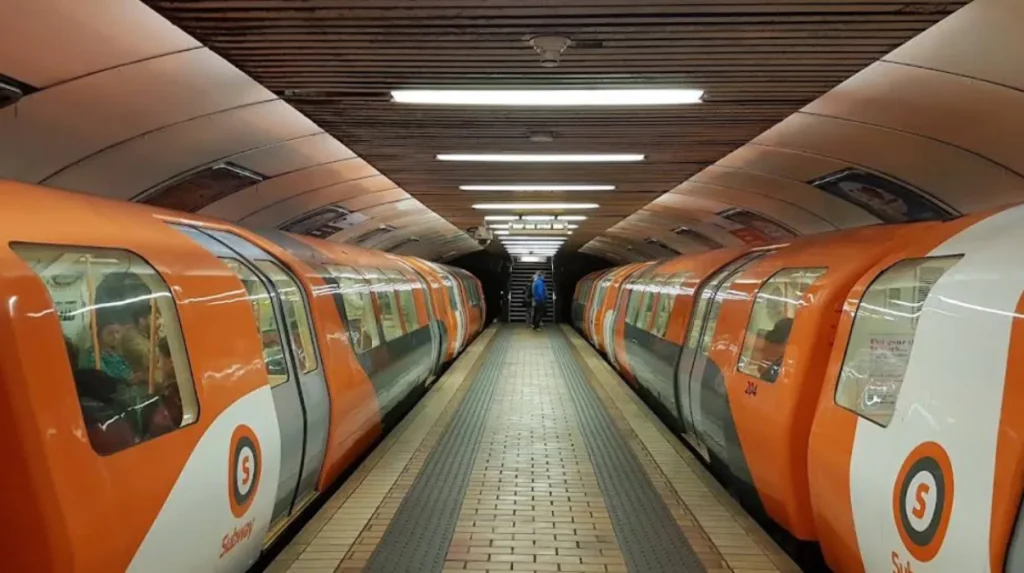
The Glasgow Subway is a 10.5 km underground metro with 15 stations on a circular route. It uses two tracks (inner and outer circles), 4‑foot gauge tunnels, and runs driverless orange trains every few minutes.
The Glasgow Subway is operated by Strathclyde Partnership for Transport (SPT) and is the third‑oldest underground metro system in the world, opening on 14 December 1896 after London and Budapest. It is the only underground system in the UK that has never been extended and remains a single circular line with no branches.
The route is 10.5 km long and dips twice under the River Clyde: between St Enoch and Bridge Street on the east side, and between Govan and Partick on the west side. Depths vary from about 2.1 metres (7 feet) to 35 metres (115 feet) below the surface, so trains climb and descend noticeably along the line.
The tunnel diameter is about 3.35 metres, and the track gauge is 4 feet (1,219 mm), which is narrower than most modern systems and requires specially built rolling stock. The current trains are small, orange, electric units introduced during the major modernisation in the late 1970s, and the system now operates in driverless mode with no crew on board.
Service hours are:
- Weekdays: 6:30 am to 11:30 pm
- Saturdays: 6:30 am to 11:30 pm
- Sundays: 10:00 am to around 6:00 pm
Trains cross under the Clyde and connect the north side (West End, university area, city centre) with the south side (Merchant City, south‑side residential areas, industrial zones) in a single, continuous loop.
Which journeys on the Subway save the most time compared with walking?
The biggest time savings come from trips that cross the River Clyde or link the West End, city centre and south side, where the Subway takes 5–12 minutes versus 20–40 minutes walking.
Journeys that span a large part of the city’s diameter or cross the Clyde benefit most from the Subway. These include:
- St Enoch or Buchanan Street to Hillhead, Kelvinhall or Partick (West End to city centre): around 7–10 minutes on the train versus 20–30 minutes walking.
- Bridge Street or West Street to Govan or Ibrox (east/southern fringe to south‑west): around 8–12 minutes on the train versus 25–35 minutes walking.
- Cowcaddens, St George’s Cross or Kelvinbridge to Cessnock, Kinning Park or Shields Road (north side to south side): around 8–12 minutes on the train versus 25–40 minutes walking, depending on starting and finishing points.
Short hops between neighbouring stations, such as Buchanan Street to Cowcaddens, Hillhead to Kelvinbridge, or St Enoch to Bridge Street, are under 1 km and take 10–15 minutes walking. The Subway can still be 3–6 minutes faster, but you must factor in walking to the station, waiting for the train and exiting, which narrows the advantage.
For people carrying heavy bags, with limited mobility, or in poor weather, the time penalty for walking increases, and the Subway’s advantage grows even for shorter distances. For quick, local errands inside a single neighbourhood, walking is often more convenient and only marginally slower.
How does the cost of the Subway compare with walking and other transport?
Walking is free. The Subway requires a fare but is cheaper than most bus or train trips for similar journeys, and integrated tickets with other SPT services can reduce overall costs.
Walking anywhere in Glasgow has no direct cost, though it may involve time, effort and exposure to weather. The Subway is a paid service, with fares set by SPT. While exact prices vary by ticket type and zone, single trips within the city are typically in the low pound range, and day tickets or integrated SPT passes can cover Subway, bus and some rail journeys for a fixed daily price.
For a single trip, the Subway is more expensive than walking, but often cheaper than a bus or taxi for the same distance, especially across the city. For example, a 3 km cross‑city trip could cost several pounds on a bus or taxi, while a Subway single is usually a fraction of that if you already have an integrated ticket.
For regular commuters, students or tourists making multiple trips, buying a day ticket or multi‑day SPT pass can make the per‑journey cost very low, often below the cost of equivalent bus trips. Walking remains the cheapest option for anyone who can afford the time and physical effort, but for frequent longer journeys, the Subway’s cost per kilometre is competitive with other public transport.
When is walking more practical than using the Glasgow Subway?
Walking is more practical for short distances under 1 km, trips within a single neighbourhood, and when you want to avoid stations, queues or fixed schedules.
Walking is ideal when:
- The start and end points are less than 1 km apart, such as moving between shops on the same street, going from a hotel to a nearby restaurant, or walking from Buchanan Street to nearby George Square.
- You are already close to your destination and the nearest Subway station is significantly farther than the walking distance itself.
- You want to see the city, explore side streets, stop at cafes or shops, or avoid the constraints of fixed routes and operating hours.
- You are travelling late at night or early in the morning when the Subway is not running (before 6:30 am on weekdays/Saturdays or before 10:00 am on Sundays), or when you need to reach a location not near any station.
In these situations, walking avoids the time spent heading to a station, waiting for a train, and exiting at the other end. For short, local trips, the total time difference can be minimal, and walking provides more flexibility and independence from the Subway’s circular route and limited station coverage.
What are the limitations of the Glasgow Subway compared with walking?
The Subway only serves 15 stations on a single loop, cannot reach destinations outside that ring, and has fixed hours. Walking can go anywhere at any time.
The Glasgow Subway’s main limitation is its coverage. It only serves 15 stations along a circular route and does not extend to outlying areas, suburbs, or many residential neighbourhoods beyond the immediate city centre and West End. If your destination is not near one of these stations, you must walk a significant distance to reach it, sometimes longer than the walk you would have done anyway.
The system also has fixed operating hours and does not run 24 hours. It closes at 11:30 pm on weekdays and Saturdays and much earlier on Sundays, so late‑night travel or early‑morning trips outside these windows require walking, buses, taxis or other transport.
Walking has no such restrictions. You can walk anywhere at any time, use any route, stop where you like, and change direction instantly. The Subway cannot compete with walking in terms of route flexibility, access to non‑station areas, or availability outside operating hours.
Explore More Area Guide
Best Lunch Spots Near Buchanan Street: Glasgow City Centre Guide
Where Can You Find the Best Late Night Takeaway in Glasgow?
How does reliability and comfort compare between the Subway and walking?
The Subway offers predictable timing, protection from weather and reduced physical effort, while walking is fully flexible but exposed to weather and fatigue.
The Subway provides a reliable, scheduled service with short intervals between trains, meaning journey times are predictable and consistent. This is especially valuable in rain, wind, snow or extreme heat, where walking becomes slower, uncomfortable or unsafe. The underground environment also avoids traffic congestion, which can affect buses and cars but not the Subway.
Walking is fully flexible but depends on weather, traffic crossings, gradients and personal fitness. Long walks in heavy rain or strong wind can significantly increase travel time and discomfort. For people with mobility issues, joint pain, or carrying heavy loads, walking longer distances can be physically demanding or impractical, whereas the Subway reduces physical strain and makes longer trips more accessible.
Is the Glasgow Subway worth using overall for residents and visitors?
The Glasgow Subway is worth using for medium to long journeys, especially those crossing the Clyde or linking the West End, city centre and south side. For very short, local trips, walking is usually more practical.
For residents, the Subway is a valuable part of a multimodal transport strategy. It complements buses, trams (if planned or introduced), and rail by providing fast, reliable crossings of central Glasgow without the delays of surface traffic. For regular commuters, students and workers who travel between the West End, city centre or south side, the Subway reduces travel time, physical effort and exposure to weather, making it a cost‑effective option when combined with integrated tickets.
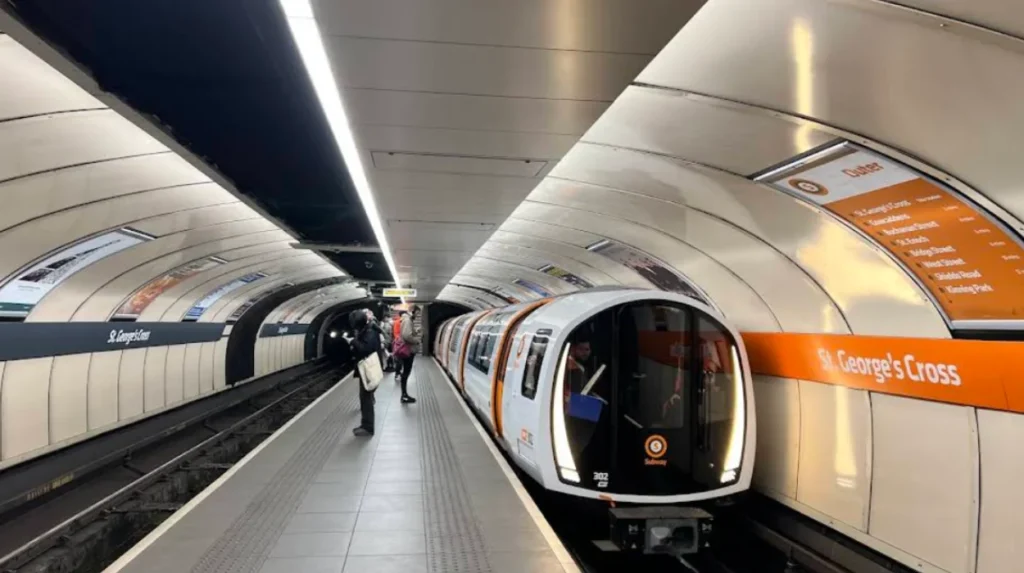
For visitors, the Subway is an efficient way to see key areas such as the city centre, Merchant City, and the West End (Hillhead, Kelvinbridge) without long walks. It also offers a unique historical experience as the world’s third‑oldest underground metro and a charismatic local icon known as the “Clockwork Orange”.
Walking remains essential for short trips, exploring neighbourhoods, and accessing places not near Subway stations. The most effective approach is to use the Subway for longer, cross‑city journeys and to walk for short, local movements, combining both modes to create a fast, flexible and comfortable travel pattern in Glasgow.
Is the Glasgow Subway worth using?
Yes. The Glasgow Subway is worth using for medium and long journeys, particularly between the city centre, West End and south side, where it is usually faster and more reliable than walking.