Key Points
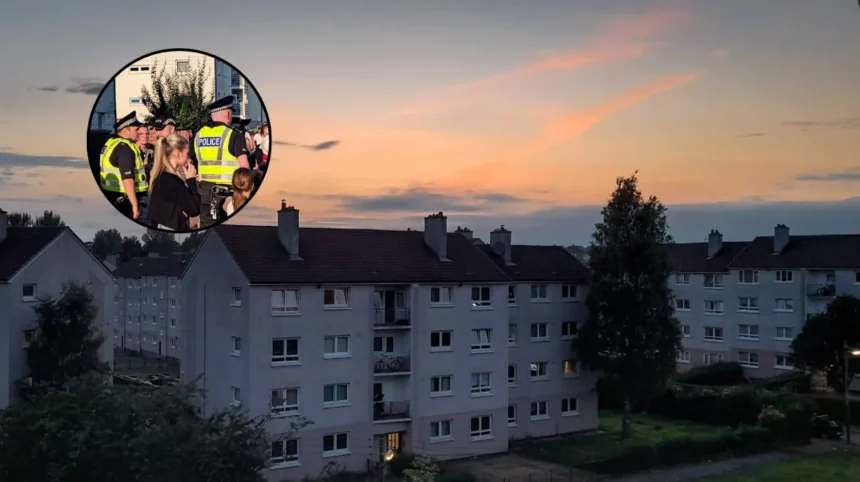
- Hundreds of people gathered in Glasgow’s Castlemilk neighbourhood on Wednesday evening, 8 July 2026, after a resident of a block of flats on Tormusk Road was said to be involved in a rape in the city.news.
- Protesters shouted slogans including “get them out” and “no peace for a beast”, and some threw objects at the building’s windows while chanting.
- Police Scotland officers guarded the entrance to the block, forming a stand-off with the crowd as three people attempted to gain entry to the flats.
- No person was removed from the flat during the protest, even after civilians were temporarily allowed to enter the building to search it.
- A window was smashed and a rock was thrown from the crowd; enquiries are ongoing into vandalism and a possible assault-related incident, but no arrests were made at the time of the protest.
- A Police Scotland spokesperson described the behaviour as not legitimate protest and warned that violence, disorder, hate crime and threatening behaviour will be dealt with “swiftly and robustly”.
- The Castlemilk protest follows similar unrest in Cranhill on Tuesday, 7 July 2026, where demonstrators confronted police on Lamlash Crescent, a man was arrested and charged with assaulting an officer, and two men were escorted from a besieged flat.
- Local anger appears linked to reports that individuals connected to a city-centre rape case were relocated to Castlemilk, though police have not confirmed any specific move in public statements.
- Police confirmed that one man was arrested and charged in connection with police assault during the Cranhill disorder the previous night; he will be reported to the Procurator Fiscal.
- The unrest originally flared in early July, weeks after two men were charged in connection with the rape of a woman near Clyde Place in the city centre on 31 May 2026.
- Jebril Abdelrahman, 19, has been charged with rape, while Denison Charles, 20, was charged with assault in connection with that incident.
- The incidents have raised concerns about community safety, the handling of expressive protests, and the potential for local tensions to escalate into wider disorder in Glasgow’s south side.
Glasgow (Glasgow Express) July 9, 2026 — Could a Single Alleged Rape Case Spark Repeated Protests in Glasgow’s South Side?Hundreds of people gathered in Glasgow’s Castlemilk last night after a resident of a block of flats was said to be involved in a rape in the city, according to reports from multiple local and national outlets.
- Key Points
- Why Did Protesters Gather in Castlemilk on 8 July?
- How Did Police Respond to the Castlemilk Stand-Off?
- What Did Police Say About the Legitimacy of the Protest?
- What Is the Background of the Underlying Rape and Assault Case?
- How Have Similar Protests Unfolded in Other Glasgow Areas?
- What Do Local Reports Say About Community Sentiment?
- How Have Police Linked the Protests to Wider Community Safety Concerns?
- Background of the Development
- Prediction: How This Development Could Affect Glaswegian Residents and Communities
Police were seen guarding the door of the block on Tormusk Road as protesters shouted and threw objects at the building’s windows, while the crowd could be heard chanting “no peace for a beast” before three people attempted to gain entry to the block of flats.
As reported by the Glasgow Times, police were called to Tormusk Road just before 7pm on Wednesday, 8 July 2026, when a crowd of locals gathered in front of a property on the street chanting “get them out”.
Those who turned out believed there to be a suspected sex offender living in the area and sought for him to be removed, according to the same report.
Why Did Protesters Gather in Castlemilk on 8 July?
The gathering appears to have been triggered by community concern that a person linked to a rape case in central Glasgow had been moved into the Castlemilk flats.
As reported by Metro and other outlets, hundreds of protesters gathered outside a block of flats in Glasgow’s Castlemilk on Wednesday evening amid claims that a resident was linked to a serious sexual assault in the city.
As reported by the Scottish Sun, dozens of furious residents gathered in Castlemilk amid reports that the individuals understood to be linked to an alleged rape in Glasgow city centre were relocated there.
The unrest comes after protests in Cranhill the previous night, which saw scores of people confront police on Lamlash Crescent, forcing officers to raise their batons as two men were escorted from a besieged flat.
How Did Police Respond to the Castlemilk Stand-Off?
Police Scotland officers attended the scene and engaged with the group, which later dispersed, according to a spokesperson for the force.
No individuals were removed from the flat outside which the protest took place, even after civilians were allowed entry to search the building, the Glasgow Times reported.
Amidst the chaos, a window was seen to be smashed, though no arrests were made throughout the protest, according to the same source.
The Police Scotland spokesperson added that enquiries are ongoing into a vandalism incident and a rock thrown from the crowd during the incident.
What Did Police Say About the Legitimacy of the Protest?
A Police Scotland spokesperson stated that violence, disorder, hate crime and threatening behaviour that poses a risk to safety is not legitimate protest and that anyone who engages in these offences will be dealt with swiftly and robustly.
The spokesperson also noted that policing in Scotland has strong relationships with the public and expressed gratitude for the ongoing support of communities.
As reported by the Scottish Sun, police confirmed one man was arrested and charged with assaulting an officer during last night’s disorder in Cranhill, and that he will be reported to the Procurator Fiscal. Further enquiries into that incident are ongoing, police said.
What Is the Background of the Underlying Rape and Assault Case?
The unrest originally flared at around 3pm on 7 July, weeks after two men were charged in connection with the rape of a woman in a city lane, according to the Scottish Sun.
The alleged attack took place near Clyde Place, just south of the River Clyde, at around 1am on Sunday, 31 May 2026, the same report states.
Jebril Abdelrahman, 19, has since been charged with rape, while Denison Charles, 20, was charged with assault in connection with that incident, as reported by the Scottish Sun.
These charges have become a focal point for local anger in multiple Glasgow neighbourhoods, including Cranhill and Castlemilk, where residents have expressed concerns about safety and the presence of individuals they believe are linked to serious sexual offences.
How Have Similar Protests Unfolded in Other Glasgow Areas?
The Castlemilk protest follows a similar gathering in Cranhill on Tuesday, 7 July, where demonstrators confronted police on Lamlash Crescent and two men were escorted from a besieged flat, according to the Scottish Sun. In that incident, police were seen raising batons as tensions escalated, and one man was later arrested and charged with assaulting an officer.
As reported by the Daily Record and other outlets, earlier protests in other parts of Glasgow, including Royston, saw demonstrators block roads and chant slogans such as “Enough is enough” after a man was arrested and charged in connection with an alleged sexual assault in the area.
In Royston, footage appeared to show a smashed window at a property, and one person was reported to have thrown a brick before others attempted to access the front door but were stopped by police, according to the Glasgow Times.
What Do Local Reports Say About Community Sentiment?
Posts shared online by people attending the Royston demonstration described it as a “peaceful protest” organised to express concerns about the safety of women and children in the area, according to the Daily Record. One social media post read:
“The Royston community took to the streets to say enough is enough as they expressed their concerns about the safety of women and children,”
the report states.
In Castlemilk, demonstrators were heard shouting “Keep our children safe” and other slogans, while several officers remained stationed outside the block of flats as videos shared online showed protesters storming the block before officers escorted them out, according to the Scottish Sun.
How Have Police Linked the Protests to Wider Community Safety Concerns?
Police Scotland has not confirmed in public statements that specific individuals connected to the city-centre rape case were moved to Castlemilk, but local reports indicate that community anger is driven by such beliefs. The force has instead emphasised that any threats or disorder will be addressed firmly, while also acknowledging the importance of maintaining strong relationships with the public.
As reported by the Glasgow Times, those who turned out believed there to be a suspected sex offender living in the area and sought for him to be removed, even though no person was actually removed from the flat during the protest.
Police said enquiries are ongoing into vandalism and the throwing of a rock, underscoring the seriousness with which they view the incidents.
Background of the Development
The Castlemilk protest is rooted in a sequence of events beginning with the alleged rape near Clyde Place on 31 May 2026, which led to charges against Jebril Abdelrahman and Denison Charles, followed by a series of community protests in July 2026 as residents in Cranhill, Royston and Castlemilk expressed concerns about safety and the presence of individuals they believe are linked to sexual offences.
Local anger intensified after reports emerged that individuals connected to the rape case might have been relocated to Castlemilk, prompting mass gatherings, stand-offs with police, and incidents of vandalism, though no arrests were made during the Castlemilk protest itself.
Prediction: How This Development Could Affect Glaswegian Residents and Communities
If similar protests continue across Glasgow, residents in affected neighbourhoods such as Castlemilk, Cranhill and Royston may experience heightened anxiety about community safety and increased tension between local groups and police.
The pattern of road blockings, confrontations with officers, and incidents such as smashed windows suggests that future gatherings could lead to further arrests, especially if participants engage in violence, disorder or hate crime, as highlighted by Police Scotland’s warnings.
At the same time, repeated demonstrations may prompt local authorities and police to review how sensitive information about charges, relocation of individuals and community concerns is communicated, to reduce the risk of misinformation fueling further unrest.
For ordinary Glaswegian residents, the ongoing situation could mean more visible policing, potential disruptions to traffic and daily routines, and a need for communities to navigate delicate balances between legitimate concerns for safety and the legal limits on protest behaviour.