Glasgow hosts a structured network of bi-weekly and monthly municipal farmers markets alongside private weekly initiatives that supply locally sourced produce directly to urban consumers. These commercial hubs establish short supply chains linking regional agriculturalists with city-centre and suburban populations.
- Which specific farmers markets operate on a regular schedule in Glasgow?
- Partick Farmers Market (West End)
- Shawlands Farmers Market (Southside)
- The Rail Yard Saturday Farmers Market
- What types of local produce can consumers purchase at these markets?
- Raw Agricultural Items and Primary Proteins
- Artisan Dairy and Farmhouse Cheeses
- Coastal Seafood and Sustainable Aquaculture
- Small-Batch Baked Goods and Fermented Products
- Wild-Foraged Botanical Products
- How do farmers markets impact Glasgow’s local economy and environment?
- What is the long-term outlook for direct agrarian commerce in Glasgow?
The modern landscape of agrarian commerce in the Glasgow City Council area functions through a combination of public-private partnerships and independent retail collectives. City Property Markets, a wholly owned subsidiary of Glasgow City Council, operates the primary municipal retail frameworks. These institutions provide specific geographic access points for agrarian business entities to sell raw, processed, and value-added commodities without third-party retail distribution networks.
Agrarian commercial activity within the boundaries of the city focuses heavily on seasonal availability, carbon footprint mitigation, and regional economic stabilization. The regulatory definition of a true farmers market within the Scottish jurisdiction mandates that traders must be directly involved in the growth, rearing, processing, or manufacturing of the retail products on display. This framework effectively excludes commercial wholesalers and ensures that all financial transactions directly support independent rural economies located primarily within a 50-mile radius of the city center, including regional producers from Ayrshire, Lanarkshire, and the Dumfries and Galloway formatting zones.
Historically, Glasgow served as a critical mercantile hub for the West of Scotland through centralized wholesale infrastructure, such as the historic Blochairn Fruit and Vegetable Market established in the nineteenth century. While the Blochairn complex continues to operate as Scotland’s largest wholesale distribution center for commercial entities, the consumer-facing farmers market model emerged in the late twentieth century as a response to industrial supermarket scaling. The contemporary retail framework transitions away from monolithic shopping centers back toward localized open-air plazas, which reflects a broader public shift toward nutritional transparency, ecological sustainability, and support for rural Scottish food ecosystems.
Which specific farmers markets operate on a regular schedule in Glasgow?
Glasgow features two primary municipal farmers markets operating on alternating bi-weekly Saturdays alongside a dedicated weekly independent market. These sites include the Partick Farmers Market, the Shawlands Farmers Market, and the weekly Saturday artisanal market hosted at The Rail Yard.
The distribution of agro-retail spaces across Glasgow ensures geographic equity between the West End, Southside, and industrial-residential border zones. The scheduling matrix prevents operational overlap, allowing small-scale regional producers to maximize their inventory deployment across different areas of the city on consecutive weekends.
Partick Farmers Market (West End)
The Partick Farmers Market operates on the second and fourth Saturday of every calendar month between the hours of 10:00 AM and 2:00 PM. Situated at Mansfield Park on Hyndland Street, this venue stands as the longest-running contemporary outdoor food market in Glasgow. The infrastructure accommodates between 30 and 40 individual stalls per operational day.
The vendor registry features established Scottish agricultural businesses, including Bellfield Organics for certified organic fruits and vegetables, and Carmichael Estate for venison and traditional meat cuts. The urban catchment area of the West End provides high footfall density, attracting a demographic consisting of university professionals, families, and long-term residents of the G11 postal code.
Shawlands Farmers Market (Southside)
The Shawlands Farmers Market takes place on the first and third Saturday of each calendar month, maintaining identical operating hours from 10:00 AM to 2:00 PM. Located at Shawlands Civic Square outside the Langside Halls on Langside Avenue, this site acts as the southern anchor for the city’s municipal food distribution network.
The vendor layout replicates the scale of the Partick market, accommodating up to 40 producers. Regular commercial participants include Cedar Cottage Country Foods and Wee Cook Pies, alongside specialty operations such as the Caurnie Soaperie, which provides wild-foraged herbal products. This location captures the dense residential populations of Shawlands, Pollokshields, and Newlands.
The Rail Yard Saturday Farmers Market
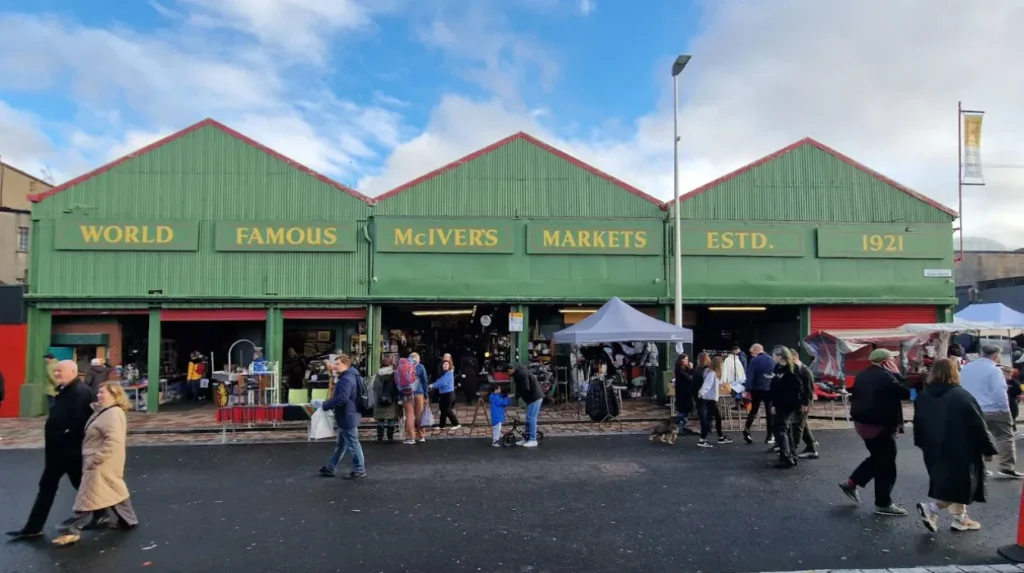
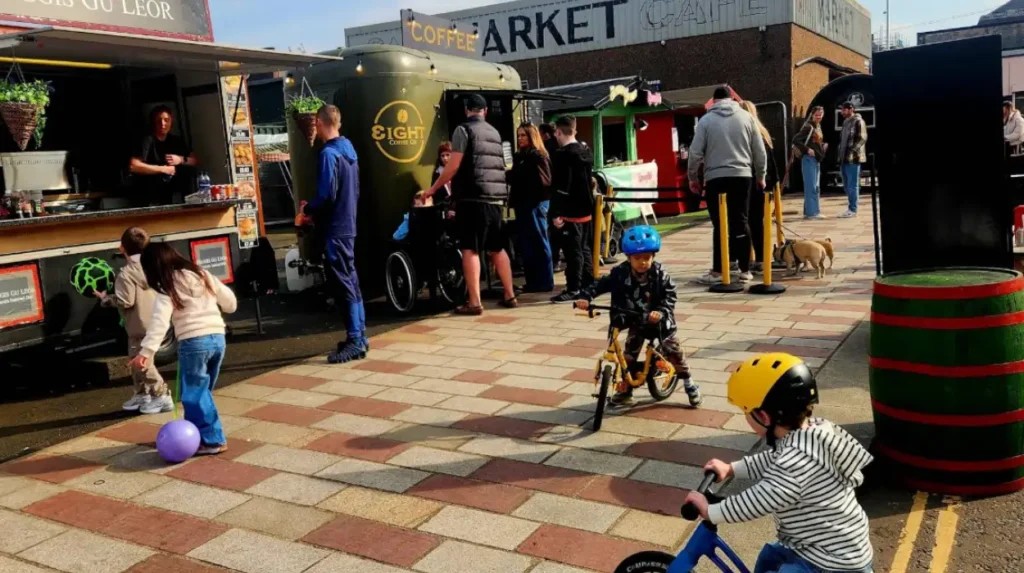
The Rail Yard Farmers Market provides a consistent weekly operational model, running every Saturday from 10:00 AM to 3:00 PM. This privately managed commercial venue serves as a stable alternative to the bi-weekly municipal schedule, aggregating foragers, growers, bakers, and micro-distillers.
The vendor structure integrates traditional food categories with creative industries. Regular agricultural suppliers include Ramstane Farm for poultry items and fresh eggs, alongside specialized entities such as Selkie Seaweed and Coeur Sauvage, which supply wild-foraged Scottish botanicals and marine ingredients to consumers and local culinary establishments.
What types of local produce can consumers purchase at these markets?
Consumers can acquire five distinct categories of local produce at Glasgow markets, including raw agricultural items, artisan cheeses, sustainably sourced coastal seafood, small-batch baked goods, and wild-foraged botanical products. These goods represent the core outputs of western Scottish regional farming.
The inventory available across the Glasgow market framework reflects the seasonal biological yield of the Scottish climate, alongside localized processing methods that preserve regional food heritage.
Raw Agricultural Items and Primary Proteins
The primary supply of fresh produce consists of field-grown brassicas, root vegetables, soft fruits, and pasture-raised meats. Farms such as Dowhill Farm and Tay Valley Fruits supply seasonal berries, potatoes, and root crops grown using conventional or integrated pest management techniques.
The meat supply chain includes pasture-raised heritage beef, lamb, pork, and wild game. Entities like Peelham Farm supply organic pork and charcuterie, while Aberdeen Angus specialists offer dry-aged beef cuts. These livestock systems rely on extensive grass feeding, which yields lower saturated fat content and higher omega-3 fatty acid ratios compared to grain-finished industrial livestock.
Artisan Dairy and Farmhouse Cheeses
The regional dairy inventory utilizes the high-quality milk production of Ayrshire and South West Scotland. Small-scale creameries supply unpasteurized milk cheeses, clothbound cheddars, and traditional crowdie, a fresh Scottish curd cheese dating back to the Viking era. These items undergo natural fermentation processes without synthetic preservatives, preserving the distinct regional bacterial cultures and flavor profiles linked to local pastures.
Coastal Seafood and Sustainable Aquaculture
Fresh marine proteins enter the city markets via direct transit from west coast fishing ports, such as Tarbert and Mallaig. Fishmongers and independent boats supply wild-caught Atlantic cod, haddock, mackerel, and hand-dived king scallops, alongside cultivated blue mussels. These seafood options bypass the centralized multi-day hub-and-spoke wholesale distribution systems, shortening the time from harvest to consumer to less than 24 hours.
Small-Batch Baked Goods and Fermented Products
The flour-based commodity sector consists of sourdough breads, traditional oatcakes, and regional pastries. Bakers such as Three Sisters Bake and The Little Bakery utilize long-fermentation processes that break down complex gluten structures naturally. This category also includes small-batch preserves, raw single-origin honeys from operations like DC Hive Products, and lacto-fermented condiments that support gut microbiome health.
Wild-Foraged Botanical Products
Specialty vendors introduce wild-harvested plant life into the urban market structure. Foraging operations select edible fungi, wild garlic, sea vegetables, and native herbs from uncontaminated woodlands and coastlines. This category also features long-standing artisanal manufacturers like Caurnie Soaperie, which has processed locally grown nettles and organic materials into specialized skincare items since 1922, establishing it as a pioneer in local sustainable production.
Explore More Area Guide
Best Cheap Eats in Glasgow: Local Daily Budget Food Guide
The Best Sunday Roast Spots in Glasgow Southside to Visit Right Now
How do farmers markets impact Glasgow’s local economy and environment?
Farmers markets generate significant economic multipliers within the Glasgow region by redirecting urban wealth directly to rural producers, while simultaneously lowering environmental carbon expenditures. This dual function shortens the traditional logistical pathways that define industrial retail systems.
The economic structure of direct-to-consumer agricultural sales eliminates the retail margin extractions typical of corporate supermarket chains. In standard industrial food distribution, the primary producer receives a small percentage of the final retail price, with the remainder absorbed by logistics corporations, packaging manufacturers, and retail conglomerates. Within the Glasgow farmers market system, the primary producer retains up to 95% of the transactional value. This high capital retention rate allows independent farms to maintain employment stability, invest in ecological soil-management practices, and purchase agricultural inputs from neighboring rural businesses, which creates a resilient regional economic cycle.
From an environmental perspective, the reduction in food miles minimizes carbon dioxide emissions related to transportation. The average supermarket item in the United Kingdom travels significantly before retail placement. In contrast, goods sold at Mansfield Park or Shawlands Civic Square travel an average distance of less than 40 miles.
Furthermore, the open-air market model reduces the need for energy-intensive temperature-controlled storage and complex plastic packaging. Products are typically sold in bulk or biodegradable paper housings, which helps decrease municipal solid waste levels across the Glasgow area.
What is the long-term outlook for direct agrarian commerce in Glasgow?
The future expansion of Glasgow’s direct agrarian commerce relies on integrating digital payment systems, creating indoor year-round trading spaces, and aligning with municipal sustainability initiatives. These developments aim to protect local supply lines against international logistical disruptions.
Data from the Scottish Agricultural Organisation Society indicates a steady rise in consumer demand for traceable, low-carbon food options. To scale effectively within Glasgow, the market infrastructure is adapting to shifting consumer habits and climate variations. The historical reliance on open-air, weather-dependent layouts presents operational challenges during winter. Consequently, the development of covered or semi-covered mixed-use spaces, like the model used at The Rail Yard, represents a key growth strategy for the city’s independent retail sector.
Municipal planning policy also plays an important role in this progression. The Glasgow City Development Plan focuses on creating “20-minute neighborhoods,” where residents can access all essential daily services, including nutritious food, within a short walk or bike ride from their homes. Expanding the schedule and locations of farmers markets fits into this urban planning goal.
By embedding rotating markets into underserved neighborhoods, the city can address food desert issues and lower the incidence of diet-related illnesses. This helps build a resilient food system capable of navigating global supply shocks and climate shifts over the coming decades.
What are the best farmers markets in Glasgow?
The best-known farmers markets in Glasgow are the Partick Farmers Market, Shawlands Farmers Market, and The Rail Yard Saturday Market. These markets bring together local farmers, food producers, bakers, and artisan businesses selling fresh Scottish produce directly to consumers.