Key Points
- A young cygnet has died after becoming entangled in discarded fishing line and a hook at Alexandra Park in Glasgow’s East End.
- The incident, which occurred on Tuesday, 23 June 2026, also ensnared an adult male swan, causing the baby bird to drown.
- Members of the public, including a local rescuer named Kirsty and her husband, managed to free the adult swan and cut away the line before official help arrived.
- The Scottish Society for the Prevention of Cruelty to Animals (Scottish SPCA) confirmed they dispatched an Animal Rescue Officer, but the cygnet had already passed away.
- Angered residents have reiterated that fishing in the park’s ponds is completely illegal, highly irresponsible, and a direct threat to local wildlife.
- Community members are actively urging witnesses to report anyone seen fishing illegally to Police Scotland or local park rangers.
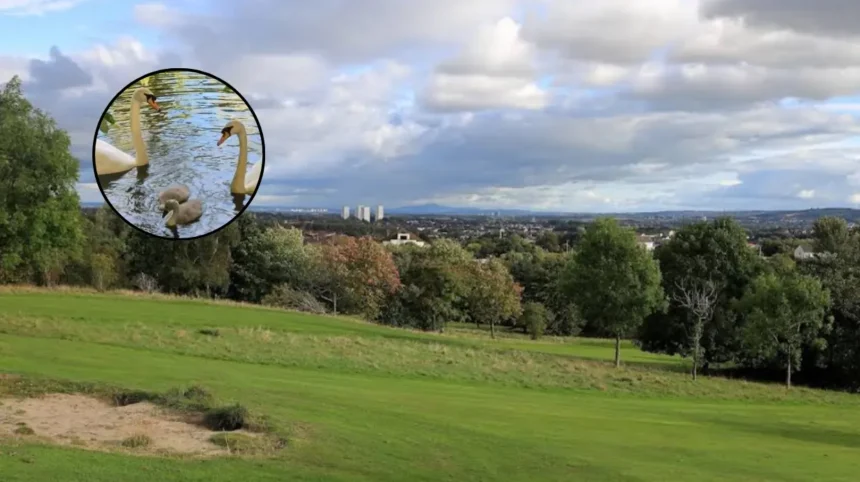
East End (Glasgow Express) June 27, 2026 – A tragic wildlife incident has occurred at a popular East End parkland pond, where a baby swan lost its life after becoming severely entangled in an illegally placed fishing line. The cygnet and its parent became snared in the discarded equipment at Alexandra Park on Tuesday, 23 June, sparking significant community anger and prompting calls for an emergency intervention by the Scottish SPCA.
- Key Points
- How did the local community respond to the emergency?
- What did the Scottish SPCA find upon arrival?
- Why are park visitors calling for a strict police crackdown?
- Background of Illegal Urban Angling and Wildlife Hazards
- Prediction: How This Development Can Affect Park Visitors and Local Wildlife
How did the local community respond to the emergency?
As reported by Aidan Maxwell of the Glasgow Times, the incident has drawn sharp condemnation from residents who witnessed the distressing scene unfold in the small park pond.
The fishing wire, which was heavily hooked onto the foot of the adult father swan, inadvertently trapped the trailing baby cygnet beneath the water’s surface, leading to its death by drowning. Members of the public who were present at the scene attempted to stage an immediate rescue alongside localized wildlife volunteers.
According to a public statement published on a local community noticeboard, a witness detailed the chaotic moments surrounding the rescue attempt:
“A baby cygnet died in the small pond today because it got caught up in fishing wire that was hooked onto the foot of its dad and drowned. The swan family were extremely distressed by the incident, as were the people there trying to help. A wonderful swan rescuer, Kirsty, and her husband came, and we got the swan out of the water, cut away the line, and removed the hook.”
What did the Scottish SPCA find upon arrival?
The Scottish SPCA confirmed that their specialized animal helpline received an urgent alert regarding multiple birds trapped in the angling debris.
However, by the time official rescue personnel reached the East End location, the youngest bird could not be saved.
In an official statement provided to the press, a spokesperson for the Scottish SPCA stated:
“The Scottish SPCA were called to an incident at Alexandra Park in Glasgow after a member of the public reported that fishing line had become wrapped around both an adult swan and cygnet. When our Animal Rescue Officer attended, the cygnet had sadly already died. We were not involved in the rescue of the adult swan but we believe that a member of the public has since managed to detach the line and release him back on to the water.”
Why are park visitors calling for a strict police crackdown?
Local park users are treating the event as a criminal issue, reminding the public that recreational angling inside Alexandra Park is entirely prohibited. Witnesses have noted that the premature death of the cygnet has left the remaining swan family visually altered, with only two cygnets remaining alive on the first pond.
An anonymous resident writing via the Glasgow Times platform issued an explicit warning to individuals bringing fishing tackle into public parks:
“DO NOT FISH HERE! It’s illegal, irresponsible and damaging to our wildlife. If you see someone fishing, please report them by calling 101 or filling out a form online through Police Scotland.”
Background of Illegal Urban Angling and Wildlife Hazards
The fatal entanglement at Alexandra Park highlights a persistent, widespread issue across public urban parks in Scotland, where migratory and resident waterfowl routinely cross paths with discarded recreational equipment.
Animal welfare charities, including the Scottish SPCA, have consistently warned that discarded monofilament fishing lines, lead weights, and barbed hooks pose a nearly invisible, lethal hazard to waterbirds.
Historically, urban ponds across Glasgow have experienced ongoing friction between conservation-minded locals and individual anglers operating outside permitted zones.
When line becomes snagged on submerged roots or overhanging branches, it is frequently cut and left behind. Birds such as swans, geese, and ducks easily become ensnared while paddling or foraging.
The strong, synthetic nature of modern fishing line means it does not degrade naturally, creating long-term death traps that can cut off circulation to limbs, pierce throats, or trap smaller birds beneath the surface to drown.
Prediction: How This Development Can Affect Park Visitors and Local Wildlife
This tragic event is highly likely to trigger tighter public surveillance, increased park ranger patrols, and stricter enforcement of municipal bylaws within Glasgow’s green spaces. For the local community and park visitors, the immediate consequence will be a heightened state of civilian reporting.
Regular park users are now far more likely to confront or immediately report individuals spotted with fishing rods around Alexandra Park’s ponds to Police Scotland via the 101 non-emergency line.
For the local wildlife ecosystem, the loss of a cygnet alters the immediate breeding success of the resident swan pair. If illegal fishing continues unmitigated, the remaining two cygnets face an elevated statistical risk of similar gear interactions as they grow and forage deeper into the pond’s margins.
Consequently, Glasgow City Council may face renewed political pressure from East End residents to install explicit, high-visibility warning signage regarding the illegality of fishing, potentially leading to fines or targeted anti-social behaviour orders for violators in the area.