Key Points
- Glasgow’s iconic sandstone tenements and landmarks, despite being one of the toughest building materials, are surprisingly vulnerable to damage from fire, water, and age.
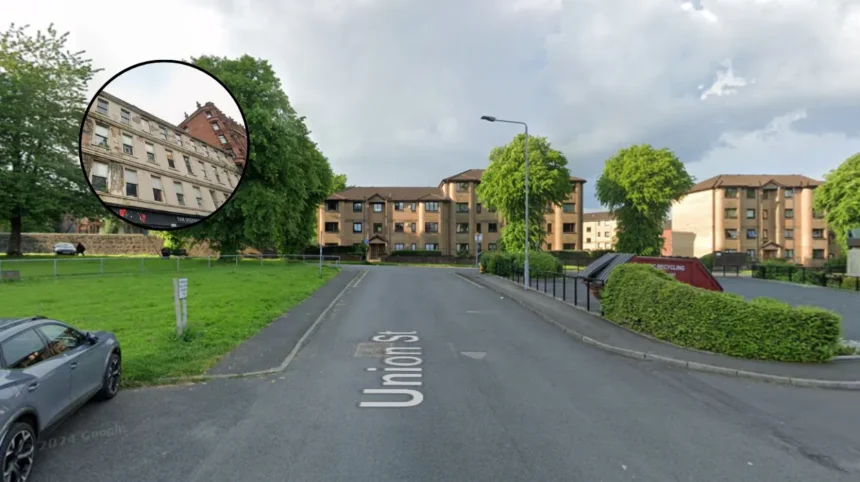
- A building at Union Street corner near Glasgow Central Station was severely ruined after a fire in March 2026; sandstone spalls when temperatures exceed 650°C as quartz grains burst.
- Along Argyle Street, a crumbling gable end is now propped up with scaffolding, while green buddleia grows in crevices and white salt streaks and moss mark damp spots on buildings.
- A vacant 19th-century merchants’ warehouse on Queen Street, unoccupied for 25 years, awaits a planning decision on full demolition and reconstruction into student flats due to advanced disrepair.
- The warehouse’s facade was covered in cement render in the 1990s, trapping water inside the stone and causing fragmentation; builders in the 1830s laid sandstone “in cant,” encouraging it to split.
- Natural decay from rain and manmade hazards like fire and neglect threaten Glasgow’s sandstone, but it remains unclear who is accountable for this deterioration.
- The majority of Glasgow’s tenements are owned by mini block-by-block democracies, adding a layer of complication to maintenance and accountability.
- Glasgow lost many tenements to demolition after World War II when repair costs became more exorbitant than rebuilding, warning of a potential future tipping point for current sandstone stock.
- The slow-motion problem of sandstone decay could dramatically alter Glasgow’s appearance for future generations, challenging the assumption that sandstone is universally durable.
- The national motto of Scotland, “Nemo me impune lacessit” (“No one provokes me with impunity”), is carved into a stone archway at Glasgow Central Station, yet the city often suffers misfortune that seemingly goes unpunished.
Glasgow’s (Glasgow Express) June 6, 2026 –Glasgow’s sandstone is a defining feature of the city, but its durability is increasingly under question. As reported by the journalist of the Glasgow Bell website, local buildings made of sandstone are showing signs of severe decay, raising concerns about whether the material can withstand the passage of time. “Even the Alps will end up in the sea,” the report notes, emphasizing that the same natural forces affecting the world’s most massive geological formations are also at work in Glasgow.
- Why is Glasgow’s sandstone, known as one of the toughest materials, so easily damaged?
- What does the vacant Queen Street warehouse reveal about the future of Glasgow’s sandstone buildings?
- Who is accountable for the deterioration of Glasgow’s sandstone buildings?
- How did Glasgow’s past tenement losses warn of a potential future tipping point?
- Background of the Development
- Prediction: How This Development Can affect Glasgow Residents and Future Generations
Why is Glasgow’s sandstone, known as one of the toughest materials, so easily damaged?
Sandstone, one of the oldest and most robust building materials on the planet, forms the backbone of Glasgow’s tenements and many of its landmarks.
Yet, despite its reputation, it is surprisingly vulnerable. According to the Glasgow Bell report, a building at Union Street corner, just outside Glasgow Central Station, suffered catastrophic damage after a fire on a Sunday afternoon in March 2026. The structure was ruined by Monday morning.
“When temperatures pass 650°C, sandstone spalls as the quartz grains burst,”
the report explains. The building did not burn so much as break open, revealing the material’s fragility under extreme heat.
Further west along Argyle Street, another sandstone building displays a crumbling gable end, now propped up with a lattice of scaffolding to prevent further collapse.
“Every other block there are the cheeky crevice squatters of green buddleia tips,”
the journalist observes, highlighting how nature is reclaiming the city’s stone structures. Blonde and red, the iconic colors of Glasgow’s urban canyons and tenement corridors, do not fully represent the spectrum of ageing stone.
White salt streaks flow along the lower courses of buildings, and green smears of moss and algae trace window frames and other damp spots, signaling long-term water damage.
What does the vacant Queen Street warehouse reveal about the future of Glasgow’s sandstone buildings?
On Queen Street, a vacant 19th-century merchants’ warehouse offers a stark glimpse into what can happen when a sandstone building reaches an advanced state of disrepair.
As reported by the Glasgow Bell, the building has been almost completely unoccupied for 25 years and is now awaiting a decision on an updated planning application for full demolition and reconstruction into student flats.
Its facade, covered in cement render in the 1990s, has trapped water inside the stone, creating fragmentation and weakening the structure.
The 1830s builders also inadvertently encouraged the stone to split by laying the sandstone “in cant,” with horizontal geological formations standing vertically.
“This inadvertently encourages the stone to split and peel off into layers,”
the report states. This construction error, combined with water damage, has accelerated the building’s decay, making it a candidate for total demolition rather than restoration.
Who is accountable for the deterioration of Glasgow’s sandstone buildings?
It is natural in a rainy city like Glasgow to expect decay from water, alongside manmade hazards such as fire and neglect. However, it remains unclear who, if anyone, should or can be held accountable for this deterioration.
As the Glasgow Bell report notes, the question is complicated by the mini block-by-block democracies that own the majority of Glasgow’s tenements.
These small-scale ownership structures create challenges for coordinated maintenance and accountability, leaving many buildings vulnerable to neglect.
The stakes are higher than some might realize, as the problem is moving in slow motion.
“If ever you’ve wondered what Glasgow will look like for the next generations, it’s tempting to think of sandstone as a future-gazing rock,”
the journalist writes. Residents in 2126 might see what we see today, because sandstone is widely perceived as durable. But this may not be true for all of Glasgow’s sandstone stock.
How did Glasgow’s past tenement losses warn of a potential future tipping point?
Glasgow lost a significant number of tenements to the wrecking ball after World War II. As reported by the Glasgow Bell, many of these demolitions occurred when repair costs became more exorbitant than rebuilding.
This historical precedent warns of a potential future tipping point for the current sandstone stock. If repair costs continue to rise and maintenance becomes too costly, more buildings may face demolition rather than restoration.
The slow-motion decay of Glasgow’s sandstone is a pressing issue that could dramatically alter the city’s appearance for future generations.
The assumption that sandstone is universally durable may be misplaced, and the city must address the challenges of water damage, fire vulnerability, and ownership complications to preserve its iconic architecture.
Background of the Development
The deterioration of Glasgow’s sandstone buildings is a result of multiple interconnected factors. Natural forces such as rain and temperature changes, combined with manmade hazards like fire and neglect, have accelerated the decay of the city’s iconic stone structures.
The construction errors of the 1830s, such as laying sandstone “in cant,” have further weakened the material’s integrity. Additionally, the mini block-by-block ownership structure of Glasgow’s tenements creates challenges for coordinated maintenance and accountability.
Historical precedents, such as the post-World War II demolition of tenements when repair costs became too high, warn of a potential future tipping point for the current sandstone stock.
Explore More Local Glasgow News
Glasgow Maternity Unit Faces 8-Day Wait for Women 2026
The Stranglers Launch Golden Brown Whisky: Glasgow 2026
Prediction: How This Development Can affect Glasgow Residents and Future Generations
The slow-motion decay of Glasgow’s sandstone buildings could significantly affect Glasgow residents and future generations. If the current trend continues, more buildings may face demolition rather than restoration, altering the city’s iconic appearance. Rising repair costs could make maintenance too exorbitant for many owners, leading to a loss of historic tenements and landmarks. Future generations may see a Glasgow that looks dramatically different from the one today, with fewer sandstone structures and a changed urban landscape.
Additionally, the loss of these buildings could impact the city’s cultural identity and heritage, as sandstone is a defining feature of Glasgow’s architecture. Residents must address the challenges of water damage, fire vulnerability, and ownership complications to preserve the city’s iconic sandstone stock for the future.