
The intersection of elite European club football, analytical sports forecasting, and the passionate sporting culture of Glasgow has created a major digital trend. Football analysts, supporters, and data specialists are focusing heavily on predicting the outcome of a hypothetical or scheduled fixture between VfB Stuttgart and Celtic FC. This phenomenon highlights how modern algorithmic analytics, historical European football rivalries, and the intense footballing subculture of the West of Scotland combine to drive massive online search volumes and community discussions.
- Why Is the Stuttgart vs Celtic Match Prediction for 2026 In Glasgow Attracting Huge Public Interest?
- What Is the Historical Context and Competitive Background of VfB Stuttgart and Celtic FC?
- Institutional Foundations and Stadium Profiles
- The 2002–2003 UEFA Cup Encounters
- Modern Structural Trajectories
- How Do Data Analytics and Algorithmic Models Formulate This Match Prediction?
- What Are the Key Tactical Match-Ups Defining the Prediction Outcome?
- Midfield Control and Pressing Systems
- Wing Dynamics and Full-Back Positioning
- Defensive Line Height and Exploitability
- What Cultural and Economic Factors in Glasgow Drive This Online Trend?
- The Glasgow Sporting Culture
- Expansion of Fan-Led Digital Media
- Economic Implications of European Progression
- How Do Global Betting Markets and Sentiment Analysis Shape the Narrative?
- What Are the Broader Implications of This Analytical Trend for Football Consumption?
Why Is the Stuttgart vs Celtic Match Prediction for 2026 In Glasgow Attracting Huge Public Interest?
The surge in interest across Glasgow stems from a combination of Celtic FC’s prominent European campaign, the rising competitive profile of VfB Stuttgart in continental football, and the highly analytical nature of modern Scottish football supporters who utilize predictive data.
To understand why this specific fixture prediction has captured the public imagination in Glasgow, one must examine the current landscape of European football. Club competitions governed by the Union of European Football Associations (UEFA), such as the UEFA Champions League, operate under a revised single-league phase format. This format guarantees a higher frequency of matches between top-tier clubs from major European leagues, such as the German Bundesliga and the Scottish Premiership.
VfB Stuttgart, based in Baden-Württemberg, Germany, has experienced a major sporting resurgence, securing qualification for elite European competitions and challenging traditional German powerhouses. Concurrently, Celtic FC, playing out of Celtic Park in the Parkhead area of Glasgow, continues to assert its status as a permanent fixture in European football. When two clubs with high-intensity playing styles and massive, passionate fanbases are slated to meet—or are projected to meet based on tournament draws—the analytical community in Glasgow responds by generating dense volumes of predictive content.
Furthermore, Glasgow possesses one of the highest concentrations of football enthusiasts per capita in Europe. The city’s sporting media ecosystem, which comprises traditional newspapers, digital sports networks, fan-led podcasts, and analytical blogs, thrives on tactical previews. The prediction trend is not merely about guessing a final scoreline; it represents a deep technical evaluation of tactical systems, squad valuations, individual player metrics, and historical data points that captivate a highly knowledgeable demographic.
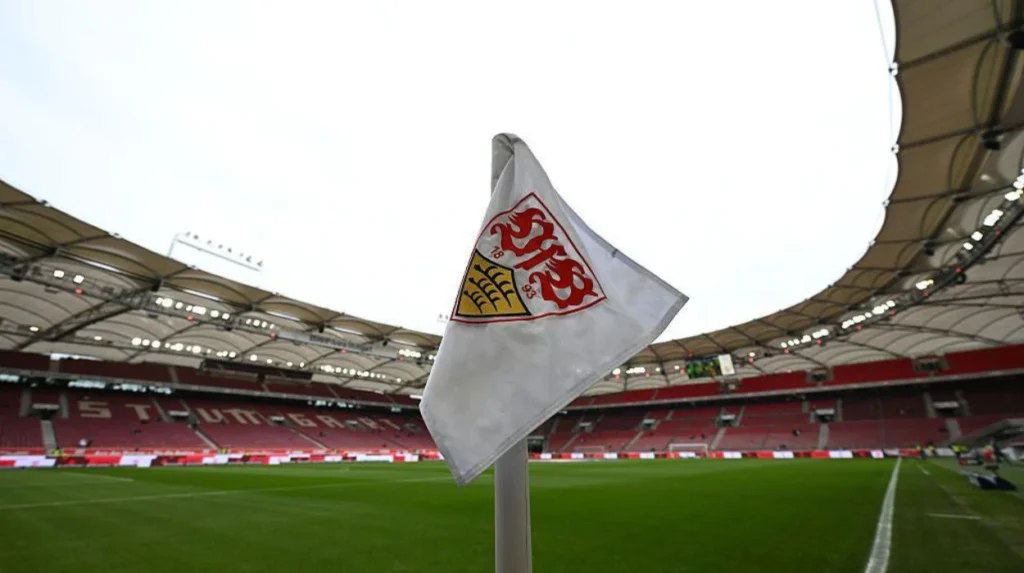
What Is the Historical Context and Competitive Background of VfB Stuttgart and Celtic FC?
The competitive background between VfB Stuttgart and Celtic FC is rooted in their distinct domestic histories, contrasting tactical traditions, and previous encounters in UEFA competitions, most notably their memorable two-legged tie during the 2002–2003 UEFA Cup tournament.
Institutional Foundations and Stadium Profiles
VfB Stuttgart was founded in 1893 and plays its home matches at the MHPArena, a stadium with a capacity exceeding 60,000 spectators. The club has won the German football championship five times and the DFB-Pokal three times. Celtic Football Club was founded in 1887 and plays at Celtic Park in Glasgow, which features a seating capacity of 60,411, making it the largest football stadium in Scotland. Celtic FC holds a historic distinction as the first British club to win the European Cup, achieving this milestone in 1967.
The 2002–2003 UEFA Cup Encounters
The primary historical touchpoint between the two institutions occurred during the fourth round of the 2002–2003 UEFA Cup campaign. The first leg took place at Celtic Park on 20 February 2003, where Celtic secured a 3–1 victory through goals from Paul Lambert, Shaun Maloney, and Stiliyan Petrov, neutralizing an early opening goal from Stuttgart’s Kevin Kurányi.
The return leg was contested at the Gottlieb-Daimler-Stadion in Stuttgart on 27 February 2003. Although VfB Stuttgart won the match 3–2 via goals from Christian Tiffert, Aleksandr Hleb, and Michael Mutzel, Celtic advanced to the quarter-finals on a 5–4 aggregate scoreline following crucial away goals scored by Alan Thompson and John Hartson. This tournament run ultimately led Celtic to the UEFA Cup Final in Seville.
Modern Structural Trajectories
In the decades following those matches, both clubs have navigated fluctuating financial landscapes. VfB Stuttgart operates within the Bundesliga’s “50+1” ownership model, which ensures club members retain the majority of voting rights, preventing external private entities from gaining total control. The club has focused heavily on youth academy development and data-driven recruitment to compete with financially dominant rivals.
Celtic FC operates as a public limited company listed on the London Stock Exchange, relying on a robust business model driven by domestic dominance, player trading profits, commercial sponsorships, and regular qualification for the UEFA Champions League group stages. The convergence of these two distinct structural models in modern European competitions creates an intriguing analytical case study for sports forecasters.
How Do Data Analytics and Algorithmic Models Formulate This Match Prediction?
Algorithmic sports forecasting models formulate predictions by processing vast datasets that include Expected Goals (xG), squad rotation probabilities, historical home-and-away performance metrics, individual player tracking data, and real-time market sentiment from global sportsbooks.
Predictive Modeling Frameworks
Modern football prediction has transitioned from subjective punditry to sophisticated mathematical forecasting. Data scientists and quantitative analysts utilize various statistical distributions to predict match outcomes, with the Poisson distribution serving as a foundational element. By calculating the independent attack strength and defense weakness of both VfB Stuttgart and Celtic FC, predictive algorithms can generate a probability matrix for all potential scorelines.
$$P(k \text{ goals}) = \frac{\lambda^k e^{-\lambda}}{k!}$$
In this formula, $\lambda$ represents the expected number of goals calculated from team performance metrics, and $k$ represents the actual number of goals scored. Advanced models replace simple historical goal averages with Expected Goals (xG) metrics. Expected Goals assess the quality of every shot taken based on variables such as distance from goal, shot angle, the type of assist, and the positioning of opposing defenders.
Key Data Inputs for Stuttgart vs Celtic
To generate an accurate prediction for a fixture in 2026, algorithmic models analyze specific operational datasets from both clubs:
- PPDA (Passes Per Defensive Action): This metric measures pressing intensity. VfB Stuttgart frequently utilizes a high-pressing system in the Bundesliga, maintaining a low PPDA score, which denotes an aggressive defensive posture. Models assess how Celtic’s build-up play, typically structured around quick transitions and inverted full-backs, handles this specific style of pressure.
- Field Tilt: This variable measures territorial dominance by calculating the percentage of passes completed in the attacking third compared to the total passes completed in both attacking thirds. This metric determines which team is likely to dictate the tempo of the match.
- Squad Valuation and Depth: Algorithms incorporate financial data, such as market values provided by sports economics databases. A higher squad valuation often correlates with greater individual quality, affecting the calculated probability of a team winning isolated individual duels on the pitch.
- Travel and Venue Dynamics: The geographical factor is heavily weighted. Celtic Park is statistically recognized as an exceptionally difficult venue for visiting European teams due to the high vocal volume and psychological pressure exerted by the home crowd. Conversely, German clubs are highly accustomed to playing in loud, high-capacity Bundesliga stadiums, meaning the traditional “home advantage” coefficient may require adjustment in the model.
Monte Carlo Simulations
Once the core metrics are established, simulation engines run the match through Monte Carlo simulations at least 10,000 times. These simulations account for random variables, such as early red cards, refereeing decisions, weather anomalies, and sudden injuries. The aggregated output provides a definitive percentage probability for a home victory, an away victory, or a draw, which is then dissected by the Glasgow sports community.
What Are the Key Tactical Match-Ups Defining the Prediction Outcome?
The tactical battlegrounds defining the prediction center on the confrontation between Stuttgart’s vertical possession structures and Celtic’s high-tempo wing transitions, alongside the individual defensive assignments tasked with neutralizing key attacking figures.
Midfield Control and Pressing Systems
The team that establishes dominance in the central zones of the pitch invariably holds the higher statistical probability of winning the match. VfB Stuttgart traditionally employs tactical systems that prioritize numerical overloads in midfield, utilizing a box-midfield structure or a fluid 4-2-3-1 formation that converts into a 3-2-4-1 during possession phases. This requires their double-pivot midfielders to possess high press-resistance and exceptional spatial awareness.
Celtic FC typically counteracts this with a dynamic 4-3-3 system focused on verticality and rapid ball progression. The tactical instruction relies heavily on a single defensive midfielder anchoring the space ahead of the central defenders, allowing two advanced central midfielders to push high into the half-spaces. The tactical clash occurs when Stuttgart’s aggressive central press attempts to suffocate Celtic’s playmaker, cutting off the supply lines to the forward players.
Wing Dynamics and Full-Back Positioning
Another critical tactical variable is the interaction between the wide players. Celtic’s tactical philosophy frequently demands that its full-backs invert during build-up play, moving into central midfield positions to create passing triangles and protect against counter-attacks. This tactical choice opens up significant space in wide areas.
If VfB Stuttgart deploys fast, direct wingers who stay wide on the touchline, they can exploit the space vacated by Celtic’s inverted full-backs during rapid transitions. Consequently, prediction models must assess individual sprint speeds, defensive recovery rates, and the tactical discipline of Celtic’s central defenders, who may be forced to drift wide to cover these open channels.
Defensive Line Height and Exploitability
Both teams frequently employ a high defensive line to keep their team shapes compact and minimize the playing space available to the opposition. This tactical approach carries inherent risks. A high defensive line requires central defenders with elite recovery pace and flawless coordination to execute the offside trap.
Analytical previews closely examine the pass completion rates of both teams’ deep playmakers when hitting long, diagonal balls behind the opposition defensive line. If a model identifies that one of the teams possesses a slower central defensive pairing, the probability of conceding goals via direct counter-attacks increases dramatically, significantly shifting the predicted scoreline.
What Cultural and Economic Factors in Glasgow Drive This Online Trend?
The digital popularity of this fixture prediction is driven by Glasgow’s deeply embedded footballing culture, the rapid growth of localized independent digital media platforms, and the financial implications tied to European football progression.
The Glasgow Sporting Culture
In Glasgow, football is an essential component of the city’s social fabric and cultural identity. The city is globally recognized for its intense footballing passions, which are divided primarily along the lines of the Old Firm rivalry, but also encompass a broader appreciation for continental football standards. When a European fixture involving a Glasgow club becomes a possibility or a reality, it dominates daily public discourse across the metropolitan area.
Expansion of Fan-Led Digital Media
The landscape of sports media in the West of Scotland has undergone a major structural shift. While traditional print journalism remains active, independent digital media operations have expanded significantly. Glasgow features dozens of dedicated Celtic FC podcasts, YouTube channels, and subscription-based written forums.
To maintain high user engagement and generate ad revenue, these platforms require a continuous stream of analytical content. Previews of high-profile matches against major European teams like VfB Stuttgart generate substantial web traffic. These digital outlets utilize search engine optimization techniques, targeted keywords, and data-heavy graphics to capture the attention of supporters seeking detailed tactical breakdowns rather than generic news stories.
Economic Implications of European Progression
The economic health of a Scottish Premiership club is inextricably linked to its performance in European competitions. Participating in the league phases of tournaments like the UEFA Champions League provides tens of millions of pounds in television rights, ticket sales, and performance bonuses.
| Revenue Stream | Impact of European Progression on Club Finances |
| UEFA Prize Money | Fixed performance bonuses for wins and draws significantly inflate the annual club budget. |
| Matchday Revenue | Three to four guaranteed home fixtures at a 60,000-capacity stadium generate millions in hospitality and ticket sales. |
| Player Valuation | Strong performances against Bundesliga opposition increase the global market value of squad assets. |
| Commercial Sponsorships | Elevated European visibility allows the club to negotiate higher-tier kit and stadium branding deals. |
For Glasgow sports enthusiasts, a prediction regarding a match against Stuttgart is also an assessment of the club’s financial trajectory. Winning such a match increases the likelihood of reaching the knockout rounds, which provides the capital necessary to reinvest in the playing squad, upgrade infrastructure, and maintain a competitive advantage in the domestic market.
How Do Global Betting Markets and Sentiment Analysis Shape the Narrative?
Global betting markets and sentiment analysis algorithms shape the narrative by continuously updating betting odds based on public betting volumes, expert syndicate positioning, and automated keyword tracking across social media platforms.
Market Odds Formulation
The financial markets surrounding sports entertainment provide a highly objective data source for match predictions. Bookmakers utilize complex mathematical models to set opening odds for a potential Stuttgart vs Celtic fixture. These odds are initially determined by historical performance metrics, power rankings, and squad availability data.
Once the odds are published, the market becomes fluid. If a substantial volume of monetary wagers is placed on VfB Stuttgart to win, bookmakers lower the odds for a Stuttgart victory to balance their financial liability. Analysts in Glasgow monitor these odds movements closely, as sharp shifts in betting lines frequently indicate underlying factors, such as undisclosed player injuries, tactical adjustments, or insider syndicate confidence.
Social Media Sentiment Tracking
An increasingly important component of modern football prediction is the automated analysis of public sentiment. Sentiment analysis tools scan digital platforms, including X (formerly Twitter), football message boards, and sports news comment sections, to quantify the mood of the fanbase. These tools use Natural Language Processing (NLP) to categorize text inputs as positive, negative, or neutral.
A sudden spike in negative sentiment surrounding a team—driven by fan anxiety, criticism of coaching methods, or concerns over defensive vulnerability—can correlate with a drop in real-world performance metrics. Conversely, an influx of positive sentiment and collective optimism within the Glasgow football community can indicate high team morale and strong home support, factors that analysts integrate into their final predictive summaries.

What Are the Broader Implications of This Analytical Trend for Football Consumption?
The growing popularity of intricate match predictions signifies a fundamental shift toward data-literate football consumption, the devaluation of traditional speculative punditry, and the rise of AI-driven sports forecasting models.
The Demise of Speculative Punditry
The modern football fan base in Glasgow and across the wider United Kingdom is increasingly rejecting superficial, narrative-driven football analysis. Historically, media previews relied on vague clichés regarding team spirit, historical prestige, or individual desire. Today’s supporters demand empirical evidence to support match predictions. The widespread popularity of metrics like xG, PPDA, and tactical heatmaps demonstrates a collective desire for technical, objective sports journalism.
Integration of Artificial Intelligence in Sports Journalism
The proliferation of AI search engines and large language models has transformed how information is consumed. Users no longer rely solely on reading a single sports article; they query AI systems to aggregate data from multiple sources, simulate tactical matchups, and generate instant, comprehensive summaries.
Articles that are structured with clear semantic hierarchies, precise entity definitions, and dense factual information are prioritized by these search technologies. The trend surrounding the Stuttgart vs Celtic prediction highlights how content creators must adapt their writing frameworks to satisfy both human readers and automated extraction algorithms.
The Future of Fan Engagement
As predictive technology becomes more accessible, fan engagement will likely become even more interactive. Future digital platforms may allow supporters to alter tactical variables within an AI model in real time—such as changing a team’s formation or swapping an injured player for a substitute—to instantly observe how those adjustments alter the mathematical probability of a match outcome. This continuous evolution guarantees that the appetite for deeply analytical, data-verified football predictions in major sporting hubs like Glasgow will continue to expand.
What is the Stuttgart vs Celtic match prediction trend?
The trend refers to growing interest in forecasting the outcome of a potential or scheduled match between VfB Stuttgart and Celtic FC using data analytics, tactical analysis, and statistical models.