Key Points
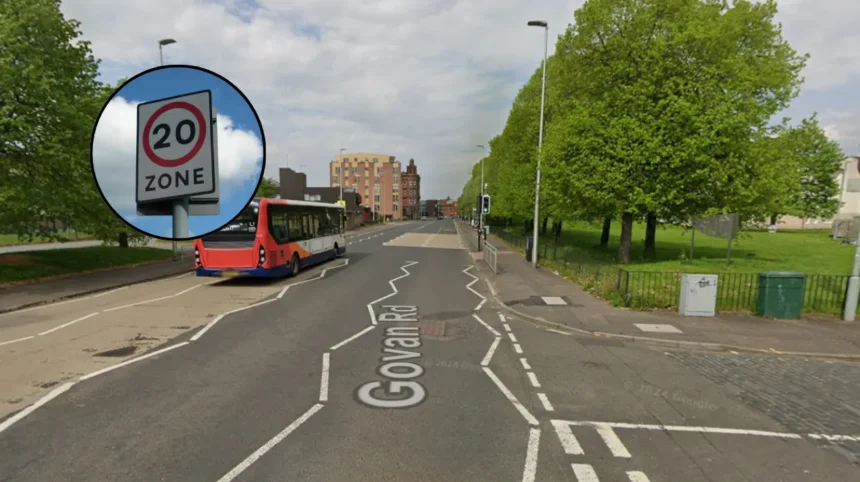
- Glasgow City Council will begin a phased rollout of 20mph speed limits on Thursday, June 4, starting in Govan.
- The first phase covers 194 streets or street sections in Govan, with signs and road markings to follow over a four-week period.
- Around 3,800 streets or street sections across Glasgow are expected to move to 20mph under the six-phase programme.
- Roads with existing speed limits of 40mph or above will not be changed.
- The council says the policy is designed to cut crashes, reduce the severity of injuries and create calmer, safer streets for pedestrians and cyclists.
- Glasgow City Council has pointed to Edinburgh, where collisions reportedly fell by 30% after a city-wide default 20mph limit was introduced in 2018.
- The first phase will be followed by areas including Southside Central, Calton, East Centre and Shettleston, before later phases move to other districts.
Glasgow (Glasgow Express) May 13, 2026 – Glasgow is preparing for a major shift in how traffic moves through its residential streets, as the city’s phased 20mph rollout is set to begin next month with Govan first in line.
As reported by STV News, the plan will start on Thursday, June 4, when a legal order takes effect for 194 streets or street sections in Govan, followed by a four-week period for the installation of new signs and road markings. In its coverage, BBC News also confirmed that the first phase is the opening stage of a six-part programme that will ultimately cover about 3,800 streets or sections across the city.
What is Glasgow changing?
The policy change is centred on local streets rather than the city’s main traffic arteries. Roads already carrying a 40mph or higher limit are excluded, meaning cross-city travel on major routes should remain unchanged.
The rollout is intended for residential streets, school areas and town-centre locations where the council says pedestrians and cyclists are more exposed.
Cllr Angus Millar, city convener for transport and climate, said the changes are “an important step” towards safer and calmer streets, according to STV News.
He added that lower speeds can reduce the number and severity of road casualties, and said Glasgow hopes to see similar results to Edinburgh, where a 30% drop in collisions was reported after its 20mph default limit began in 2018.
Why start in Govan?
Govan has been chosen as the first neighbourhood for the rollout, with the legal order coming into force on June 4. The council has said the area will serve as the opening phase before the scheme expands elsewhere in the city.
BBC News reported that a public information drop-in session was scheduled for Monday, May 18, at Elder Park Library in Govan so residents could view detailed maps of the affected streets.
The decision to begin in Govan also fits the council’s wider safety approach, which focuses on places with higher collision risk and heavier pedestrian use.
Officials have said the gradual introduction will allow the scheme to be reviewed as it moves from one phase to the next. That means the first area will be assessed before the remaining districts are brought into the programme.
Explore More Govan News
Glasgow Church Challenges Council Over Toilet Cabin, Govan 2026
Housing association backs programme giving pupils meaningful exposure to work
How will the rollout work?
The rollout will happen in six phases, with each stage covering different areas of Glasgow. After Govan, the first phase continues through Southside Central, Calton, East Centre and Shettleston. Later phases will include Drumchapel/Anniesland, Hillhead, Maryhill, Partick East/Kelvindale, Cardonald, Pollokshields, Langside, Anderston/City/Yorkhill, Victoria Park, Garscadden/Scotstounhill, Dennistoun, Linn, Newlands/Auldburn, Greater Pollok, Canal, Springburn/Robroyston, Baillieston and North East.
The council has said signs and road markings will be installed over four weeks after the legal order starts in Govan. BBC News reported that the new limits will not be enforced until signage is in place. That approach suggests the council wants to give road users time to adapt before penalties become a practical issue.
What changes for drivers?
For most drivers, the biggest practical effect will be on neighbourhood journeys rather than main commuting routes. Travel on roads with 40mph or higher limits should continue as before, while lower-speed residential corridors are expected to require more careful driving.
The policy is likely to affect school runs, local shopping trips and short-distance cross-neighbourhood journeys more than long-distance traffic.
The council says the purpose is not to slow the whole city indiscriminately but to reduce risk in areas where people walk, cycle and cross roads more often. Glasgow’s approach mirrors wider road-safety policy trends in Scotland, where lower urban speed limits have been used to improve street safety.
The evidence cited by the council from Edinburgh is being used to support the argument that lower limits can improve safety without seriously harming journey times.
What do officials say?
As reported by STV News, Cllr Angus Millar said the change is intended to make streets “calmer, safer and more liveable”.
He said safer speed limits are part of a broader effort to reduce road casualties and make streets more pleasant for people who live, walk and cycle there. Millar also pointed to Edinburgh’s experience as a sign that Glasgow could see similar benefits.
BBC News reported that the council has prioritised areas using collision data, especially locations involving people walking and cycling. That suggests the rollout is being framed as a targeted safety measure rather than a cosmetic traffic change.
The council’s argument is that lower speeds can reduce both the likelihood of crashes and the seriousness of injuries when incidents do happen.
What do residents need to know?
Residents in Govan will be the first to see the change, but they will not be the last. The wider scheme will touch thousands of streets across the city, so many households are likely to notice the impact later in the rollout.
People who live near the first phase may also see changes in traffic behaviour before the new restrictions are fully enforced.
The council has already provided a route for public viewing through the Elder Park Library session, which gave residents a chance to inspect the street maps.
That points to a rollout built around communication as well as regulation. For now, the key date is June 4, when the legal order begins in Govan.
Background of the development
Glasgow’s 20mph programme is part of a broader effort to lower vehicle speeds in built-up areas and improve safety outcomes for vulnerable road users.
The policy follows examples from other Scottish cities, especially Edinburgh, which introduced a default 20mph limit in 2018 and later reported a 30% fall in collisions.
Glasgow City Council has used that example to argue that lower speed limits can be effective without causing major disruption to journey times.
The current rollout also reflects a phased administrative approach, with temporary or staged measures allowing the council to monitor traffic and public response before expanding the scheme. That means the move is not a one-day citywide switch, but a controlled rollout spread across six phases.
The council’s focus on residential streets, school areas and town centres shows that the project is being designed around local movement and safety rather than through-traffic efficiency.
Prediction for drivers and residents
For regular drivers, the most immediate effect is likely to be slower travel on local streets and a need for greater attention to signage, particularly in neighbourhoods where limits are changing. For residents, cyclists and pedestrians, the likely benefit is a calmer street environment with reduced crash risk and less severe impacts when incidents occur. Schools, local businesses and people making short daily trips may notice the change first because these journeys are most tied to residential roads.