Key Points
- Scottish Parliament election set for Thursday, 7 May 2026.
- Glasgow voters on Buchanan Street highlight high taxes on young professionals as a top concern.
- Couple David and Caroline, both 64, state their vote focuses on their daughter’s future, saying she earns good money but is “taxed to the hilt”.
- Broader voter priorities include economy and cost of living (over 60% mention), health and social care (nearly 50%), immigration (30%), housing, and poverty.
- Scotland’s income tax rates diverge from rest of UK, with higher rates for middle and higher earners contributing to fiscal drag.
- Election campaign features twists and turns, with street-level views from Glasgow reflecting national trends.
Glasgow (Glasgow Express) May 6, 2026 –
- Key Points
- What are Glasgow voters prioritising ahead of the Scottish Parliament election?
- Why is tax a key issue for families in Glasgow?
- What do polls say about voter concerns across Scotland?
- How does Scotland’s tax system affect young professionals?
- What other issues are resonating with voters?
- Background of the Tax Burden Development
- Prediction: How this development can affect Glasgow voters
What are Glasgow voters prioritising ahead of the Scottish Parliament election?
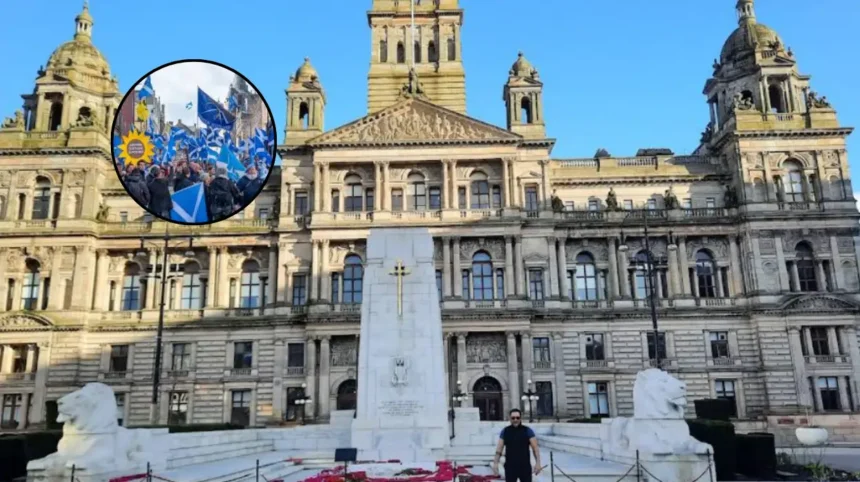
Glasgow voters walking down Buchanan Street expressed strong concerns about taxation on the eve of the Scottish Parliament election. Couple David and Caroline, both 64, told reporters they will have just one thing on their mind in the polling booth.
“We only think about our daughter’s future,”
says David.
“She’s a young professional and she earns good money, but she’s getting taxed to the hilt.”
This sentiment aligns with broader polls showing the economy and cost of living as top issues for over 60% of Scottish voters.
A BBC poll found nearly half prioritise health and social care, while 30% cite immigration among their top three concerns. Housing and poverty also feature as secondary issues for many.
Scotland’s income tax system, with rates up to 48% for top earners and fiscal drag pulling more into higher bands, has drawn criticism. The Scottish Fiscal Commission estimates fiscal drag raised an extra £320m in two years.
Why is tax a key issue for families in Glasgow?
As reported by Glasgow Live reporters on Buchanan Street, David and Caroline’s comments underscore intergenerational worries.
Their daughter, a young professional, faces Scotland’s progressive tax bands: starter rate at 19% from £12,571, basic at 20%, intermediate at 21% up to £43,662, higher at 42% to £75,000, advanced at 45%, and top at 48%.
This divergence from UK rates creates incentives against paying Scottish tax, per BBC analysis. Young taxpayers in the 25-34 age bracket contribute around 26% of total liabilities.
In Clackmannanshire, mirroring national views, voters told Sky News the next government must prioritise key challenges post-election on 7 May. SNP has held power nearly two decades but faces scrutiny on taxes.
What do polls say about voter concerns across Scotland?
A Savanta poll for BBC in March 2026 identified economy, cost of living, health, social care, and immigration as drivers. Over half see economy worsening, half view NHS decline.
Professor John Curtice notes economy, cost of living, health, immigration, energy, housing, and independence as main issues. BBC Scotland’s Scotcast podcast featured leader interviews.
In Glasgow Kelvin and Maryhill constituency, voters head to polls under new boundaries. Registration deadlines passed, with 17 parties in Glasgow region.
Tax and welfare shape votes, with Scotland’s path since 2017 under spotlight. SNP’s 2021 win under Sturgeon amplified divergence.
How does Scotland’s tax system affect young professionals?
David’s remark about his daughter echoes fiscal drag effects. Higher rate now catches one in five payers as thresholds lag wage rises. Personal allowance up £663, but earnings rose more.
Scottish Income Tax bands: personal allowance to £12,570 at 0%, then 19%, 20%, 21%, 42%, 45%, 48%. Middle earners face “stealth tax” hikes.
Opposition critiques SNP budgets as cynical, taxing hard-working Scots. Scottish Conservatives propose cuts.
What other issues are resonating with voters?
Cost of living tops at 60%, broader economy 30%. Health/social care nearly 50%. Immigration 30%.
Petrol prices from Iran war heighten economic fears. Party manifestos compare on 13 areas: government reform, quangos cuts proposed by Conservatives, Lib Dems.
Labour eyes opposition role, Reform UK vies. SNP commits public service bill.
Glasgow faces council tax rises 5-6% amid refugee costs £66m.
Background of the Tax Burden Development
Scotland’s income tax powers devolved since 2016, with full control from 2017. SNP introduced more bands: starter, intermediate, higher thresholds frozen, leading fiscal drag. 2022-23 projections show young professionals’ large contribution. SNP budgets hiked rates, opposition calls cuts. Divergence grew post-2021 election.
Prediction: How this development can affect Glasgow voters
Higher taxes on young professionals like David and Caroline’s daughter may influence family voting patterns, prioritising relief proposals. Middle earners facing fiscal drag could shift support to parties pledging threshold rises or cuts, impacting seat outcomes in Glasgow constituencies. Persistent cost pressures alongside health concerns may sustain focus on economy, affecting turnout among 25-34 group contributing 26% liabilities.