Key Points
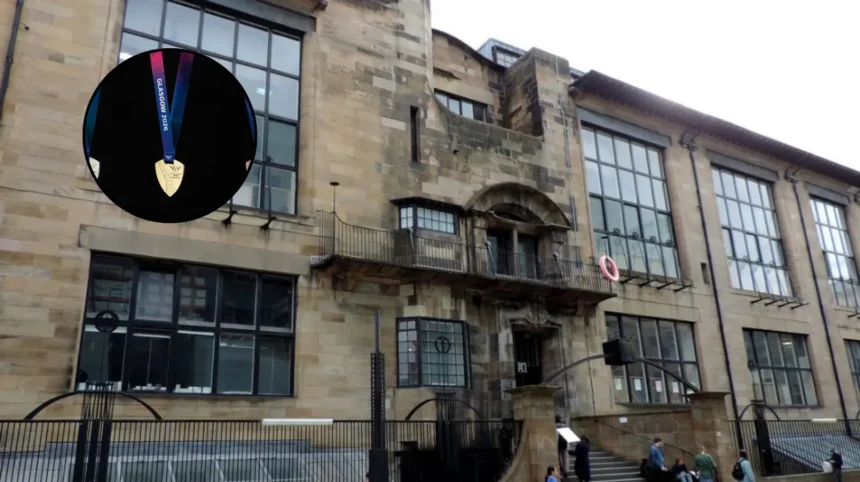
- Glasgow 2026 has unveiled the prize medal for the Commonwealth Games at a special ceremony at the Glasgow School of Art.
- The medal was designed in secret by Glasgow School of Art’s award-winning Artist in Residence, Militsa Milenkova.
- The design draws on Glasgow’s coat of arms and industrial heritage, including the Finnieston Crane in its detailing.
- Glasgow 2026 says the medal includes a world-first inclusive design with Braille and tactile elements.
- The Games organiser described the medal as a “historic” and “standout” prize medal.
Glasgow (Glasgow Express) April 29, 2026 – Glasgow 2026 has unveiled the prize medal for next summer’s Commonwealth Games at the Glasgow School of Art, with organisers saying the design combines city symbolism, industrial heritage and a new inclusive feature for athletes. The reveal took place at a special ceremony and marks one of the key visual launches in the build-up to the Games.
What has Glasgow 2026 revealed about the medal design?
As reported by Glasgow 2026, the medal was created by Artist in Residence Militsa Milenkova, who worked on the project in secret before the reveal. The design was inspired by Glasgow’s coat of arms and its industrial background, with the Finnieston Crane incorporated into the detailing. Glasgow 2026 said the medal is the first in Games history to include Braille and tactile elements, which it described as making inclusion “tangible and felt”.
Who designed the medal?
The medal was designed by Militsa Milenkova, Glasgow School of Art’s award-winning Artist in Residence. Her background includes a BA in Silversmithing and Jewellery from the Glasgow School of Art, according to her published biography. The project was kept secret until the official unveiling, according to Glasgow 2026.
Why does the design matter?
The use of Glasgow landmarks and heritage symbols gives the medal a strong local identity, with the Finnieston Crane serving as one of the key references in the detailing. Glasgow 2026 has also placed emphasis on accessibility by adding Braille and tactile features to the medal, which it says is a first for the Commonwealth Games. That combination makes the prize medal both a ceremonial object and a symbol of the Games’ branding approach.
What did the unveiling say about Glasgow 2026?
The unveiling at the Glasgow School of Art shows that organisers are using city institutions and local design talent to build the public image of the Games. The official Games website placed the medal launch alongside other 2026 updates, showing it as part of a wider countdown to the event. The language used by Glasgow 2026 suggests the medal is being positioned as one of the standout visual elements of the competition.
Background of this development
Glasgow last hosted the Commonwealth Games in 2014, and the city is again preparing for the event in 2026. Commonwealth Games medals often carry design features linked to the host city, and Glasgow’s 2014 medals also reflected the city’s industrial heritage. The 2026 version continues that tradition while adding Braille and tactile elements, which Glasgow 2026 says is a first for the Games.
Prediction: How can this affect athletes and the audience?
For athletes, the medal design may strengthen the sense of achievement by giving them a prize that visibly reflects Glasgow’s identity and the values of inclusion. For audiences, it adds another local story to follow in the lead-up to the Games and may increase interest in the event’s branding and ceremonies. For Glasgow 2026’s wider audience, the inclusive design could also shape expectations around accessibility and representation across the Games programme.