Key points
- A burst water pipe on Argyle Street caused flooding at Glasgow Central’s low‑level platforms, disrupting some services.
- Trains using the Argyle Line (connecting stations such as Balloch, Milngavie, Motherwell and Cumbernauld) were prevented from stopping at Glasgow Central Low Level.
- Services continued to run on the Argyle Line, but passengers were advised to use Anderston or Argyle Street instead of Glasgow Central Low Level.
- Water levels were brought down to a safe level by about 11:00, allowing trains to resume stopping at the affected platforms.
- This was the second flooding‑related halt at Glasgow Central this year, after a similar incident in February left the low‑level platforms closed for much of a day.
- The station has faced repeated disruption in recent months, including a multi‑day closure following a fire on Union Street in March and ongoing works near the main entrance.
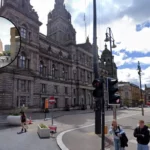
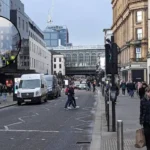
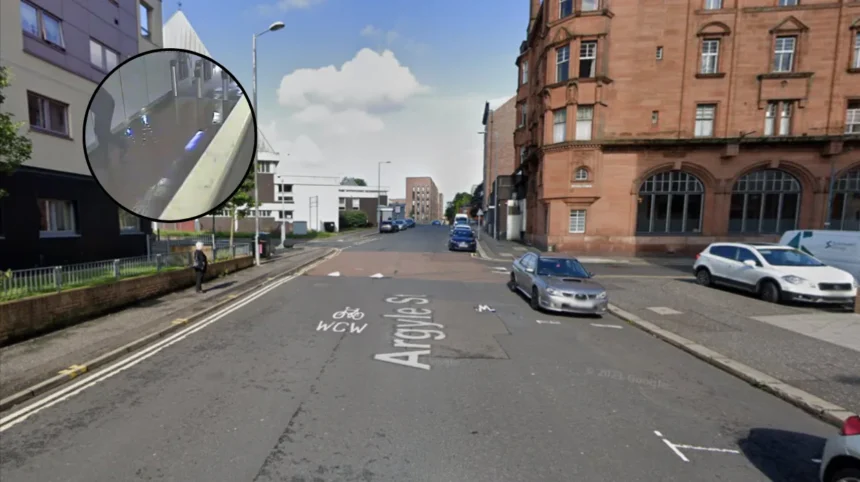
Glasgow (Glasgow Express) April 29, 2026 Glasgow Central station has resumed normal operations after a burst water pipe on Argyle Street flooded the low‑level platforms, forcing ScotRail to suspend stops at Glasgow Central Low Level for several hours. According to Network Rail Scotland, the incident occurred on Argyle Street near the station’s under‑pass access, sending water into the low‑level concourse and platforms 16 and 17.
- Key points
- Why were trains unable to stop at Glasgow Central Low Level?
- How did passengers cope with the disruption?
- When did services return to normal?
- Has this kind of flooding happened before at Glasgow Central?
- How has Glasgow Central been affected by other recent disruptions?
- Background to the Glasgow Central flooding incidents
- Predicted impact on passengers and commuters
Why were trains unable to stop at Glasgow Central Low Level?
A Network Rail Scotland spokesperson told BBC News that the flooding meant trains could still pass through platforms 16 and 17 but were not able to stop there safely. The spokesperson added that the low‑level section of the Argyle Line was
“likely to remain closed for the remainder of”
the disrupted period, until engineers and Scottish Water teams had brought the water levels under control.
Scottish Water later confirmed that a ruptured water main on Argyle Street was the cause of the flooding, with water running into the station’s lower‑level corridors and adjacent subway‑style access. A Scottish Water representative quoted by STV News said that engineers were working to isolate the affected section of the main and assess repairs, while coordinating with Network Rail to restore the station to normal conditions as quickly as possible.
How did passengers cope with the disruption?
During the height of the disruption, ScotRail asked passengers using Argyle Line services to treat Glasgow Central Low Level as skipped and to get off at either Anderston or Argyle Street stations instead.
A Network Rail spokesperson noted that all other Argyle Line stations remained in service, with trains still running through the low‑level corridor but not calling at Glasgow Central.
ScotRail also posted on social media that
“there is flooding at Glasgow Central Low Level station due to a burst water pipe. Trains aren’t stopping there until further notice – please use Argyle Street station instead,”
instructing passengers to follow staff guidance and check live departure boards for any changes. At the same time, local access was restricted on Argyle Street between Hope Street and Union Street while engineers worked on the pipe, with the utility warning that some nearby customers experienced a temporary loss or reduction in water supply.
When did services return to normal?
According to updates from STV News and BBC News, water levels at the low‑level concourse were lowered to a safe level by about 11:00, allowing trains to resume stopping at Glasgow Central Low Level. Staff from ScotRail and Network Rail carried out checks of the platforms and drainage systems before confirming that the station could reopen fully.
A ScotRail spokesperson quoted by STV said that, following the earlier broken‑water‑pipe incident, staff had worked through the night to ensure the station could open as normal the following day, with only certain lifts temporarily out of use. Passengers were advised to speak with station staff if they required assistance, particularly when using lifts or escalators that were still being checked.
Has this kind of flooding happened before at Glasgow Central?
Yes. This was the second time in 2026 that services at Glasgow Central have been halted due to flooding at the low‑level platforms.
As reported by BBC News, a similar burst‑pipe incident in late February forced the low‑level section of the Argyle Line to shut for much of a day, with trains again bypassing Central Low Level and using Argyle Street or Anderston as alternatives.
In that earlier incident, images published by the BBC showed several inches of water in the corridor beside the automatic ticket barriers and sandbags placed at doorway areas, indicating repeated vulnerability of the low‑level concourse to surface‑water ingress when nearby pipes fail.
Network Rail and Scottish Water have since been working together to review drainage and pipe‑protection measures in the area, though no detailed public report has yet been issued on long‑term mitigation plans.
How has Glasgow Central been affected by other recent disruptions?
Beyond the flooding incidents, Glasgow Central has endured further major disruptions in recent months. In March, a fire in a building on Union Street led to the partial closure of the station for days, with high‑level platforms one to 15 out of service while emergency and structural‑works teams carried out assessments and repairs.
Reporting for Glasgow Chamber of Commerce News, correspondents noted that the normal timetable from Glasgow Central High Level resumed on 25 March after works to reinstate the remaining platforms were completed. Services on routes such as Edinburgh–Glasgow Central via Shotts or Carstairs, Cathcart Circle, Paisley Canal, Newton, Barrhead and Neilston were all gradually restored over that period.
At the same time, the main entrance to the station on Gordon Street remains closed due to ongoing demolition and construction work nearby, with passengers continuing to use alternative entrances and temporary access routes. ScotRail has published ongoing travel‑advice updates on its website, warning of occasional timetable changes and advising passengers to allow extra time when travelling through Glasgow Central.
Background to the Glasgow Central flooding incidents
Historically, Glasgow Central has been Scotland’s busiest railway station, serving both high‑ and low‑level networks and acting as a central hub for suburban, regional and intercity services. The low‑level platforms, which sit beneath the main station concourse and the Argyle Street subway‑style corridor, are particularly exposed to surface‑water run‑off and nearby utility infrastructure, including water mains that run beneath the road.
The February and most recent flooding episodes were each traced back to ruptures in water mains on Arg latch Street, which channels water into the station’s lower‑level passageways and onto the Argyle Line platforms. These incidents have prompted both Network Rail and Scottish Water to examine whether existing drainage, pipe‑protection casings and emergency‑response protocols are sufficient to minimise future stoppages.
In addition, the March fire on Union Street and the current demolition work near the main entrance have layered extra pressure on station operations, with engineers having to coordinate fire‑safety clearances, structural assessments and ongoing construction around the clock. Combined, these repeated shocks to the station’s infrastructure have underlined how tightly linked Glasgow Central’s resilience is to the condition of surrounding roads, utilities and adjacent buildings.
Predicted impact on passengers and commuters
For daily commuters using Argyle Line services between Balloch, Milngavie and Motherwell or Cumbernauld, repeated flooding‑related suspensions mean an increased likelihood of having to change where they alight at short notice, often at Anderston or Argyle Street. Longer‑term, if further pipe failures occur, passengers may see more frequent advice to plan for alternative stops and potentially longer walking or bus‑transfer legs, especially those with mobility constraints relying on lifts and escalators.
For business travellers and tourists using Glasgow Central as a main interchange, the combination of flooding, fire‑related closures and ongoing demolition work may reinforce a perception of the station as a high‑risk point for delays, even as ScotRail and Network Rail maintain overall reliability on most routes. Operators may therefore need to invest more visibly in contingency signage, real‑time messaging, and extended access routes to retain confidence among passengers who choose Glasgow Central for its connectivity.
Finally, for local authorities and Scottish Water, the repeated Argyle Street‑linked disruptions could prompt calls for a more comprehensive infrastructure review of the area’s underground services, including upgrades to pipe casings and storm‑water systems, in order to reduce the chance of future station‑level flooding events.