Key Points
- Glasgow City Council has published a new plan for the area south of the River Clyde between Sheriff Court and Bridge Street subway, covering the north section of Laurieston.
- The plan sits within the wider Laurieston Transformational Regeneration Area (TRA), part of the city’s “Transforming Communities: Glasgow” programme, with a £140 million revitalisation fund.
- The scheme envisages around 1,000 mixed‑tenure homes, flexible commercial space, community facilities, open space and recreation areas over multiple phases.
- The North Laurieston masterplan includes proposals to reduce traffic on Bridge Street, introduce more pedestrian‑friendly routes and cycle paths within the area bounded by Bridge Street, Norfolk Street, Gorbals Street and the Clyde.
- Urban Union is delivering the Laurieston Living regeneration, with four phases expected over about nine years, including the completion of Phase 3 in summer 2026.
- The area’s physical state—derelict buildings, demolition sites and uncertain ownership—has been described as laying bare Glasgow’s broader inner‑city crisis of housing, heritage decay and stalled investment.
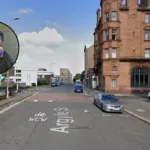
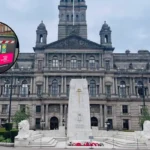
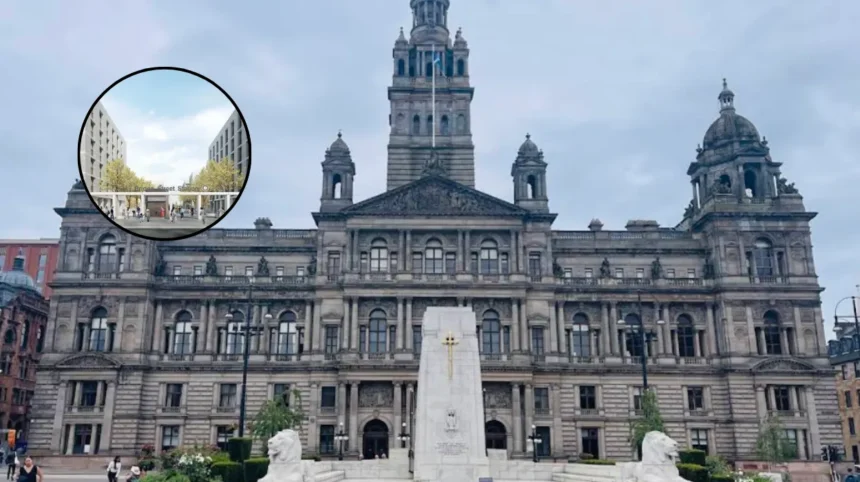
Glasgow’s (Glasgow Express) April 25, 2026 Laurieston, Glasgow, 25 April 2026 – The streets around Bridge Street, Norfolk Street and Gorbals Street now epitomise the tension between Glasgow’s ambitious regeneration plans and the stubborn realities of dereliction, weak ownership and fragmented investment, as a new city‑led masterplan lays out the future for this dilapidated stretch south of the Clyde. Glasgow City Council and the New Gorbals Housing Association (NGHA) have published a North Laurieston masterplan that aims to transform the area between Sheriff Court at one end and the train lines near Bridge Street subway at the other into a mixed‑tenure neighbourhood with new housing, public realm and active travel routes.
- Key Points
- What are the three streets that lay bare Glasgow’s crisis?
- How does the new masterplan for North Laurieston aim to fix the area?
- What is the wider Laurieston regeneration doing on the ground?
- Why do locals say these streets expose Glasgow’s housing and heritage crisis?
- How does this regeneration fit into Glasgow’s wider city‑centre strategy?
- Background of the Laurieston and North Laurieston development
- Predictions: How could this development affect Glasgow residents, businesses and the housing market?
What are the three streets that lay bare Glasgow’s crisis?
The three streets most often cited in local commentary are Bridge Street, Norfolk Street and Gorbals Street, which together mark the northern spine of Laurieston and the transitional edge between the city centre and the Gorbals.
These streets are already partially caught up in the Laurieston Transformational Regeneration Area, a long‑running project that began in outline as early as 2002 and has since been recharged under the city’s wider “Transforming Communities: Glasgow” programme.
As reported by a local journalist in Glasgow Bell, this cluster of roads is where “rotting heritage” and absent owners sit cheek by jowl with the outlines of future homes, shops and cycle paths, making the area a visible barometer of what works—and what fails—in Glasgow’s regeneration model.
Residents and business owners in the area have for years complained about the mismatch between demolition and rebuilding, with structures boarded up or cleared but replacement development left to drag out.
The planners behind the North Laurieston masterplan argue that the problem is structural: multiple landowners, fragmented ownership and a legacy of under‑investment have left the area “stuck” while the city centre and the wider Gorbals have seen more visible change.
How does the new masterplan for North Laurieston aim to fix the area?
The North Laurieston masterplan, produced by the joint venture of Glasgow City Council and the New Gorbals Housing Association, sets out a vision for a more compact, walkable urban quarter south of the river. According to the council’s own documentation, the plan prioritises reducing traffic flow on Bridge Street, introducing pedestrianisation and cycle paths within the block bounded by Bridge Street, Norfolk Street, Gorbals Street and the Clyde, and fast‑tracking development involving private investors as well as council and NGHA projects.
The plan also envisages “leafy planters” lining walking routes, small commercial or café spaces at street level, and a mix of housing types designed to appeal to both private buyers and social‑housing tenants.
As reported by Glasgow Bell, the masterplan’s proponents argue that Laurieston is “as much a part of the city centre as it is the Gorbals,” and should therefore function as a bridge between the two, rather than a neglected in‑between space.
The council has pledged to work with a desired private investment consortium, NGHA and Urban Union to ensure that each phase of development is delivered without long gaps between demolition and construction. A key stated aim is to cut the “dead time” where cleared sites sit empty, contributing to the sense of dereliction that many locals say has plagued the area for years.
What is the wider Laurieston regeneration doing on the ground?
The North Laurieston masterplan is just one piece of a much larger project: the Laurieston Living / Laurieston Transformational Regeneration Area, which sits under the banner of Glasgow City Council’s TRA programme.
As reported by Urban Union and council sources, the broader regeneration pot stands at around £140 million, earmarked for close to 1,000 mixed‑tenure homes, flexible commercial space, community facilities, open space and recreation areas.
Urban Union, the developer appointed by the council, divides the work into four phases spread over roughly nine years, building on the earlier phases of the Gorbals‑Laurieston regeneration that have already delivered several hundred homes.
The company’s Phase 1 and 2 layouts, designed by Page Park and Anderson Bell + Christie, emphasise four‑ to six‑storey blocks and town houses that echo the traditional grid‑like grain of central Glasgow, while inserting new green spaces and public realm.
Phase 3 of Laurieston Living, which includes 191 new homes and apartments, is scheduled for completion in summer 2026 and is marketed directly to first‑time buyers and mid‑market buyers as “award‑winning” regeneration within walking distance of Glasgow city centre.
Local reporting notes that the area has already benefited from 537 new homes via earlier phases, yet many residents still feel that large pockets of the wider Laurieston‑Gorbals corridor remain under‑delivered or undefined.
Why do locals say these streets expose Glasgow’s housing and heritage crisis?
For many long‑term residents, the junctions of Bridge Street, Norfolk Street and Gorbals Street remain a textbook example of how Glasgow’s regeneration can stutter: grand masterplans are drawn up, demolition teams move in, but then works stall while ownership disputes, funding gaps and planning wrangling drag on. As outlined by Glasgow Bell, the area is still dogged by the
“age‑old Glasgow problem of rotting heritage and absent owners,”
where buildings in need of repair change hands infrequently or are left in a legal limbo that makes investment risky.
Local voices quoted in regional reporting describe seeing “posters of happy families in glossy, imagined futures” alongside piles of rubble and boarded‑up shells, reinforcing a sense that the city’s aspirations are not yet matched by on‑the‑ground certainty.
Some community figures argue that the crisis is not just bricks and mortar, but also about who the regeneration is for: they worry that as the area becomes more attractive, existing lower‑income tenants and small independent traders may be priced out or displaced without clear safeguards.
Council officials and planners have acknowledged in public statements that resident engagement is vital to the North Laurieston plan, and that the aim is to ensure community facilities, green space and mixed‑tenure housing are integrated from the outset rather than added as afterthoughts.
However, the same sources concede that the area’s patchwork of ownership and long‑running planning issues mean that progress can feel uneven, with some blocks thriving while others sit idle for years.
How does this regeneration fit into Glasgow’s wider city‑centre strategy?
The North Laurieston plan is framed as part of a broader recalibration of how Glasgow connects its city centre with the south‑bank neighbourhoods of the Gorbals and Laurieston.
City‑centre‑facing landmarks such as Sheriff Court, Bridge Street subway station and the rail corridors are seen as key nodes, and the council’s thinking is that the streets between them should be upgraded to carry more people on foot and by bike, rather than through cars.
The modernisation of Bridge Street subway station, carried out under Strathclyde Partnership for Transport’s wider subway upgrade programme, has already improved passenger circulation and signage, and the council hopes that the North Laurieston plan will lock in more active‑travel flows around the station.
Planners also point to the role of the Clyde Waterfront regeneration and the wider Transforming Communities: Glasgow strategy, which targets eight key neighbourhoods, including Laurieston, for coordinated investment in housing, skills and public space.
That said, the same strategy has been critiqued by local commentators for sometimes appearing “top‑down,” with communities feeling that decisions are taken elsewhere and then presented as finished plans.
As one Glasgow‑based journalist observed in Glasgow Bell, the danger with Laurieston is that the “grand gestures” of new homes and cycle paths are offset by the more mundane, persistent problems of ownership, maintenance and social mix that regeneration can struggle to fix.
Background of the Laurieston and North Laurieston development
The Laurieston area has long been seen as a pivotal space between Glasgow city centre and the historically working‑class Gorbals, with its streets dating back to the 19th‑century grid that defined much of the city’s south bank.
By the early 2000s, the area was marked by a mix of vacant industrial and commercial buildings, derelict housing blocks and fragmented landholding, prompting the first iterations of a masterplan aimed at creating a new residential quarter “fit for the 21st century.”
The Transformational Regeneration Area approach, launched under the Transforming Communities: Glasgow umbrella, committed £140 million to Laurieston and partnered Glasgow City Council with Urban Union and the New Gorbals Housing Association to deliver phased housing, infrastructure and public‑realm work.
The first phase of Laurieston was conceived as a “new edge” to the south city centre, with four‑storey buildings and block‑fronts that mirror the traditional urban grain, while later phases added more tower‑style flatted blocks and town houses.
The North Laurieston masterplan, published in 2025, builds on that earlier work but focuses specifically on the strip between Sheriff Court and Bridge Street subway, where the mismatch between dereliction and development has been starkest.
It formalises commitments to reduce traffic on Bridge Street, extend pedestrian and cycle routes, and accelerate the assembly of sites so that demolition and construction happen in closer succession.
Even as Urban Union markets Laurieston Living as an award‑winning regeneration project with homes “just minutes from Glasgow city centre,” residents and local commentators continue to emphasise that the area’s story is not yet complete: wide stretches of vacant land, semi‑ruined buildings and unresolved ownership issues still give the lie to the glossy future displayed on planning hoardings.
Predictions: How could this development affect Glasgow residents, businesses and the housing market?
Looking ahead, the North Laurieston plan and the wider Laurieston Transformational Regeneration Area are likely to have several measurable effects on different groups in Glasgow. For residents, the combination of new social and private housing, upgraded public realm, and better walking and cycling links could improve everyday quality of life if the promised homes and community facilities are delivered on schedule and at the promised mix of tenures.