Key Points
- Police were called to a property in Glasgow’s West End late on Monday night following an incident.
- Windows at a house on Crawford Street, Partick, were damaged.
- Police Scotland has launched an investigation and is appealing for information.
- No further details have been released regarding injuries, arrests, or motivation.
- The incident is described by local coverage as a “police probe” into the damage.
Glasgow (Glasgow Express) April 22, 2026
- Key Points
- What happened in Glasgow’s West End on Monday night?
- How did local media describe the nature of the incident?
- Where exactly did the incident take place and what do we know about the location?
- What has been disclosed about police activity at the scene?
- What has not been reported so far about the incident?
- How is this incident being presented in the context of the wider West End?
- What should residents and the public understand from the current reporting?
What happened in Glasgow’s West End on Monday night?
uk/local/partick/">Partick, Glasgow – Police were called to a property in Glasgow’s West End late on Monday night after an incident involving damage to a home on Crawford Street, Partick, according to reporting by Glasgow Times. As reported by Glasgow Times, officers were called to the scene following reports that windows had been damaged at the house. No further details have been provided about the nature of the incident beyond the damage to the property.
A Police Scotland spokesperson, as quoted in the Glasgow Times report, confirmed that an investigation is under way and that inquiries are ongoing. While the report does not specify whether any injuries were sustained, the focus of the coverage is on the damage to the windows and the subsequent police response.
How did local media describe the nature of the incident?
Coverage by Glasgow Times characterises the episode as a “police probe” following late‑night damage to the property, with the wording indicating that the incident is being treated as a criminal matter rather than a domestic or accidental event. The article notes that the windows at the house were damaged, but does not attribute responsibility or provide a clear motive for the act.
The report also stresses that the public is being asked to contact Police Scotland if they have any information about the incident, a detail repeated in the headline and text of the Glasgow Times piece. No witness statements or named parties have been quoted in the existing coverage, leaving the public relying on the framework of the police investigation and the newspaper’s summary.
Where exactly did the incident take place and what do we know about the location?
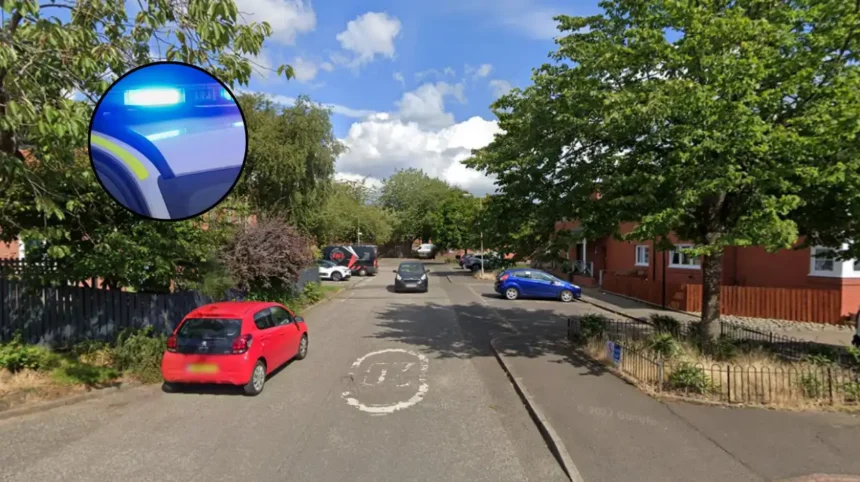
The property involved is described as being on Crawford Street in Partick, an area within Glasgow’s West End. Partick is a residential and commercial district located on the north bank of the River Clyde, known for its mix of housing, shops, and transport links into the city centre.
Crawford Street is a residential side street in that neighbourhood, and the Glasgow Times report does not specify whether the damaged house is a detached, semi‑detached, or tenement property. The article does not indicate whether the damage was confined to the front of the house or extended to other parts of the building.
What has been disclosed about police activity at the scene?
According to the Glasgow Times report, officers attended the property in the wake of the incident and subsequently began a formal investigation. The coverage does not mention the presence of a cordon, forensic teams, or visible evidence collection at the scene, but the invocation of a “police probe” implies that officers are seeking evidence and potential witnesses.
The report also notes that Police Scotland is appealing for information, which in the context of similar incidents usually means that investigators are asking members of the public to come forward with any details about suspicious activity in the area at the time of the incident. No suspects have been named or arrested in connection with the damage, according to the information currently available via Glasgow Times.
What has not been reported so far about the incident?
The Glasgow Times article does not state whether anyone inside the house was injured or required medical attention. It also does not say whether the property was occupied at the time of the incident or whether residents were present when the windows were damaged.
There is no indication in the coverage of the number of windows broken, the side of the building that was targeted, or the method used to cause the damage (for example, stones, bricks, or other objects). The report similarly does not mention any apparent motive such as an argument, dispute, or connection to wider local issues.
How is this incident being presented in the context of the wider West End?
Published coverage focuses narrowly on the specific event at the Crawford Street property and does not place it within any broader pattern of similar incidents in the West End. The Glasgow Times piece does not compare this damage with other recent cases of vandalism or break‑in attempts in Partick or nearby districts.
The absence of contextual references to wider crime trends means that the information available to the public at this stage is limited to the facts of the late‑night call to police and the resulting investigation. Readers are therefore not guided toward an interpretation of whether this is part of a serial problem or a one‑off episode.
What should residents and the public understand from the current reporting?
From the Glasgow Times report, the main takeaways for the public are that a house on Crawford Street in Partick had its windows damaged late on Monday night and that Police Scotland is investigating. The article emphasises that anyone with information is encouraged to contact the police, which is consistent with routine investigative procedure for incidents of property damage.
Residents in the immediate vicinity are not being told, based on the available coverage, that there is an ongoing threat or a pattern of targeted attacks in Crawford Street. The reporting instead presents the episode as a discrete incident currently under police review, with the on‑the‑record information limited to the damage and the appeal for witnesses.
Background of the development
Coverage of the incident originates solely from Glasgow Times, which published a brief online article describing the late‑night call to police and the subsequent probe into the damaged property on Crawford Street, Partick. The title and text of that article are framed as a straightforward police‑incident report, with no biographical detail about the homeowners and no commentary on wider social or economic factors.
The report does not reference any prior complaints at the same address, related incidents in the street, or any known history of anti‑social behaviour in the immediate area. It likewise does not draw links to national crime statistics, local policing plans, or broader discussions about vandalism or anti‑social behaviour in Glasgow’s West End.
In institutional terms, the background is that Police Scotland is treating the matter as an investigation into property damage, a category that can range from isolated vandalism to targeted attacks depending on what evidence emerges. Until further information is released, the background is defined by the initial report: a late‑night incident at a residential property in Partick, a police response, and a public appeal for information.
Prediction: How this development could affect the local audience
If no further similar incidents are reported in the immediate area, local residents may view the damage on Crawford Street as an isolated episode, which could nevertheless prompt some households to review their own home security measures. A one‑off case of window damage, combined with a police appeal for information, may encourage neighbours to be more observant of unusual activity at night and to report anything suspicious to the authorities.
Should the investigation reveal that the incident is part of a wider pattern of vandalism or targeted behaviour in Partick or nearby streets, the local audience might see an increased focus on visible policing, community‑safety initiatives, or local crime‑prevention campaigns. In that scenario, the initial report would function as the first public record of a broader issue, potentially influencing how residents, local councillors, and community groups frame discussions about safety in the West End.