Key Points
- Glasgow city centre footfall has returned to normal levels and is slightly up on last year, according to the Glasgow Chamber of Commerce.
- Footfall dropped sharply to 79,000 on 9 March – a 60% decrease year-on-year – due to the Union Street fire disrupting train and bus services.
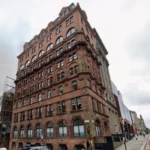
- The fire on 8 March 2026 destroyed the B-listed Union Corner building (also known as Forsyth House), a five-storey Victorian structure attached to Glasgow Central Station.
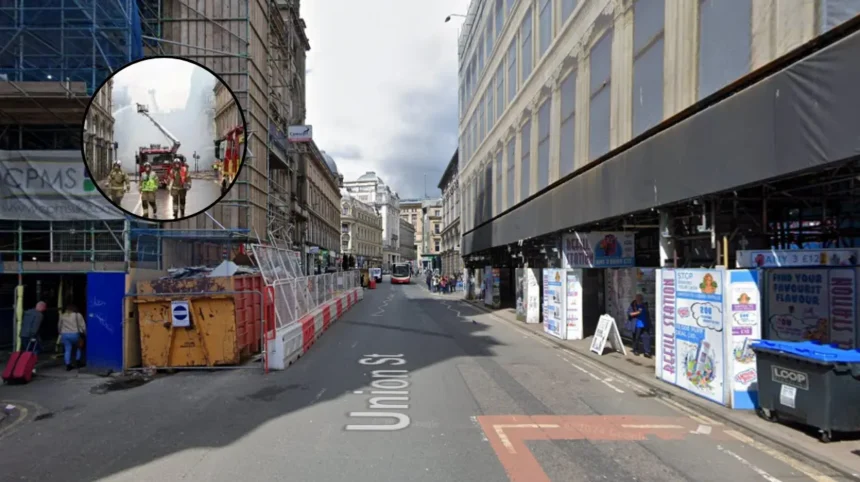
- Parts of Gordon Street, Union Street, and Renfield Street remain closed for recovery work; Central Station fully reopened on 25 March.
- By 25 March, footfall recovered to 193,000 (just 6,000 below last year), rising to 214,000 on 27 March (up from 202,000 in 2025).
- Businesses affected by the fire qualify for compensation from a £10 million Scottish Government fund administered by Glasgow City Council: up to £25,000 for those losing premises, £15,000 for current cordon businesses, £2,000 for initial cordon.
- Over 250 firefighters tackled the blaze, which started in a vape shop around 15:45; the building partially collapsed and was later demolished for safety.
- Fund applications opened 23 March with a deadline of 5 April via Glasgow City Council.
Glasgow (Glasgow Express) April 11, 2026 – Glasgow city centre is proving “remarkably resilient” after the recent fire in Union Street, with new footfall statistics showing a return to normal levels and a slight increase compared to last year.
- Key Points
- What Caused the Initial Drop in Footfall After the Union Street Fire?
- How Has Footfall Recovered in Glasgow City Centre?
- What Support Is Available for Businesses Affected by the Fire?
- Why Do Business Fears Persist Despite Recovery?
- Background of the Union Street Fire Development
- Prediction: Impact on Glasgow City Centre Businesses
What Caused the Initial Drop in Footfall After the Union Street Fire?
The fire broke out on Sunday, 8 March 2026, in a vape shop located in the B-listed Union Corner building at the corner of Union Street and Gordon Street, directly attached to Glasgow Central Station, Scotland’s busiest railway hub. Emergency services were called shortly after 4pm, with more than 250 firefighters attending the scene at its peak; crews remained until 11 March.
As reported by BBC News, the blaze consumed the entire five-storey Victorian structure, dating back to before the station’s 1879 opening, leading to a partial collapse and the closure of neighbouring Central Station. Train services and local bus routes were severely disrupted, with Gordon Street, parts of Union Street, Renfield Street, and St Vincent Street closed; diversions were implemented.
Footfall – the measure of people entering shops or areas – plummeted the following day. On Monday, 9 March, it fell to just 79,000 in the city centre, a 60% drop from the same day in 2025, largely due to Central Station’s full shutdown. Business leaders monitored concerns that shoppers, workers, and visitors to restaurants and attractions might be deterred.
How Has Footfall Recovered in Glasgow City Centre?
New data from the Glasgow Chamber of Commerce indicates daily footfall, including workers and shoppers, has rebounded to normal levels and is slightly higher than last year. By 25 March, when Central Station fully reopened with all platforms operational (though Gordon Street and Union Street entrances stayed closed), footfall reached 193,000 – only 6,000 fewer than the prior year.
Recovery continued over the weekend: on Friday, 27 March, 214,000 people were in the city centre, up from 202,000 on the equivalent day in 2025; Saturday also showed a year-on-year increase. Stuart Patrick, chief executive of the Glasgow Chamber of Commerce, described the figures as “reassuring”.
As reported by BBC News, Patrick stated:
“The city has shown extraordinary resilience, and the rise in footfall after the fire underscores the strength, determination, and confidence of our businesses and the community members who continue to frequent, work in, and support the city.”
Low-level services at Central Station resumed on 11 March, with some high-level platforms on 18 March; full operations returned on 25 March. On 12 March, the fire-damaged remains were handed to Glasgow City Council, which confirmed demolition of the unstable facade for public safety.
What Support Is Available for Businesses Affected by the Fire?
Businesses directly impacted – those losing premises or unable to open due to closures – qualify for aid from the Union Street Fire Recovery Fund. Administered by Glasgow City Council with £10 million from the Scottish Government, applications opened on 23 March 2026, closing 5 April.
Funding tiers include: £25,000 for businesses in Forsyth House (Union Corner) that lost premises; £15,000 for those in the current safety cordon; £2,000 for the initial emergency cordon from 8-12 March. Eligible firms span the initial cordon (set 8 March) and updated one (12 March).
Councillor Susan Aitken, Leader of Glasgow City Council, said:
“It was very clear, even as the catastrophic fire at Union Street was still burning, that this incident was going to have a huge impact on a really wide variety of businesses – including a great number of small and independent businesses – in our city centre. Supporting them has been a key priority for the city – and opening this Fire Recovery Fund, with the backing of the Scottish Government, is a really significant step.”
“We’re already in contact with many of the eligible businesses, but we hope to hear from traders as soon as possible so we can do what we can to help them get back in business,”
Aitken added.
Finance and Local Government Secretary Shona Robison stated:
“As soon as the full impact of this devastating fire became clear, the First Minister promised that the Scottish Government would provide immediate help for businesses and support their longer-term recovery.”
“Alongside Glasgow City Council, we have designed a scheme that delivers on both these aims. It enables businesses to access financial help quickly while ensuring support reaches those most in need. By doing so, we are taking the first steps towards rebuilding and renewing this important part of Glasgow city centre, a process to which we have promised up to £10 million,”
Robison said.
As detailed by Phoebe Clark of City Live Glasgow, the fund targets small businesses that lost livelihoods from the blaze. Applications are via https://glasgow.gov.uk/15062.
Why Do Business Fears Persist Despite Recovery?
Despite the footfall rebound, concerns linger for affected traders. Areas of Gordon Street, Union Street, and Renfield Street remain cordoned off for ruins clearance and rebuilding. Businesses fear prolonged closures could erode customer confidence, even as overall visitor numbers recover.
The Glasgow Chamber of Commerce highlighted that while the city shows resilience, individual firms – especially independents displaced from Forsyth House – face ongoing challenges stabilising operations. Network Rail confirmed all ScotRail and cross-border routes restored at Central Station post-reopening.
Wikipedia notes the fire’s scale disrupted rail for weeks, underscoring vulnerabilities in the city centre’s transport and retail nexus.
Background of the Union Street Fire Development
The Union Street fire originated in a vape shop within the B-listed Union Corner (Forsyth House), a Victorian-era building predating Glasgow Central Station. Reported shortly after 15:45 on 8 March 2026, it escalated rapidly, drawing over 250 firefighters and leading to partial structural collapse. The Scottish Fire and Rescue Service handed the site to Glasgow City Council on 12 March; demolition followed a safety assessment. This incident echoes Glasgow’s history of heritage losses but prompted swift government intervention via the recovery fund.
Prediction: Impact on Glasgow City Centre Businesses
This development can affect Glasgow city centre businesses by providing short-term financial stabilisation through the recovery fund, enabling quicker resumption of trading for cordoned firms. Prolonged street closures may continue limiting access, potentially slowing full customer return for nearby independents despite overall footfall gains. Rebuilding Union Corner could enhance long-term resilience, but delays might strain small operators reliant on foot traffic near Central Station.