Key Points
- Glasgow City Council warns of financial struggles to maintain the Clyde Tunnel, not part of the national road network.
- Council has proposed a congestion charge to fund the tunnel’s upkeep, amid broader efforts to raise revenue for the city’s poorly maintained road network.
- Scottish Labour leader Anas Sarwar criticises the plan as punishing motorists for essential travel like work, family visits, or hospital appointments.
- Sarwar pledges Scottish Labour would block any tolls on drivers living outside Glasgow.
- Sarwar blames SNP for underfunding Glasgow’s infrastructure over years.
- Council has suggested Scottish Government take over tunnel maintenance, but Holyrood shows no interest.
- SNP-led administration examines revenue options as drivers frequently complain about road conditions.
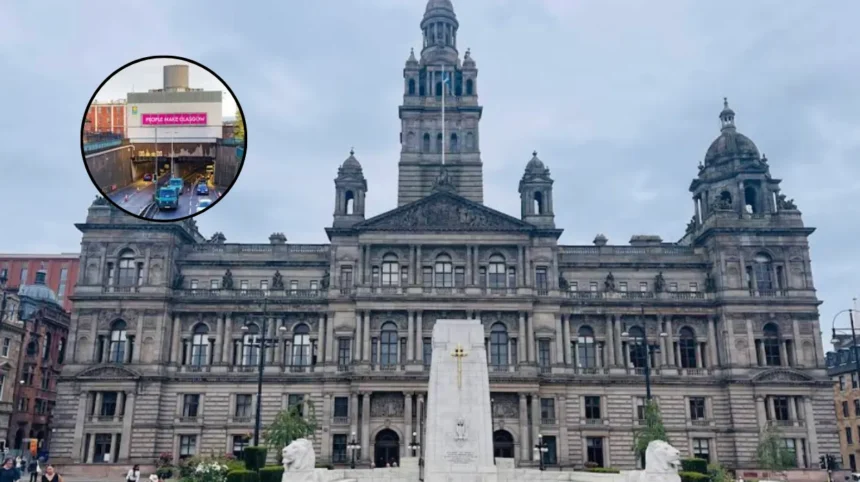
Glasgow, Scotland (Glasgow Express) – April 7, 2026 –Glasgow City Council faces mounting opposition to its proposal for a congestion charge aimed at funding essential maintenance of the Clyde Tunnel, a critical artery linking the city’s north and south sides. Scottish Labour leader Anas Sarwar has led the charge against the idea, labelling it unfair to everyday drivers.
- Key Points
- Why is Glasgow City Council proposing a congestion charge for Clyde Tunnel maintenance?
- What has Anas Sarwar said about the proposed Glasgow congestion charge?
- How is the Clyde Tunnel’s maintenance funded currently, and why the funding gap?
- Has the Scottish Government responded to calls for Clyde Tunnel responsibility?
- What other revenue options is Glasgow City Council considering for road maintenance?
- Why does Anas Sarwar blame the SNP for Glasgow’s infrastructure issues?
- Background on Clyde Tunnel Maintenance Developments
Why is Glasgow City Council proposing a congestion charge for Clyde Tunnel maintenance?
The Clyde Tunnel, vital for daily commuters crossing the River Clyde, requires significant upkeep that the SNP-led Glasgow City Council claims it cannot afford without new revenue streams.
As reported across multiple outlets including BBC News Scotland and The Herald Scotland, the council has repeatedly highlighted its financial pressures, noting the tunnel falls outside the national road network maintained by the Scottish Government.
In statements echoed in council briefings covered by local journalists, officials have warned that the tunnel’s maintenance programme strains local budgets already stretched by the city’s vast and often criticised road network.
Drivers have long voiced complaints about potholes and deterioration, with the council now exploring a congestion charge as one option to generate funds.
What has Anas Sarwar said about the proposed Glasgow congestion charge?
Anas Sarwar, Scottish Labour leader, directly addressed the proposal in remarks widely reported by BBC News Scotland’s political correspondent. He stated that the charge would
“punish motorists for going to work or seeing family.”
Mr Sarwar added that his party would block the introduction of any tolls on drivers who live outside the country’s largest city.
As quoted verbatim in The Herald Scotland coverage by their transport reporter, Mr Sarwar said: “The SNP has underfunded Glasgow for years and now they want working people to pay the price for their failure.” He continued:
“This charge would punish motorists for going to work, seeing family, meeting friends, or getting to vital services like hospital appointments. That is not fair, and Scottish Labour would block it. If the SNP and Greens were serious about tackling congestion, they would fix the mess they have made of buses and trains instead of continuing their war on motorists.”
These comments, first emerging in a Labour press release and picked up by outlets like STV News, underscore Sarwar’s firm opposition, positioning it as a defence of working people against what he terms SNP mismanagement.
How is the Clyde Tunnel’s maintenance funded currently, and why the funding gap?
Glasgow City Council’s road network responsibilities extend far beyond typical local authority duties, including the Clyde Tunnel, which carries heavy traffic volumes daily.
Reports from The Scotsman detail how the tunnel, opened in 1967, endures constant wear from vehicles, necessitating regular repairs not covered by national trunk road funding.
Council documents, as summarised in Glasgow Times articles, reveal repeated warnings about affordability. The local authority maintains the tunnel independently since it lacks classification as part of the national network, leading to proposals like the congestion charge mooted in recent budget discussions.
Has the Scottish Government responded to calls for Clyde Tunnel responsibility?
The council has floated the idea of transferring Clyde Tunnel upkeep to the Scottish Government, but Holyrood has shown no appetite for such a move.
Coverage in The National Scotland notes that SNP ministers at Holyrood have not committed resources, leaving the burden on Glasgow ratepayers.
As per Scottish Daily Express reporting, no formal response has emerged from government spokespeople, with sources indicating limited appetite amid competing national priorities like rail and bus improvements.
What other revenue options is Glasgow City Council considering for road maintenance?
Beyond the congestion charge, the SNP-led administration examines various ways to raise revenues for its road network, frequently slammed by drivers for poor condition.
STV News has covered council meetings where alternatives like increased parking fees or public-private partnerships were discussed, though none have advanced as concretely as the toll idea.
The broader context includes ongoing complaints from motorists about potholes and delays, as documented in reader submissions to Glasgow Live, amplifying pressure on the council to act.
Why does Anas Sarwar blame the SNP for Glasgow’s infrastructure issues?
Mr Sarwar’s critique centres on years of alleged underfunding by the SNP, both locally and nationally. In interviews with BBC Scotland’s Laura Babcock, he argued that SNP failures in infrastructure investment have forced the congestion charge idea, shifting costs to ordinary citizens.
This narrative aligns with Labour’s campaign messaging, as reported in The Sunday Post, framing the proposal as symptomatic of wider governance shortcomings rather than a necessary fix.
The debate highlights tensions between local funding needs and political opposition, with the Clyde Tunnel’s role in daily life – handling thousands of crossings for work, services, and leisure – at its core. Council leaders have yet to respond directly to Sarwar’s pledge to block the charge, but discussions continue amid Glasgow’s transport challenges.
Background on Clyde Tunnel Maintenance Developments
The Clyde Tunnel, comprising two 1.25-mile tubes under the River Clyde, opened to traffic in 1967 as a key relief for the Kingston Bridge. Managed solely by Glasgow City Council since inception, it has never joined Scotland’s national trunk roads, per Transport Scotland classifications.
Maintenance costs have escalated with traffic volumes exceeding 30,000 vehicles daily, as per council traffic data reported in 2025 audits. Previous repair programmes, including 2022 refurbishments costing £15 million, strained budgets, prompting 2024 warnings of deferred work without new funds. The congestion charge idea surfaced in council papers from late 2025, amid a £50 million roads maintenance backlog cited in official reports to the Scottish Parliament. Holyrood rejected a 2023 transfer bid, citing devolved responsibilities.