Merchant City Glasgow stands as a captivating blend of 18th-century grandeur and contemporary vibrancy, drawing visitors into its cobbled streets and historic facades. This central Glasgow district offers an evergreen exploration of the city’s mercantile past while serving as a hub for modern culture, dining, and events.
Origins of Merchant City
The foundations of Merchant City trace back to the mid-18th century, when Glasgow’s burgeoning trade transformed a once-peripheral area into a symbol of wealth and ambition. Developed from the 1750s onward, it emerged west of the congested High Street as the ancient burgh’s first planned New Town, featuring wide, straight streets, grand vistas, churches, and elegant squares. This deliberate urban design marked the beginning of Glasgow’s aspirational residential expansion westward, setting a precedent for future developments like Blythswood.
At its core, Merchant City was shaped by the tobacco trade boom following the 1707 Treaty of Union, which opened English colonies to Scottish merchants. Glasgow’s strategic position on the River Clyde, enhanced by deepening works in 1768, allowed for larger ships tailored for Atlantic crossings, propelling the district’s rise. Residences and warehouses sprang up, reflecting the fortunes amassed through this commerce, while medieval remnants from Glasgow’s original street plan lingered on the eastern fringe, linking it to neighboring Townhead.
The Tobacco Lords’ Golden Era
No story of Merchant City Glasgow is complete without the Tobacco Lords, the nouveau riche merchants who epitomized 18th-century prosperity. These Georgian-era figures dominated the triangular trade, importing slave-produced tobacco from the Thirteen Colonies and channeling profits into lavish townhouses, churches, and public buildings across Scotland. Concentrated in Glasgow, they built mansions that named streets like Buchanan Street after Andrew Buchanan, Glassford Street after John Glassford, and Virginia Street from Alexander Speirs’ Virginia Mansion.
John Glassford stood among the most prominent, owning a fleet of ships and vast stores in New England by the 1750s, trading over half a million sterling annually at his peak. Tobias Smollett described him in 1771 as one of Europe’s greatest merchants, underscoring the scale of their operations. Their Calvinist restraint tempered opulent displays—black silk attire accented by scarlet cloaks, ebony canes, and mahogany furnishings paired with classical architecture—yet their influence reshaped Glasgow’s skyline.
The American Revolution disrupted this era in the 1770s, as colonists’ debts to the Lords, accrued through manipulative credit practices, fueled grievances alongside taxation disputes. Planters like George Washington and Thomas Jefferson decried depressed tobacco prices that trapped them in cycles of debt, with little repaid post-war. Undeterred, survivors pivoted to cotton and other trades, leaving an indelible architectural legacy.
Iconic Architecture and Landmarks
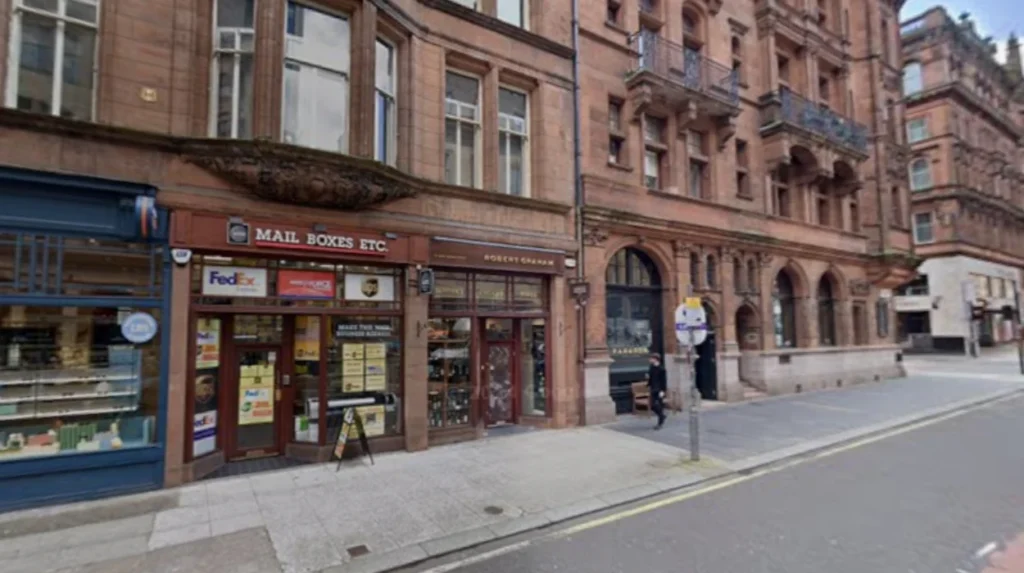
Merchant City’s architecture masterfully fuses neoclassical elegance with adaptive reuse, preserving the Tobacco Lords’ vision amid modern life. St Andrew’s in the Square, built 1739–1756 by master mason Mungo Naismith, exemplifies this as the first post-Reformation Presbyterian church, inspired by St Martin-in-the-Fields in London and funded by the Lords to flaunt their power. Today, it serves as Glasgow’s Centre for Scottish Music, hosting performances that echo its sacred origins.
The Gallery of Modern Art occupies the expanded 1780 mansion of William Cunninghame, originally costing £10,000—equivalent to millions today—its grandeur expanded into the Royal Exchange. Merchant Square, a fairy-lit courtyard from former fruit markets, buzzes with bars and restaurants, its undercover space hosting weekend craft fairs. Nearby, the Italian Centre by Page\Park Architects integrates art into facades, including Shona Kinloch’s ‘Thinking of Bella’ sculpture, anchoring high-end shopping.
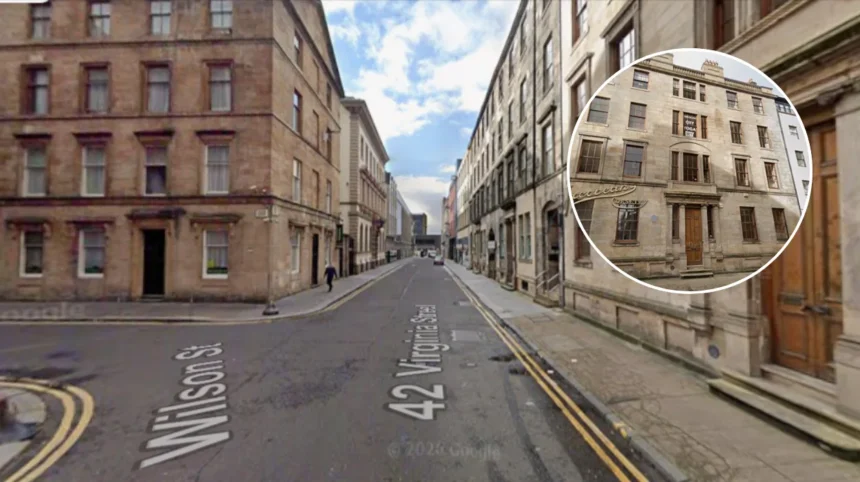
Other treasures include the Tron Steeple at Glasgow Cross, a 16th-century remnant of the medieval tron weighing scales, and restored warehouses like the Tobacco Merchant’s House at 42 Miller Street by James Craig in 1775. The City Halls & Old Fruitmarket exemplify repurposing, transforming 19th-century markets into cultural venues. These structures, from the Merchants’ House steeple designed by Sir William Bruce in 1659 to neo-classical facades on Wilson Street, highlight Merchant City’s evolution from trade hub to heritage gem.
Revival and Modern Transformation
By the 19th century, as Glasgow became the British Empire’s second city, Merchant City shifted to warehouses, distilleries, and markets for fish, fruit, and cheese, with elites relocating to Blythswood. Mid-20th-century decline loomed with M8 motorway plans in the 1960s, leading to compulsory purchases and market relocations, but the road’s abandonment paved the way for revival.
In the 1980s, the Scottish Development Agency and city council revitalized the area, coining “Merchant City” from historian Charles Oakley’s 1960s term to promote residential, shopping, and leisure akin to London’s Covent Garden. Investments restored Victorian buildings into flats and boutiques, complemented by University of Strathclyde’s campus expansion, including the 2014 Technology and Innovation Centre. Today, it thrives with offices, retail, and the Scottish Youth Theatre, balancing preservation and innovation.
Vibrant Events and Festivals
Merchant City pulses with annual festivals that celebrate its creative spirit, making it a perennial draw. The Merchant City Festival, held every July during Fair Fortnight, transforms streets with arts, circus, dance, live music, markets, and family activities like Surge street theatre and samba bands. In 2025, it spans July 18–20, featuring carnival processions from Glasgow Cathedral, UNESCO music stages, and food celebrations at Merchant Square, the main sponsor.
These events, from comedy and heritage walks to visual arts and family fun zones, infuse the district with energy year-round. Merchant Square hosts fairs, live sports, and ceilidhs, ensuring constant vibrancy. Such gatherings highlight Merchant City’s role as a cultural nexus, attracting locals and tourists alike.
Culinary Delights and Shopping
Dining in Merchant City Glasgow offers a spectrum from casual brunch to fine contemporary fare, centered in Merchant Square’s eclectic venues. Fairy-lit courtyards host coffee spots, sandwich bars, cocktail lounges, and upscale restaurants, blending historic charm with modern tastes. Award-winning eateries and street food markets during festivals elevate the scene, supporting local producers.
Shopping mirrors this fusion, with designer boutiques along Ingram Street and the Italian Centre’s luxury brands amid artistic courtyards. Weekend craft fairs and independent shops provide unique finds, from sustainable goods to fashion, fostering a high-end yet accessible retail experience. This blend positions Merchant City as a shopper’s paradise rooted in heritage.
Guided Explorations and Practical Tips
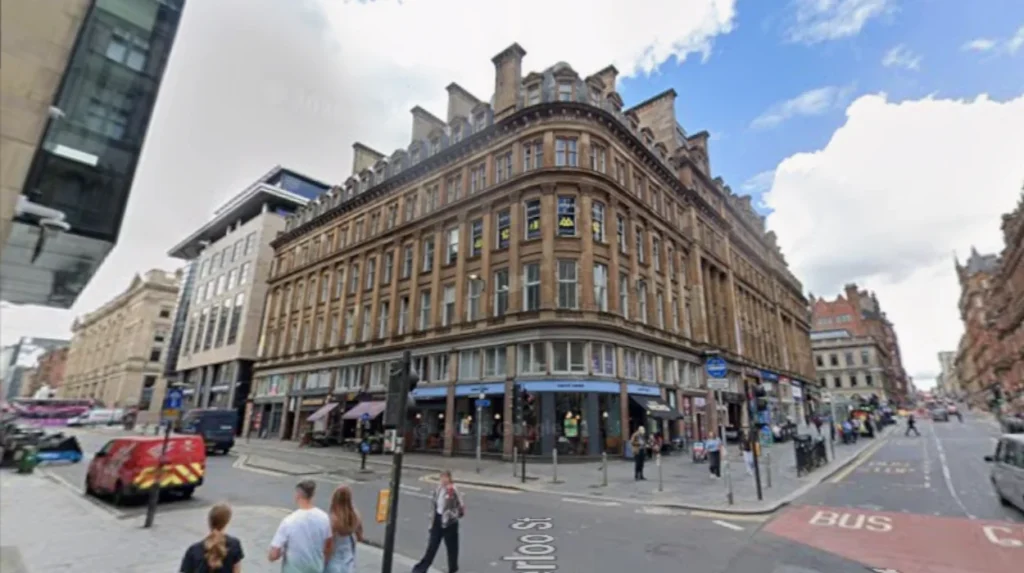
A Merchant City walking tour unveils layers of history, from medieval origins to industrial might, often starting at Glasgow City Centre and covering architecture, the cathedral, and hidden gems. Local guides share Glasgow patter, visiting independent spots off the beaten path for an authentic taste of the area. Key stops include Royal Exchange Square with the Duke of Wellington statue, Glassford Street, John Street, Hutchison Street, Candleriggs, and the former St. Paul’s Church.
Bounded by George Street north, High Street east, Trongate south, and Queen Street west, it’s easily accessed via Queen Street, High Street stations, or Buchanan Street Subway. Ample parking and proximity to Glasgow Green enhance visits, ideal for half-day or full explorations.
Merchant City’s Enduring Legacy
Merchant City endures as Glasgow’s living testament to mercantile ambition, where Tobacco Lords’ stone legacies house today’s galleries, eateries, and festivals. Its revival from near-demolition to cultural hotspot underscores resilient urban planning, ensuring timeless appeal for history buffs, foodies, and shoppers. As Glasgow evolves, this district remains a cornerstone, inviting endless discoveries amid its storied streets.